Do You Need an Air Permit for On-Site Generators?
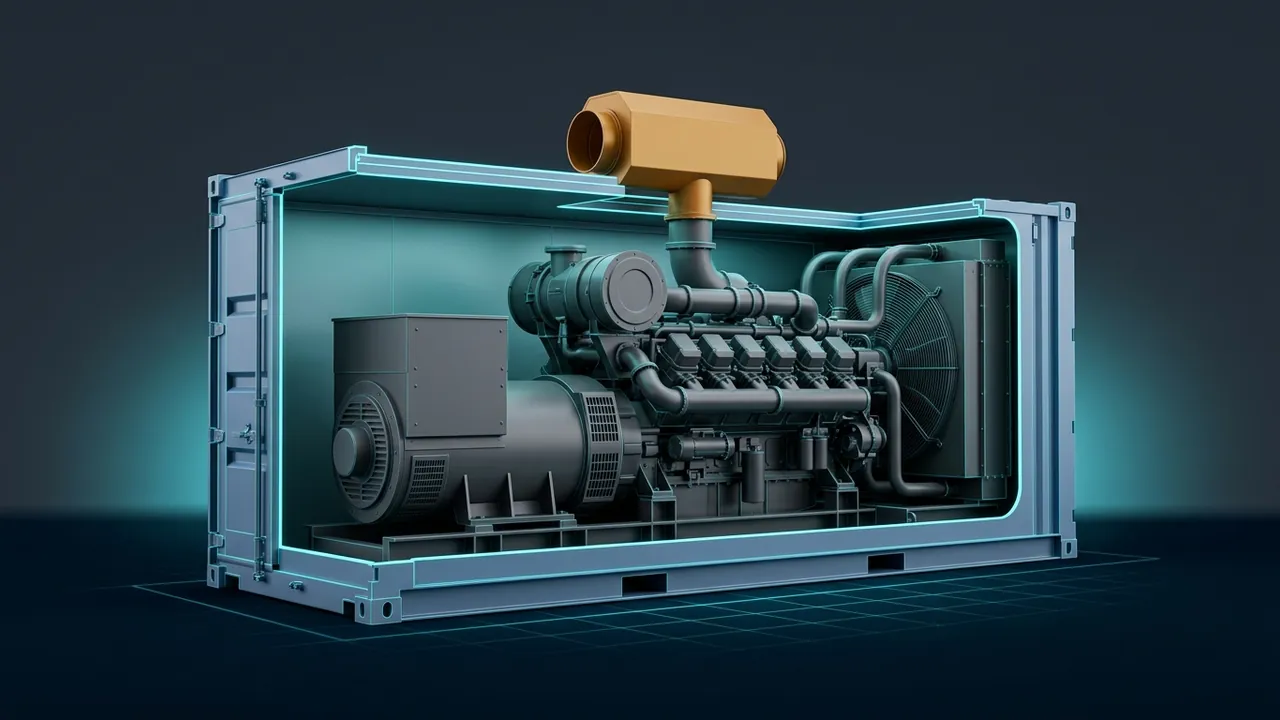
You've found the site, lined up the gas and picked the engines. Then someone on the call asks the question that can quietly add a year to the schedule: has anyone talked to the state air agency yet? Generators burn fuel, fuel makes pollution, and the Clean Air Act cares about both. Do you need an air permit for generators at a data center or other large facility, and what decides which permit you get?
In most cases, yes: stationary generators need some form of air permit for generators or a registered exemption, and the type depends on how much the equipment could emit, not just how much it actually runs. Small emergency units often qualify for a state exemption, permit by rule or general permit.
Larger fleets, and especially generators that run every day as prime power, can trigger a full pre-construction permit under New Source Review (NSR) and a federal Title V operating permit. The key number is "potential to emit," measured in tons per year of pollutants like nitrogen oxides (NOx), and rules vary by state, so check with your air agency before buying equipment.
Why Do Generators Need Air Permits at All?
Generators need air permits because they're combustion sources, and the Clean Air Act regulates combustion sources at the federal, state and local level. Every engine or turbine that burns diesel or natural gas releases NOx, carbon monoxide (CO), particulate matter, volatile organic compounds and small amounts of hazardous air pollutants (HAPs) like formaldehyde.
Air permits do two things. Before construction, they confirm the new equipment won't push local air quality past federal limits. During operation, they collect every rule that applies to the site into one enforceable document with limits, monitoring and reporting.
Separate from permits, federal equipment standards also apply to the engines themselves. Those are the New Source Performance Standards (NSPS) and the engine rules known as RICE NESHAP, which set emission limits and hour caps no matter what permit the site holds.
Emergency vs Prime Power: Why the Label Matters
The single biggest factor in permitting is whether the generators are for emergencies or for everyday power. Regulators treat these as different animals.
- Emergency (standby) generators run only when utility power fails, plus limited hours for testing and maintenance. Because they run so little, many states exempt them or cover them with a simple general permit.
- Prime or continuous generators run as the main power source, often close to 8,760 hours a year. Their emissions add up fast, and they get permitted like a small power plant.
The label isn't something you pick for convenience. An engine permitted as emergency equipment has to operate within the federal emergency limits. If a site later wants to run those units for peak shaving or to sell power, that usually means a new permit and, often, cleaner engines or aftertreatment.
My take: decide early how the generators will really be used over the facility's life. Permitting a fleet as emergency-only and then trying to change the story later is one of the most common ways on-site power projects stall.
What Is Potential to Emit?
Potential to emit (PTE) is the maximum amount a piece of equipment could emit if it ran at full capacity all year, unless an enforceable limit says otherwise. It's the number that sorts a site into minor or major source status.
By default, PTE assumes 8,760 hours a year of operation. That's why permit writers care so much about enforceable limits on hours or fuel. A permit condition capping a site's run time lowers its PTE on paper, and a site that accepts such limits to stay under major source thresholds is often called a "synthetic minor."
For emergency generators, EPA guidance from 1995 allows agencies to estimate PTE using 500 hours a year instead of 8,760, because these units don't run continuously. Many states use that figure or set their own. Your agency decides which assumption it accepts.
Worked Example: How Fast Generator Emissions Add Up

The math behind an air permit for generators is just emission rate times hours. Here are two labelled examples with assumed emission rates. Real numbers come from the engine's certified data sheet and your permit.
Example 1: Ten Emergency Diesel Gensets
- Fleet: 10 diesel gensets, each 2,000 kW
- Assumed NOx rate: 6.0 grams per kWh
- Hourly NOx per unit: 2,000 kW × 6.0 g/kWh = 12,000 g/hr, or about 26.5 lb/hr
- PTE at 500 hours: 26.5 × 500 = 13,250 lb, or about 6.6 tons per unit
- Fleet PTE: 6.6 × 10 = about 66 tons per year of NOx
That's under the 100-ton threshold in a clean-air area, but not by much. Double the fleet and you're over. Actual emissions are far lower, since these units might run 50 hours a year in testing, but PTE drives the permit.
Example 2: Ten Gas Engines Running as Prime Power
- Fleet: 10 natural gas engine gensets, each about 2,800 brake horsepower (roughly 2 MW)
- Assumed NOx rate: 1.0 gram per horsepower-hour
- Hourly NOx per unit: 2,800 g/hr, or about 6.2 lb/hr
- Yearly NOx at 8,760 hours: 6.2 × 8,760 = about 54,300 lb, or 27 tons per unit
- Fleet PTE: about 270 tons per year of NOx
A 20 MW prime power plant can blow past both the 100-ton and 250-ton markers. That's why prime power projects almost always add selective catalytic reduction (SCR) and oxidation catalysts, then accept permit limits, to manage their emissions and their permit path.
Which Air Permits Might a Site Need?
A generator site might need a pre-construction permit, an operating permit, or both. Here's how the main types line up.
| Permit | When it applies | What it involves |
|---|---|---|
| State exemption, permit by rule or general permit | Small or emergency units under state thresholds | Registration, standard conditions, recordkeeping |
| Minor NSR permit | Sources above state exemption levels but below major thresholds | Site-specific limits, sometimes dispersion modeling |
| Prevention of Significant Deterioration (PSD) | New major sources in areas meeting air quality standards | Best Available Control Technology, modeling, public comment |
| Nonattainment NSR | New major sources in areas that fail air quality standards | Lowest Achievable Emission Rate and emission offsets |
| Title V operating permit | Major sources once operating | Consolidated limits, monitoring, annual compliance certification |
The EPA's New Source Review overview describes these three NSR programs and notes that state and local agencies issue most of these permits. For PSD, the major source threshold is 100 or 250 tons per year depending on the source category.
When Does a Site Need a Title V Permit?
A site needs a Title V permit when it's a major source. According to the EPA's Title V guidance, that generally means a potential to emit of 100 tons per year of any regulated pollutant, or 10 tons per year of a single HAP or 25 tons of combined HAPs. In areas that don't meet air quality standards, the threshold can be lower.
Title V doesn't usually add new emission limits. It bundles existing requirements into one permit, adds monitoring and reporting, and requires an annual compliance certification signed by a responsible official. Public notice is part of the process, so neighbors and advocacy groups can comment.
Formaldehyde deserves a mention here. Gas engines emit it, and a large fleet can approach the 10-ton single-HAP line even when NOx is under control. Oxidation catalysts are the usual fix.
Does Location Change the Answer?
Yes, location changes the answer a lot. The same generator fleet can be a routine permit in one county and a hard one in another.
- Attainment status: Areas that fail the ozone standard often set lower major source thresholds for NOx and volatile organic compounds and require emission offsets.
- State programs: Texas, for example, uses permits by rule and standard permits for many smaller sources, while other states lean on general permits or registration. Oklahoma's Department of Environmental Quality runs its own exemption and permit program.
- Local agencies: Some metro areas have their own air districts with stricter rules than the state.
- Nearby receptors: Homes, schools and hospitals close to the fence line can make dispersion modeling harder to pass.
Remote sites aren't automatically easy, either. Rural areas often have clean air, which helps, but a large prime power plant still faces the same thresholds as anywhere else.
How Long Does Air Permitting Take?
Air permitting timelines run from a few weeks to well over a year. A registration under a permit by rule can move fast. A minor NSR permit with modeling often takes several months. A PSD permit, with control technology review, modeling and public comment, frequently takes a year or more, and contested permits can take longer.
Ordering long-lead equipment before the permit path is clear is a real gamble. If the agency requires lower emission limits than the engines can meet, the fix might be an aftertreatment retrofit or a different engine model.
A Practical Air Permit Checklist
Before you lock in equipment, work through these steps with your engineer and permitting consultant:
- Define the duty: emergency only, peak shaving, bridge power or full prime.
- Get certified emission data for every candidate engine or turbine.
- Calculate PTE for NOx, CO, volatile organic compounds, particulate, formaldehyde and total HAPs.
- Check the county's attainment status and any local air district rules.
- Decide whether to accept hour or fuel limits to stay minor.
- Meet with the state agency early to confirm the permit path.
- Build the permit timeline into the project schedule before ordering equipment.
Your Air Permit for Generators Starts With One Honest Number
Most on-site generators need an air permit for generators or a documented exemption. Emergency units usually have an easier path. Prime power fleets often face major source review and Title V.
The deciding number is potential to emit, so start there. Run that math honestly this week, using real data sheets, then take it to the state air agency before anyone signs a purchase order. Let the permit path shape the equipment list, not the other way around. Air rules differ by state and change over time, and this article isn't legal advice, so have environmental counsel confirm the path for your site.