How Does ERCOT Handle Large Loads? – Studies, Rules and Curtailment
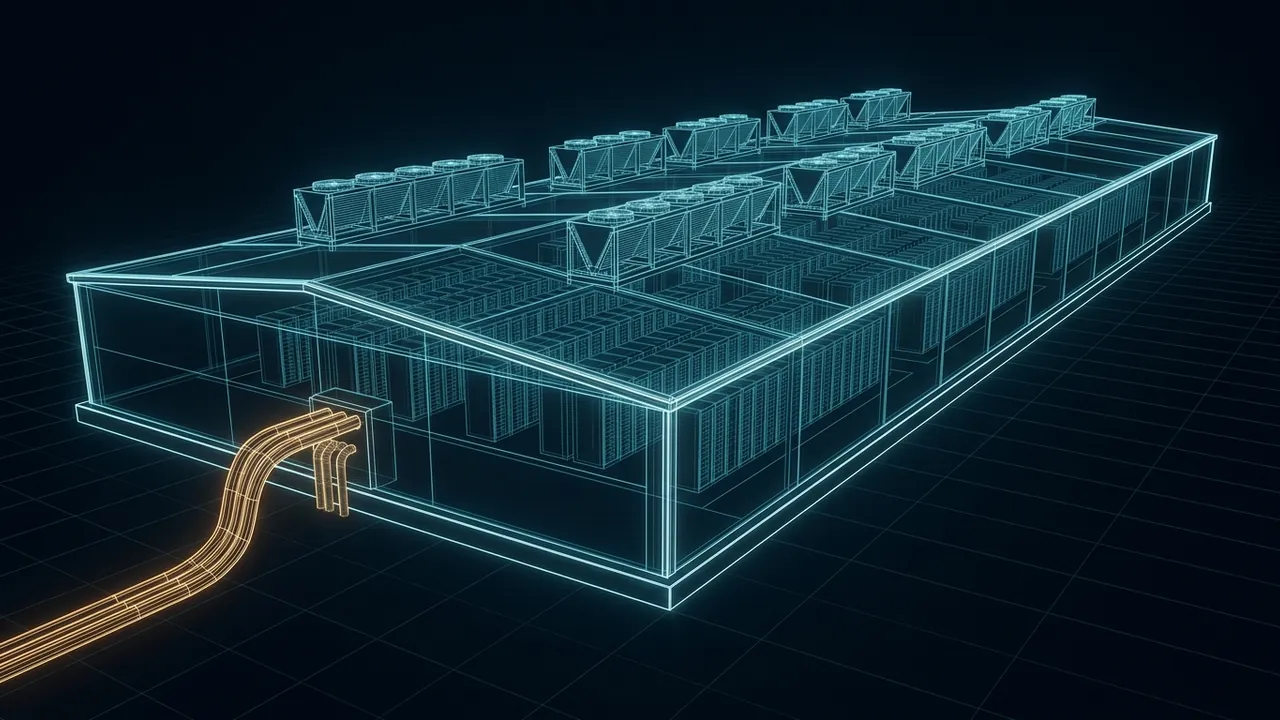
Texas has cheap land, plenty of gas, a lot of wind and solar, and a grid operator that famously runs its own show. No wonder data center and crypto developers flocked there, and no wonder the ERCOT large load queue exploded. The Electric Reliability Council of Texas (ERCOT) now fields more large load requests than any other grid operator in the country, and it's been rewriting its playbook in real time. So how does ERCOT handle large loads, from the first study to the day the grid asks them to shut down?
ERCOT handles large loads through a study process run jointly with the local transmission utility, then manages them in operation through market prices, voluntary curtailment, demand response programs and, increasingly, technical rules on how fast they can change. A customer of 75 MW or more submits a request through its transmission service provider, which studies the connection while ERCOT reviews the results for grid-wide reliability.
Once online, many large loads cut usage on their own when prices spike, and some sell flexibility as ancillary services. Texas Senate Bill 6, signed in 2025, added new standards, fees and emergency curtailment rules on top of this process.
What Counts as an ERCOT Large Load?
In ERCOT's process, a large load generally means a site that will draw 75 MW or more, the same threshold Texas lawmakers later wrote into state law. Smaller loads still need utility approval, but they don't go through the dedicated large load review.
Most of the requests come from two kinds of customers. Data centers want steady, around-the-clock power. Cryptocurrency miners also want a lot of power, but they can shut down in minutes when prices rise. ERCOT has dealt with the miners for years, which is one reason its rules lean so heavily on flexibility.
How Big Is the ERCOT Large Load Queue?
The ERCOT large load queue is enormous compared with the size of the grid itself. ERCOT's all-time peak demand is about 91 GW, a preliminary record set in July 2026. Large load requests are several times that.
- The Texas Reliability Entity reported in late 2025 that large-load demand under study rose from about 72 GW to more than 200 GW in roughly 11 months, with data centers and crypto making up over 80% and about 80 individual projects above 1 GW.
- Utility Dive reported in January 2026 that requests had reached roughly 233 GW, more than 70% of it data centers, and that ERCOT's process was designed to handle about 40 to 50 large loads at a time.
Nobody expects all of that to get built. A 1 GW campus running at an 80% load factor would use about 7 million MWh a year (1,000 MW × 8,760 hours × 0.8 = 7,008,000 MWh). Dozens of those would reshape Texas power demand. The useful question is which projects are real, and that's exactly what the study process and newer fees are designed to sort out.
How Does ERCOT Study a Large Load Request?

ERCOT studies a large load request in partnership with the transmission service provider (TSP), the utility that owns the wires at the connection point. The TSP does most of the engineering, and ERCOT reviews it from a system-wide view.
- The customer contacts the TSP serving the site and submits the load size, location, ramp schedule and technical details.
- The TSP runs steady-state power flow studies, checking that lines and transformers stay within limits during normal operation and after outages.
- Depending on size and location, the TSP or ERCOT also checks short circuit levels and dynamic stability, meaning how the load behaves during faults.
- ERCOT reviews the studies and any upgrades they call for.
- The load connects in approved stages, and ERCOT can cap how much it draws until needed upgrades are finished.
The staged approval is a quiet but important tool. A site might get permission for 100 MW now and the rest only after a new line or transformer is built. That lets real projects start while the grid catches up.
Why Location Matters So Much in Texas
Where a load connects can matter as much as how big it is. West Texas has a lot of wind and solar, and at times the lines carrying that power east to the big cities fill up, which pushes local prices down. A large load sited near that generation can soak up power that would otherwise be curtailed. The same load placed in an already crowded urban area may need major new transmission before it can connect. That's why two 300 MW requests can get very different answers and timelines.
Load near generation is not automatically easy, though. A remote site may still need new substations, and the local lines may not be strong enough to keep voltage stable when a big load trips off. The study, not the map, decides.
Why Do ERCOT Large Loads Curtail on Their Own?
Many ERCOT large loads curtail on their own because Texas's energy-only market rewards them for it. ERCOT doesn't run a capacity market. Instead, wholesale prices can spike sharply during tight hours, and a load buying at or near real-time prices saves a lot of money by shutting down for those intervals.
There's a second incentive. Transmission costs for large customers in much of ERCOT are allocated based on their demand during the four highest system peak intervals of the summer, known as four coincident peak, or 4CP. A customer who drops load during those peaks can cut its transmission charges for the following year. Senate Bill 6 directed regulators to review that method, so check the current rules.
The result is a lot of flexible behavior with no program behind it. In a May 2024 presentation on ancillary services and large loads, ERCOT reported that large loads had independently curtailed more than 2 GW during high-price intervals, while less than 20% of large-load capacity was registered to provide ancillary services.
What Demand Response Programs Can Large Loads Join?
Large loads in ERCOT can join formal demand response programs that pay them to stand ready to reduce power. The main options are:
- Load Resources in ancillary service markets: loads that qualify can provide reserves, dropping quickly when frequency falls or ERCOT calls on them.
- Controllable Load Resources: loads that ERCOT can dispatch in real time, much like a generator, by adjusting their consumption.
- Emergency Response Service (ERS): a program for emergencies, which ERCOT says it calls when reserves drop below 3,000 MW, with response times of 10 to 30 minutes.
Crypto miners fit these programs well. A data center full of customer workloads is a harder fit, since its tenants usually expect power around the clock. Some operators are testing ways to shift work or switch to on-site backup power during calls, but steady data center loads still provide much less flexibility than miners.
How Is Texas Senate Bill 6 Changing ERCOT Large Load Rules?
Texas Senate Bill 6 changes ERCOT's large load process by putting standards, fees and emergency powers into state law. According to the Texas Legislature's bill analysis, it applies to loads of 75 MW or more and calls for a study fee of at least $100,000, proof of site control and disclosure of on-site backup generation.
It also requires new large loads connecting after December 31, 2025 to install equipment that allows remote curtailment during firm load shed emergencies, and it lets ERCOT direct large loads with backup generation to switch to it or curtail during emergencies. We break down each provision in our article on Texas Senate Bill 6. The Public Utility Commission of Texas (PUCT) is filling in details through rulemaking, so the specifics are still settling.
What Technical Rules Are Coming for Large Loads?
The next wave of ERCOT large load rules is about behavior on the grid, not just getting connected. Two concerns stand out.
The first is ride-through. When a fault causes a brief voltage dip, some large loads trip offline or jump to backup power all at once. Lose a few gigawatts of load in seconds, and frequency on a grid like ERCOT's spikes upward. Grid planners want large loads to stay connected through those disturbances, the same way generators must.
The second is fast swings. Some computing loads can change their power draw quickly as workloads shift. A September 2026 ERCOT board update described a draft operating guide revision that would limit large-load power variation to 10 MW per 5 seconds. It's a draft, so watch for the final version.
My take: these rules are where the real cost will show up. Fees and site control filter out speculators, but ride-through and ramp limits shape facility design, uninterruptible power supply (UPS) choices and battery sizing for every serious project.
ERCOT Large Load Policy Is Moving Fast
So how does ERCOT handle large loads? It studies them with the local transmission utility, connects them in stages, and relies on prices and programs to keep them flexible once they're running. Senate Bill 6 adds firmer state rules on fees, disclosure and emergency curtailment, and new technical standards are coming for ride-through and ramp rates.
The ERCOT large load queue is far bigger than the grid can absorb soon, so expect the filters to keep tightening. Projects that can show site control, a realistic ramp, real flexibility and good grid behavior will move. Others will wait.
For a Texas developer, three moves follow. Get in front of the transmission service provider early. Budget for higher study fees than you would have a few years ago. And draw the one-line diagram with curtailment equipment and ride-through settings already on it, because retrofitting them later costs more than designing them in. The PUCT is still writing details, so check the current rule text before you lock anything in.