What Is an Aeroderivative Gas Turbine? – Jet Engines Making Power
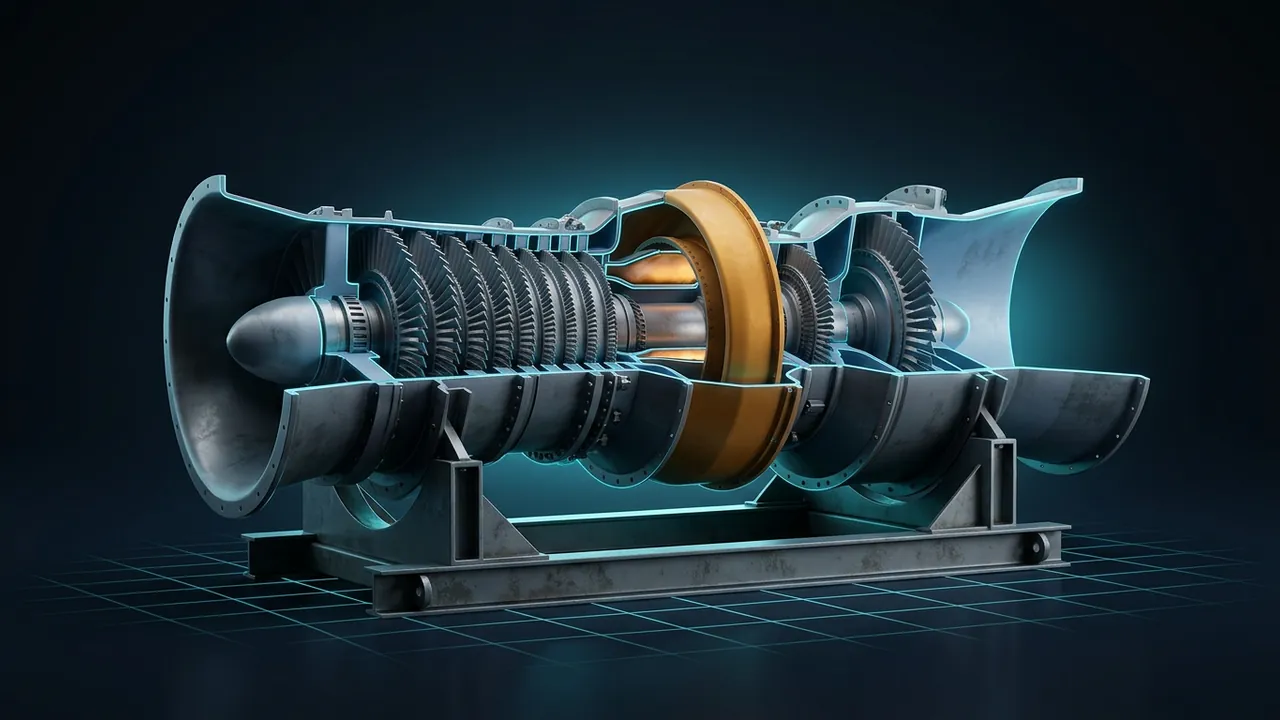
Picture the engine hanging under the wing of a wide-body airliner. Now bolt it to a concrete pad, point the exhaust up a stack instead of out the back, and hook a generator to it. That, more or less, is an aeroderivative gas turbine. It sounds like a stunt, but these machines run peaking plants, offshore platforms, pipeline stations and on-site power plants all over the world. What is an aeroderivative gas turbine, and why would anyone choose one?
An aeroderivative gas turbine is a power generation turbine built from the core of an aircraft jet engine, adapted to drive an electric generator or a compressor instead of pushing a plane. Because they come from flight engines, aeroderivatives are light, compact and quick: many can go from a cold start to full power in about five to ten minutes.
They are also efficient for their size, reaching around 40% in simple cycle. They cost more per kW than heavy industrial frame turbines and need high gas pressure, but their speed, small footprint and easy engine swaps make them a favorite for peaking, remote and on-site power.
How Does an Aeroderivative Gas Turbine Work?
An aeroderivative works the same way any gas turbine does, using the Brayton cycle: compress air, add fuel and burn it, then expand the hot gas through turbine blades. The difference is in where the hardware came from and how it is arranged.
- Air enters through a filter house that removes dust and moisture.
- A multi-stage compressor, often with two spools taken from the jet engine, squeezes the air to a high pressure.
- Natural gas (or liquid fuel) burns in the combustor.
- The hot gas spins the high-pressure turbine, which drives the compressor. Together these parts are called the gas generator.
- The gas then passes through a power turbine connected to the generator. In a jet, that energy would become thrust. Here it becomes shaft power.
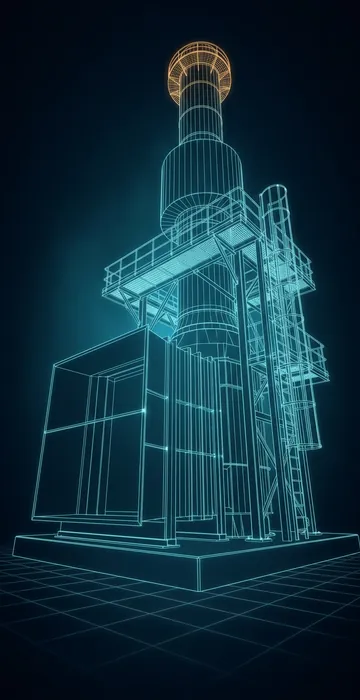
- Exhaust leaves through a stack, or through a heat recovery boiler if the plant uses the heat.
Many aeroderivative designs use a separate "free" power turbine on its own shaft. That lets the gas generator run at its best speed while the power turbine turns the generator at the speed needed for 60 Hz or 50 Hz power.
Which Jet Engines Became Power Turbines?
Several of the best-known industrial turbines trace directly back to airline and military engines:
- GE's LM2500 comes from the engine family used on large military transports and wide-body jets, and it also powers many naval ships.
- GE's LM6000 is based on the CF6-80C2, an engine that has flown on widely used wide-body airliners.
- Mitsubishi's FT8 descends from Pratt and Whitney's JT8D, the engine behind a generation of narrow-body jets.
- Siemens' industrial Trent line grew out of the Rolls-Royce Trent engines.
The jet heritage is a real advantage. The core designs have accumulated enormous operating hours in the air, and that experience flows into reliability, parts supply and repair know-how on the ground.
How Big and How Efficient Are Aeroderivatives?
Most aeroderivatives fall between about 20 MW and 100 MW per unit, with a few smaller and larger models. GE lists its LM6000 aeroderivative at about 57 MW in simple cycle, with efficiency up to 41% and a heat rate of roughly 8,328 to 8,595 Btu/kWh on a lower heating value (LHV) basis.
You can check the efficiency claim with one division. One kWh of electricity holds 3,412 Btu of energy. Efficiency equals 3,412 divided by the heat rate:
- 3,412 ÷ 8,328 = 0.41, or 41%
- 3,412 ÷ 8,595 = 0.397, or about 40%
That is high for a simple-cycle turbine of this size. Jet engines are built for high compressor pressure ratios and high firing temperatures because fuel efficiency matters on long flights, and that carries over to power generation. In combined heat and power or combined-cycle setups, total efficiency rises further.
Why Do Aeroderivatives Start So Fast?
They start fast because they are light. Aircraft engines are designed to save every pound, so the rotors and casings have far less metal than a heavy industrial turbine. Less metal means less thermal mass to warm up and less stress from rapid temperature changes.
The practical result is a machine that can go from standstill to full output in minutes, then shut down again without much penalty. GE says the LM6000 starts in about five minutes. That makes aeroderivatives natural peaking plants: they sit ready and run when demand spikes or another source drops out. It also makes them useful as fast backup on islanded systems, where a unit that trips needs to be replaced by a standby unit quickly.
Aeroderivative vs Industrial Frame Turbines
The other big family of gas turbines is the heavy-duty or "frame" turbine, designed from the start for power plants. Frames trade speed and lightness for size, durability and lower cost per kW.
| Feature | Aeroderivative | Industrial frame |
|---|---|---|
| Typical size | About 20 to 100+ MW | About 40 MW to over 500 MW |
| Simple-cycle efficiency | Higher, around 40% | Lower in simple cycle |
| Start to full load | Minutes | Tens of minutes or more |
| Weight and footprint | Light and compact | Heavy, larger foundations |
| Exhaust temperature | Lower | Higher, better for combined cycle |
| Maintenance approach | Swap the engine core and overhaul it off site | Major inspections done in place |
| Fuel gas pressure | High | Lower, though still above most engines |
| Cost per kW | Higher | Lower at large sizes |
For a big baseload combined-cycle plant, frames usually win. For fast response, tight sites, mobile units and modest sizes, aeroderivatives usually win.
How Are Aeroderivatives Maintained?
Aeroderivatives borrow their maintenance approach from aviation, where an airline cannot leave a plane on the ground for weeks. Instead of tearing the machine down in place, crews remove the gas generator as a module, slide in a spare or leased one, and send the original to a specialist shop for overhaul. Done well, that turns a job that could take weeks into an outage measured in days.
Between overhauls, technicians use borescopes, small cameras on flexible probes, to look inside the compressor and hot section without opening the casing. Maintenance intervals are usually set by a mix of operating hours and the number of starts, because every start and stop puts the hot parts through a heat-up and cool-down cycle. A peaking unit that starts every day can need attention sooner than a unit with the same hours that runs steadily.
The catch is that this work belongs to specialists. Remote sites typically sign long-term service agreements with the manufacturer or a qualified repair shop, which include spare engine access.
Where Are Aeroderivative Gas Turbines Used?
Aeroderivatives show up wherever weight, space or speed matters:
- Peaking plants that run a few hundred hours a year during demand spikes.
- Offshore oil and gas platforms, where every ton of deck weight is expensive.
- Naval and commercial ships.
- Natural gas pipeline compressor stations, driving compressors directly.
- Trailer-mounted mobile power units for emergencies and temporary sites.
- Industrial combined heat and power plants.
- Behind-the-meter plants for data centers and other large loads that need firm power quickly.
What Are the Downsides?
The main downsides are cost, fuel pressure and hot-weather output. Aeroderivatives cost more per kW than frames, and they need natural gas at high pressure, often several hundred psi. If your pipeline cannot deliver that, you will need a fuel gas compressor.
Like all gas turbines, they lose output as ambient temperature and elevation rise, because hot, thin air has less mass for the compressor to move. Some installations add inlet chilling or evaporative cooling to recover summer capacity.
Emissions control takes attention too. Units use either water or steam injection or dry low-emissions combustors to hold down nitrogen oxides (NOx), and many sites add selective catalytic reduction. Water injection means the site needs a supply of treated water.
Aeroderivatives vs Gas Engines
For on-site plants in the 5 to 50 MW range, the real competition is often a bank of reciprocating engines. Engines tend to be more efficient at part load, less sensitive to heat, and happier with low gas pressure. Aeros win on footprint and number of machines to maintain. If you are weighing both, our guide on how a natural gas generator engine makes power covers the other side of the trade.
Jet Engines That Never Leave the Ground
An aeroderivative gas turbine is a jet engine core repurposed to spin a generator. It brings aviation's strengths to the ground: light weight, compact size, strong simple-cycle efficiency and starts measured in minutes, plus the ability to swap an engine core instead of overhauling it in place.
Put an aeroderivative on the shortlist when a project needs tens of megawatts quickly, on a tight footprint, with fast response. Before you commit, confirm your gas pressure, check output at your hottest design day, and compare total lifetime cost against engines and frame turbines on the same assumptions.