How Are Data Centers Financed? – Leases and Project Finance
Nobody pays for a billion-dollar data center out of a checking account. Even the richest tech companies think hard about which projects to fund themselves and which to lease from someone else. Developers, meanwhile, often start with a parcel, a power study and not much else, then assemble the money one milestone at a time. If you work anywhere near these projects, the financing shapes the schedule more than most people realize. How are data centers financed, from raw land to a fully leased campus?
Most data center financing combines owner equity with large amounts of debt, and the thing that makes the debt possible is a long-term lease with a creditworthy tenant. Big cloud companies often pay for their own campuses from their balance sheets.
Leased facilities are usually built by developers who fund land and early work with equity, take a construction loan once a tenant signs, and refinance into long-term debt such as bank loans or bonds backed by the lease once the building is running. Very large campuses and on-site power plants may use project finance, where lenders rely on the project's own cash flow.
How Much Money Does a Data Center Take?
A lot, and the number keeps rising. Cushman & Wakefield's 2026 Data Center Development Cost Guide puts the average greenfield development cost at about $17.6 million per MW, up 21% per MW since the firm's previous report. At that average, a 100 MW campus runs about $1.76 billion before the tenant installs its servers, which are usually financed separately.
Across the market, the totals are enormous. A July 2026 research note from the Structured Finance Association cites Morgan Stanley's estimate of about $2.9 trillion of data center capital spending through 2028, with roughly $1.5 trillion needing outside funding. That gap is why banks, private credit funds, infrastructure investors and bond markets have all crowded into the sector.
Who Pays for Data Centers?
Several groups, often on the same project:
- Hyperscale cloud companies, which fund many of their own campuses from operating cash flow and corporate bonds.
- Developers and operators, who build and lease facilities to cloud companies and enterprises.
- Private equity and infrastructure funds, which supply equity and own many of the big developers.
- Real estate investment trusts (REITs), publicly traded companies that own and lease data centers.
- Banks and private credit lenders, which make construction and term loans.
- Bond investors, who buy securities backed by data center leases.
What Is a Data Center Lease and Why Does It Matter So Much?
The lease is the asset lenders are really lending against. In a large wholesale deal, a tenant commits to pay rent for a block of power capacity, usually priced in dollars per kilowatt per month, for many years. Big cloud leases often run 10 to 15 years or more, with built-in rent increases.
Lease structures vary. In a powered shell deal, the developer delivers the building and the power connection and the tenant fits out the inside. In a turnkey deal, the developer delivers everything up to the rack. Many large leases are triple net, meaning the tenant also pays electricity, taxes and insurance. A signed lease with a strong tenant turns a risky construction project into something that looks a lot like a long-term bond.
How Does the Money Change From Land to Stabilized Campus?
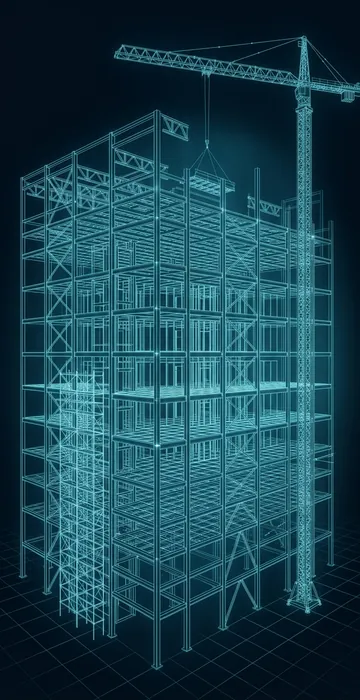
The financing evolves as risk falls. A typical leased project moves through these stages:
- Land and predevelopment. The developer uses its own equity to buy or option the land, study power and pursue zoning. This is the riskiest money, and it expects the highest return.
- Power and tenant. A utility commitment or on-site power plan, plus a signed lease, opens the door to construction lending. This is why powered land carries such a premium.
- Construction. A construction loan funds the build in draws as work is completed, often covering a majority of the cost, with the developer's equity going in first.
- Stabilization. Once the tenant is paying rent, the project has a track record.
- Permanent financing. The developer refinances into cheaper long-term debt, sells a stake to a long-term investor, or both.
One fast-growing permanent option is securitization: bundling data center leases into asset-backed securities (ABS) or commercial mortgage-backed securities (CMBS) sold to bond investors. The Structured Finance Association note says data center securitizations grew from $4 billion in 2020 to $61 billion in 2026.
How Do Hyperscalers Pay for Their Own Campuses?
Mostly with cash. The largest cloud companies generate enormous operating cash flow and can borrow cheaply in the corporate bond market, so they fund many owned campuses directly. Owning gives them control over design, power and timing, and avoids paying a developer's profit margin.
Even so, they lease a large share of their capacity. Leasing lets them add megawatts faster than they could build alone, keeps some spending off their own construction budgets and spreads risk across many developers. Most big cloud companies run both models at once: owned campuses for their core regions and leased capacity to fill gaps and move quickly.
Why Do Developers Prelease Before They Build?
Because lenders want the rent locked in before they fund construction. In tight markets, tenants sign leases on buildings that are still dirt. CBRE reported in September 2026 that more than 80% of capacity under construction in North America's primary markets was already preleased.
Preleasing helps everyone's financing. The developer borrows more on better terms, the tenant secures scarce capacity and the lender sees cash flow before the first concrete pour. The catch is that the developer now carries a firm delivery date, and missing it can mean penalties or even a lost tenant.
What Are Joint Ventures and Sale-Leasebacks?
They are two common ways to bring in outside capital after the hard work is done. In a joint venture, a developer sells part of a stabilized campus to a long-term investor such as a pension fund or infrastructure fund, freeing up equity for the next project while keeping a share of the income. In a sale-leaseback, a company that owns its data center sells the building to an investor and leases it back, turning a real estate asset into cash.
How Do Lenders Size a Data Center Loan?
Mostly by asking whether the rent comfortably covers the debt payments. The key ratio is debt service coverage (DSCR): annual net operating income divided by annual principal and interest. Here is an illustrative example. These inputs are round numbers for the math, not market quotes.
- Project: 100 MW leased, total cost $1.76 billion (using the Cushman & Wakefield average).
- Assumed rent: $130 per kW per month × 100,000 kW × 12 months = $156 million a year.
- Assumed net operating income after owner costs on a triple-net lease: $150 million.
- Assumed loan: 65% of cost = $1.144 billion at 6.5% interest, paid off over 20 years.
- Annual payment factor at 6.5% over 20 years ≈ 0.0908, so debt service ≈ $1.144 billion × 0.0908 ≈ $104 million.
- DSCR = $150 million ÷ $104 million ≈ 1.44.
Lenders set a minimum DSCR and a maximum loan-to-cost. If the rent is lower, the rate higher or the lease shorter than the loan, the loan shrinks and the developer has to put in more equity. That is why lease length and tenant credit move the whole deal.
What Is Project Finance for Data Centers?
Project finance puts a single project in its own company, a special purpose vehicle, and borrows against that project alone. Lenders can't reach the sponsor's other assets if things go wrong, which is called non-recourse debt. In exchange, they scrutinize everything: the lease, the construction contract, the power supply, insurance and the schedule.
It is common for on-site power plants built for data centers. The plant sits in its own company and sells power to the data center under a long-term agreement, and lenders look at that contract the way real estate lenders look at a lease. Some developers use energy-as-a-service deals, where a third party owns and runs the plant, to keep that capital off their own books.
What Risks Worry Data Center Lenders?
The same handful come up again and again:
- Power delays. A finished building without energized power earns no rent.
- Tenant concentration. One tenant leasing an entire campus makes its credit the whole story.
- Lease cancellation. In early 2025, analysts at TD Cowen reported that Microsoft had let some data center lease agreements lapse, a reminder that commitments short of signed leases can disappear.
- Cost overruns from equipment shortages and construction inflation.
- Technology change. A building designed for one generation of rack density may need costly upgrades for the next.
Nothing here is investment advice. Every deal is different, and the details belong with experienced counsel and financial advisers.
Data Center Financing Follows the Lease and the Power
Data center financing follows the risk down. Equity takes the early, risky steps: land, power studies and zoning. A signed lease from a strong tenant makes construction debt possible. Once the building is earning rent, developers refinance into long-term loans or lease-backed bonds, while very large campuses and their power plants often use project finance.
If you are bringing a site to market, the lesson is simple: lenders follow the lease, and tenants follow the power. Line up a credible power path and a realistic schedule first, and the money gets much easier to find.