Can Data Centers Connect Directly to Power Plants? – The FERC Fight
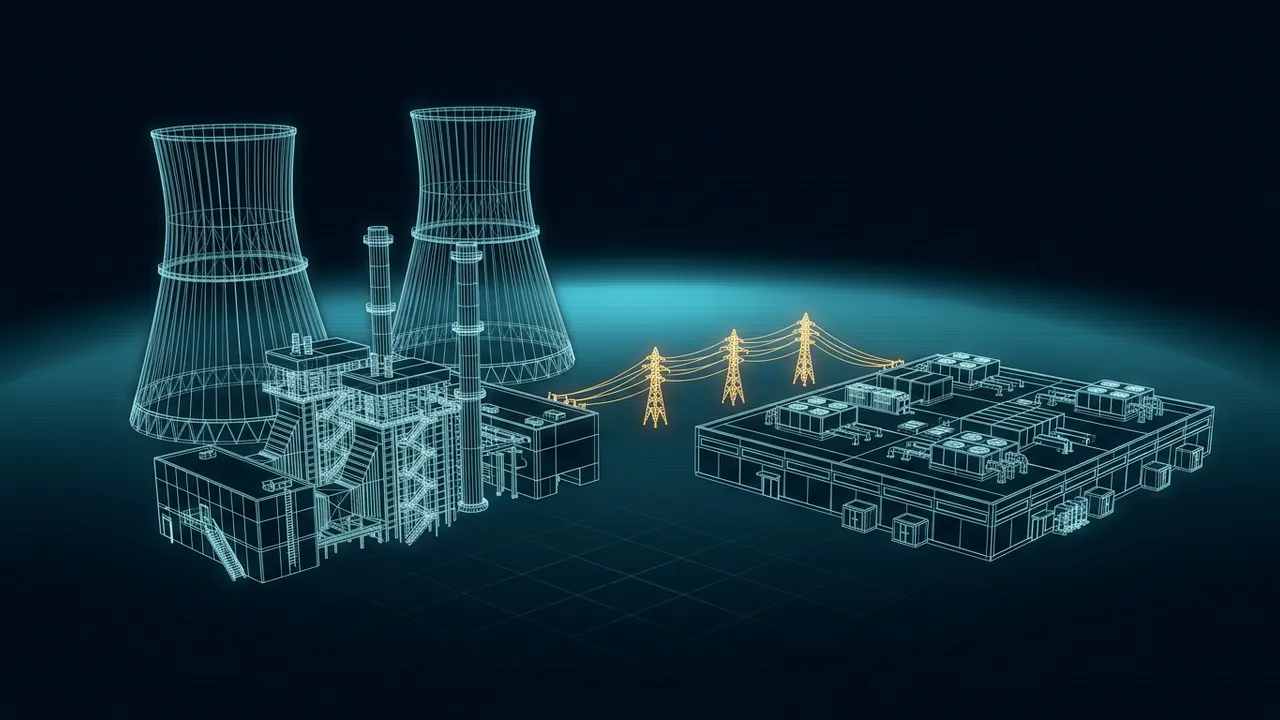
Picture a big nuclear or gas plant that already has land, cooling water, security and a fat connection to the transmission grid. Now picture a data center campus going up right next door, buying power straight from the plant. For a developer stuck in a years-long utility line, putting data centers at power plants sounds almost too good. Utilities, grid operators and regulators have spent the past two years arguing about exactly that. Can data centers really connect directly to power plants, and what is the fight at FERC about?
Yes, data centers can connect directly to power plants, but in most organized markets they still can't fully escape the grid, and that is the heart of the fight. A co-located data center sits next to a generating station and takes some or all of its power from it, sometimes behind the plant's meter.
Utilities and some regulators argue the data center still leans on the grid for backup and stability, so it should pay for transmission and other grid services. In December 2025, the Federal Energy Regulatory Commission (FERC) found PJM's rules for these arrangements unjust and unreasonable and ordered new transmission service options, so the rules are still being written.
What Does It Mean to Co-Locate a Data Center at a Power Plant?
Co-location means building a large load, like a data center, physically at or adjacent to a power plant and serving it, in whole or in part, from that plant's output. The details matter, because "co-located" covers a few different setups.
- Fully islanded: the plant and data center are completely disconnected from the grid. This is rare at large scale, because neither side has backup.
- Behind the meter, grid connected: the data center connects on the plant side of the meter. Power that serves the data center never shows up as grid sales, but the site still connects to the grid.
- Front of the meter: the data center is a regular grid customer that happens to sit next to the plant and buys its output under a contract. Power flows through the grid accounting, and the customer pays normal transmission charges.
Most of the controversy is about the middle option. That's where questions about who pays for what get murky.
Why Do Developers Want a Data Center Co-Located With a Power Plant?
Developers want co-location mainly for speed. A new large load request can take years to study and connect, especially where transmission is crowded. An existing plant already has a high-voltage interconnection, a switchyard and a site that has been permitted for heavy industrial use.
There are other draws too:
- Firm supply: nuclear plants in particular run around the clock, which matches a data center's steady load.
- Price certainty: a long contract with the plant owner can lock in pricing for years.
- Avoided charges: a behind-the-meter setup may avoid some transmission and distribution charges, which is exactly the part critics object to.
- Land and security: plant sites already have fencing, guards and buffer zones.
Plant owners like it too. A long contract with a creditworthy tech company is steadier income than selling into a volatile wholesale market.
Which Power Plants Make Sense for Co-Location?
The best candidates are large plants that run steadily and sit on strong transmission. Each type brings its own trade-offs:
- Nuclear plants: they run at high output almost all year and carry no fuel price swings, which suits a constant data center load. They also have the tightest security and licensing rules, so anything built nearby gets extra scrutiny.
- Gas combined cycle plants: efficient and dispatchable, with room to add units, but the data center takes on gas price exposure through its contract.
- Retired or retiring coal sites: the boilers may be gone, but the land, water rights and grid connection often remain. New generation or batteries can reuse that connection.
Planned outages are a practical issue for all of them. A nuclear unit goes offline for refueling every year or two, and gas turbines need major inspections. A co-located campus has to plan for those weeks, either through the grid, a second unit at the same site or its own backup.
Why Did Utilities and Regulators Push Back?

Utilities and some regulators pushed back because they believe co-located loads still use the grid while paying less for it, and because pulling large plants out of the market could raise prices for everyone else.
The argument has a few parts. A data center behind a plant's meter still needs the grid when the plant trips or goes down for refueling. It benefits from grid frequency and voltage support. If it doesn't pay transmission charges on that load, critics argue, other customers pick up the slack. And if a 1,000 MW plant that used to sell into the regional market now serves one customer, the remaining market has less supply, which can push capacity and energy prices up.
The other side has answers. Plant owners argue that a co-located load uses little or no transmission, that it can pay for the backup services it actually uses and that blocking these deals slows investment. Both sides have a point. Who is right depends on the specific wiring and contract, which is why regulators have spent so long on it.
What Happened With the Talen and Amazon Deal?
The Talen Energy and Amazon arrangement at the Susquehanna nuclear plant in Pennsylvania became the test case. Talen sold an adjacent data center campus to Amazon Web Services and sought to raise the amount of co-located load the plant could serve. In November 2024, FERC rejected an amended interconnection agreement that would have expanded that co-located load, after utilities in the region objected.
The companies kept working on it. World Nuclear News reported in June 2025 that a new agreement would supply 1,920 MW from Susquehanna to Amazon through 2042, building on the earlier 960 MW campus sale. The case showed that big co-location deals can still happen, but the structure has to satisfy regulators.
What Did FERC Decide About Co-Location in PJM?
In December 2025, FERC ruled that PJM Interconnection's existing tariff did not adequately address co-located large loads. According to a summary by Jones Day, FERC found the rules unjust and unreasonable and ordered PJM to create new transmission service options, called Firm and Non-Firm Contract Demand service, plus an interim non-firm service, with a compliance filing due in 60 days.
In plain English, FERC didn't ban co-location and didn't give it a free pass. It told PJM to offer co-located customers a defined way to buy the transmission service they actually need. A customer willing to be cut off when the grid is stressed could pay less for non-firm service. One that wants guaranteed backup would pay for firm service.
The decision applies to PJM, the largest US grid operator, covering all or parts of 13 states and Washington, D.C. Other regions and states are working through their own versions. Texas, for example, added a review step for some co-location arrangements in Senate Bill 6.
How Does Non-Firm Service Connect to Flexibility?
Non-firm transmission service only works for customers that can actually reduce their grid draw when asked. That ties co-location directly to data center demand response. A data center that can ride on backup generation or batteries, or shift its computing load during grid emergencies, can take cheaper non-firm service. One that can't must pay for firm service, or accept the risk of being curtailed anyway.
A simple example shows why the choice matters. Say a 500 MW co-located campus can cut its grid draw to zero during emergencies by running on on-site backup for a few hours. It might qualify for non-firm service on most of its load. A campus that can only drop 100 MW would need firm service on the other 400 MW. The difference in charges could be large, though the actual rates depend on PJM's compliance filings.
What Should Developers Watch Next?
Developers considering a data center at a power plant should watch three things closely:
- PJM's compliance filings and FERC's response, which will set actual rates and terms for firm and non-firm service.
- State actions, including utility commission rules and laws like Texas SB 6 that add their own review steps.
- Appeals and rehearing requests, since major FERC orders are often challenged in court.
This is complex regulatory ground, so work with experienced energy counsel and talk to the plant owner, the transmission owner and the grid operator early.
A Data Center Co-Located With a Power Plant Still Needs the Grid
Can data centers connect directly to power plants? They can, and some already do. What they can't easily do in a market like PJM is take the grid's backup and stability for free. That's what the FERC fight has been about from the start.
The December 2025 order points toward a middle path: co-location with clear transmission service choices, priced by how much grid support the customer really needs. Flexibility becomes the currency. The more a co-located data center can drop off the grid when asked, the less it should pay.
That makes the first homework on any co-location deal an honest flexibility number: how many MW can the campus shed, for how long, on what notice? Price both firm and non-firm service around that number, and put the regulatory review on the project schedule as a real task with a real duration.