Firm Gas Supply – How Power Plants Make Sure the Fuel Shows Up
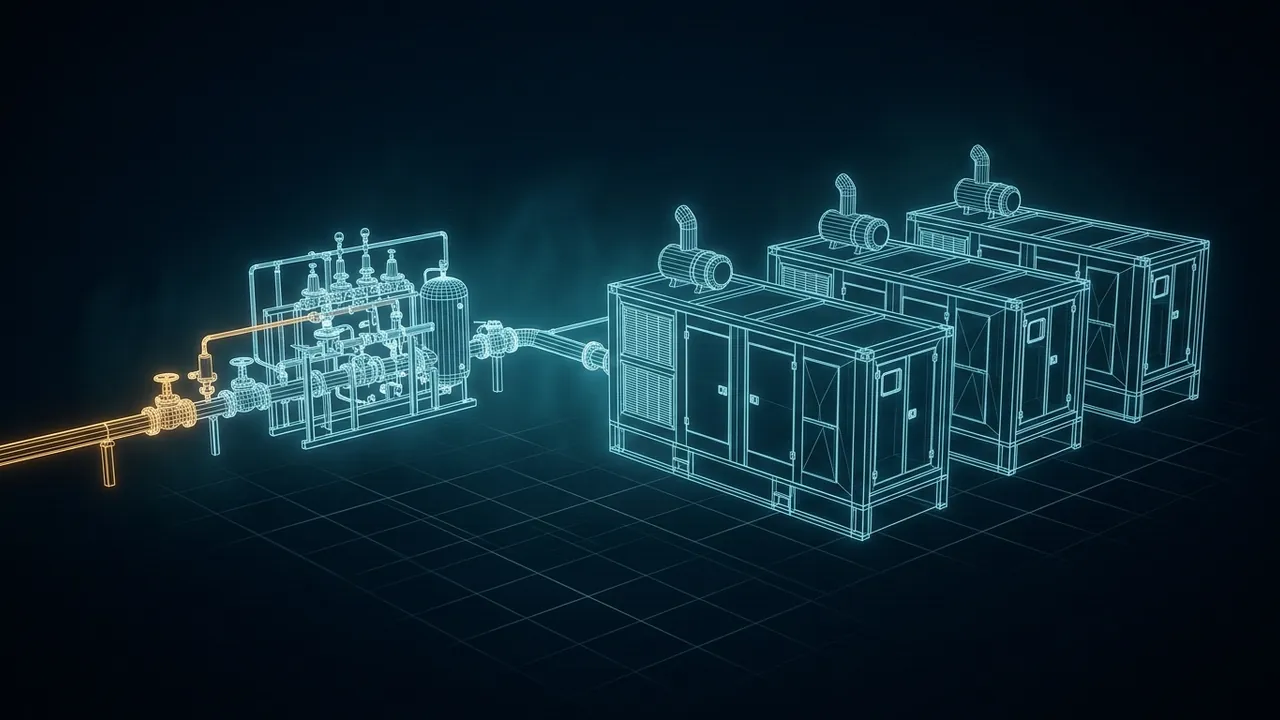
A gas-fired power plant can have the best engines money can buy and still go dark on the coldest night of the year. It happens when the fuel stops showing up. The equipment is only half the plan. The other half is the paperwork, the pipe and the people who make sure gas arrives every hour of every day. What does firm gas supply mean, and how do plant owners make sure the fuel shows up when it matters most?
Firm gas supply means a plant has contracted rights to both the gas itself and the pipeline space to move it, on terms where neither can be cut off except in rare emergencies. The key piece is firm transportation, a pipeline service the shipper pays for whether it uses the capacity or not, in exchange for top priority when the pipe is full. Interruptible service is cheaper, but it is the first to be curtailed when demand spikes, which is exactly when a power plant needs gas most. Careful owners then add backup layers, like on-site fuel storage, dual-fuel engines or a second pipeline, because no single contract makes a plant bulletproof.
What Is the Difference Between Firm and Interruptible Gas Service?
The difference is who gets cut first. On a gas pipeline, every shipper holds a certain kind of service, and when the system gets tight the pipeline works down a priority list. Firm customers sit at the top. Interruptible customers fill in whatever space is left and can be told to stop with little notice.
The Interstate Natural Gas Association of America (INGAA) describes firm transportation as service delivered without interruption except in extraordinary events, and its pipeline service primer reports that pipelines delivered 99.79% of their firm commitments. That record is why firm service costs more. A shipper pays a monthly reservation charge for a set amount of daily capacity, measured in dekatherms (Dth) or million British thermal units (MMBtu) per day, whether it flows a molecule or not.
Interruptible service skips the reservation charge. You pay for what you move, when there happens to be room. That works fine for a customer that can switch fuels or shut down. It is a gamble for a plant that has promised power to someone else.
Supply Versus Transport
People often blur two separate things. Gas supply is the commodity, bought from a producer or marketer. Transportation is the pipeline capacity to carry it. You can buy firm gas from a marketer and still lose it if your pipeline capacity is interruptible, and the reverse is just as true. A real firm gas supply plan locks down both.
How Much Gas Does a Plant Need to Firm Up?
Start with the math, because every contract is sized from it. Say you have a 50 MW plant running at full output with a heat rate of 9,000 Btu per kilowatt-hour (Btu/kWh).
- Electric output: 50 MW = 50,000 kW.
- Fuel per hour: 50,000 kW × 9,000 Btu/kWh = 450,000,000 Btu, or 450 MMBtu per hour.
- Fuel per day: 450 MMBtu × 24 hours = 10,800 MMBtu per day.
- In volume, at about 1,037 Btu per cubic foot: 10,800 ÷ 1.037 ≈ 10,400 thousand cubic feet (Mcf) per day, or roughly 10.4 million cubic feet per day (MMcf/d).
That 10,800 MMBtu per day becomes the maximum daily quantity, or MDQ, in the transport and supply contracts. Most owners add a little headroom for hot days, when engines and turbines lose output and heat rate climbs. Some also contract for hourly flexibility, because a plant that ramps hard in the morning pulls gas faster than a flat 1/24th of the daily number.
How Do Gas Nominations Work?
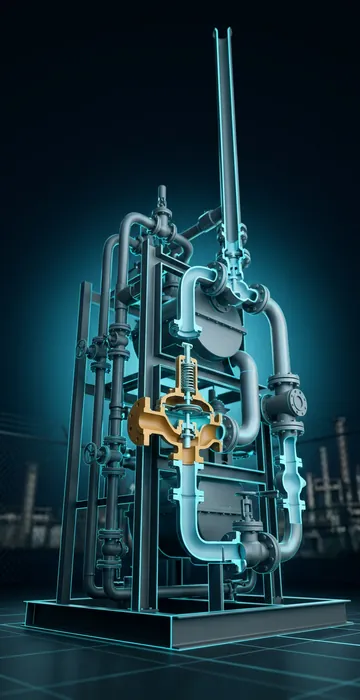
A nomination is the shipper's formal request telling the pipeline how much gas to move, from where to where, on a given gas day. In the United States the standard gas day runs from 9 a.m. to 9 a.m. Central time, and pipelines accept nominations in several scheduled cycles, starting the day before gas flows and continuing with intraday updates.
Here is the catch for power plants. Electricity markets often settle the next day's dispatch on a different clock than the gas market. A plant can learn it will run hard tomorrow after the cheapest, easiest nomination window has closed. Firm shippers get priority in every cycle, so a late nomination on firm capacity usually still flows. A late nomination on interruptible capacity may not.
Pipelines also enforce balance. If you take much more or much less gas than you nominated, you can face imbalance charges. During stressed conditions, a pipeline can issue an operational flow order (OFO) that tightens those tolerances and stiffens the penalties. Anyone running a plant learns to respect OFO season, because the penalties can wipe out a month of margin.
Why Firm Gas Supply Still Fails Sometimes
Firm contracts give you priority on the pipe. They cannot make gas appear that never left the wellhead. That was the hard lesson of Winter Storm Uri in February 2021, when extreme cold froze wellheads and gathering lines across Texas, Oklahoma and neighboring states. Production dropped sharply right as heating demand soared, and the joint FERC and NERC review afterward pointed to gas supply problems as a major contributor to generator outages.
Out on a lease in a hard freeze, water in the gas line can turn to ice and plug things up, and remote equipment without power or heat tracing just stops. Those are called freeze-offs, and no contract clause fixes them. So when someone says a plant has firm gas, the follow-up question should be: firm all the way back to where?
Keep the limits straight: firm transport protects you from other shippers. It does not protect you from weather at the wellhead, a compressor station losing power or a pipeline rupture upstream.
What Backup Layers Do Plants Add?
Smart owners treat firm transport as the floor, not the ceiling. The usual backup layers look like this:
- Dual-fuel capability: engines or turbines that can switch to diesel or another liquid fuel, with several days of storage on site.
- Two pipeline connections: interconnects to two different pipelines, ideally fed from different supply basins, so one outage does not take out both.
- On-site or nearby storage: a contract for gas storage service, or for smaller sites, trucked LNG or CNG held in reserve.
- Diverse supply: gas bought from several producers or receipt points instead of one.
- Flexible load: for some operations, the ability to shed load on purpose when gas gets scarce or expensive.
Each layer costs money, and nobody buys all of them. A small bitcoin mining site on a single lease might accept interruptions as part of the deal. A data center promising high uptime to tenants cannot, and its fuel plan usually looks a lot more like a utility's.
How Does the Gas Actually Get to a New Plant Site?
Firm capacity on a big interstate line does nothing if the plant is twenty miles away. Most new sites need a dedicated connection: a tap on the transmission line, a meter and regulator station, and a pipeline lateral running to the plant fence. Who pays for that lateral, who owns it and whether the pipeline offers firm service on it are some of the first questions to settle, because building one can take longer than buying the generators.
Pressure matters too. Turbines in particular need gas delivered at a fairly high, steady pressure. If the pipeline delivers at lower pressure during peak demand, the plant may need its own fuel gas compressors, and those compressors need their own power and redundancy. Every fix upstream adds another piece of equipment that has to work on the worst day.
What Goes Into a Firm Gas Contract?
The terms that matter most tend to be the same across deals, even when the paperwork runs to a hundred pages. A typical gas supply agreement and its matching transport contracts spell out:
| Term | What it covers | Why it matters for firmness |
|---|---|---|
| Maximum daily quantity | Most gas the buyer can take per day | Sets the ceiling on what is protected |
| Delivery point | Where title and risk change hands | Gas delivered upstream of a bottleneck is not truly firm to you |
| Force majeure | Events that excuse non-delivery | Broad clauses can quietly turn firm into best effort |
| Price index | How the gas is priced (fixed or index) | Firm supply at a volatile index still exposes you to price spikes |
| Term and renewal | Length of the deal and rollover rights | Plants live decades; short contracts leave gaps |
Read the force majeure clause twice. I would argue it is the most important paragraph in the deal, because it defines what "firm" actually means when the weather turns. This is not legal advice, and anyone signing one of these should have experienced energy counsel review it.
Making Sure the Fuel Shows Up When It Counts
Firm gas supply is not one contract. It is firm commodity plus firm pipeline capacity, sized from honest math, nominated on time and backed by at least one way to keep running if the gas stops anyway. Interruptible service is fine for loads that can wait. For a plant that has promised power, it is a bet you lose on the worst possible day.
Start the gas conversation the same week you start the equipment conversation. Figure out your daily quantity, find out which pipelines can serve the site and whether they have firm capacity available, and ask hard questions about where the gas really comes from. The gas is often right there. Making sure it keeps coming is the real work.