What Is an Energy Park? – Power and Compute on One Campus
Industrial parks have been around for a century. Cities zone a big tract, run roads, water and power to it, and let factories move in. A newer idea flips that around for data centers: build the power plant first, or at least alongside, and put the computing load right next to it. The land, the substation and sometimes the fuel line are planned together from day one. What exactly is an energy park data center, and why are developers building them?
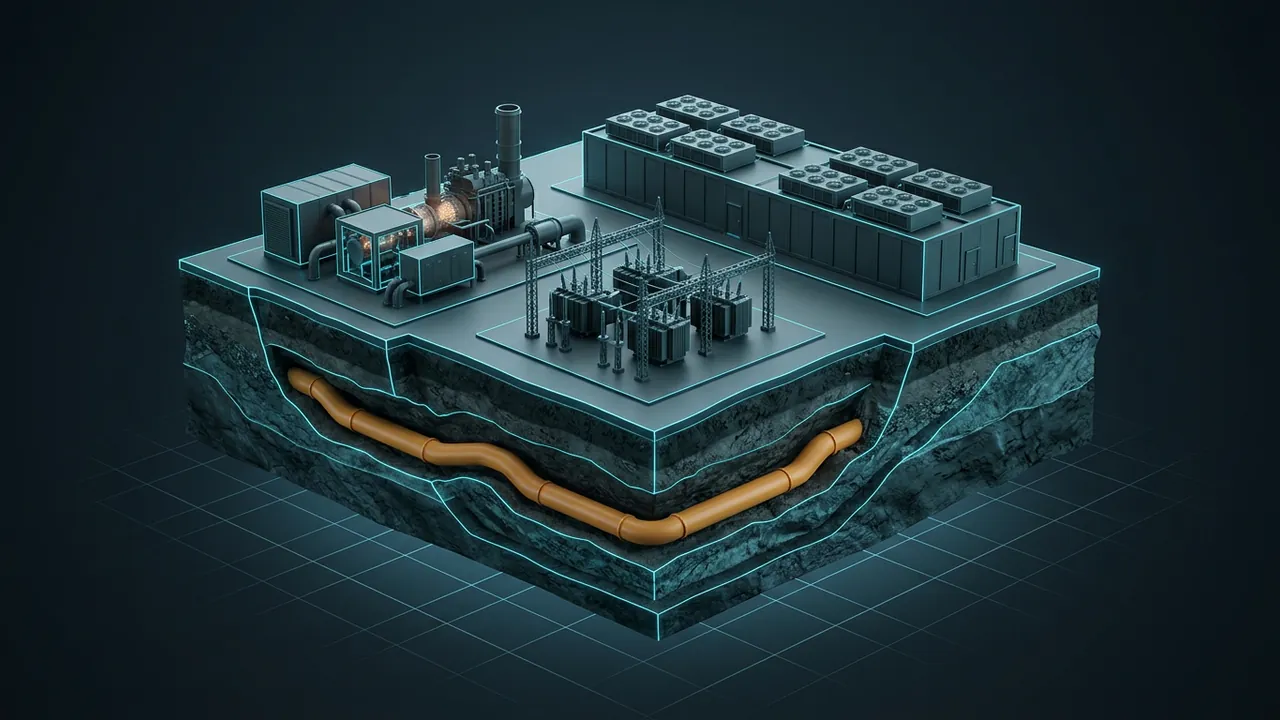
An energy park data center is a campus where large-scale power generation and storage are built on the same site as the data centers that use the power. The generation might be gas turbines or engines, solar, batteries or a mix, and the campus may run behind the utility meter, with a grid tie, or both.
Developers like the model because it can deliver power faster than waiting years for new transmission and a grid connection, and because the substation, land, water and permits are planned once for the whole site. The trade-offs are real: fuel supply risk, air permits, large land needs and a lot of capital tied to one location.
What Makes a Campus an Energy Park?
Three things, in my view. First, the generation is sized for the campus load, not for the wider grid. Second, power and compute share infrastructure: one high-voltage yard, shared roads, shared water systems and one master plan. Third, the developer plans the power and the data halls as one project, with phases that grow together.
That separates an energy park from a normal data center that happens to have backup generators. Backup units sit idle almost all year. In an energy park, the on-site plant is meant to run, either all the time or for a large share of the hours.
What Goes Inside an Energy Park Data Center?
The pieces vary, but a typical plan includes:
- Generation: gas turbines or reciprocating engines for firm output, often with solar or wind where land and resource allow.
- Battery storage: to handle fast load swings, cover the seconds after a unit trips, and shift solar output.
- A high-voltage substation and medium-voltage distribution tying all sources to all buildings.
- Fuel supply: a pipeline lateral and meter station, sometimes with a backup fuel.
- Water and cooling plant sized for both the power equipment and the data halls.
- Fiber routes, security, roads and laydown areas for construction.
- The data center buildings themselves, often phased in blocks of tens to hundreds of megawatts.
How Is It Different From Other Campus Types?
The lines blur, but the table below shows the main distinctions.
| Model | Main power source | Generation built for | Typical timing |
|---|---|---|---|
| Grid-served campus | Utility | The grid (generators are standby) | Waits on utility upgrades |
| Co-location at an existing plant | An existing power plant next door | Originally the grid | Fast if the plant and rules allow |
| Energy park | New on-site plant, often plus grid | The campus | Built in parallel with the halls |
| Fully off-grid campus | On-site plant only | The campus | No utility wait, but full self-reliance |
Why Are Developers Building Energy Parks?
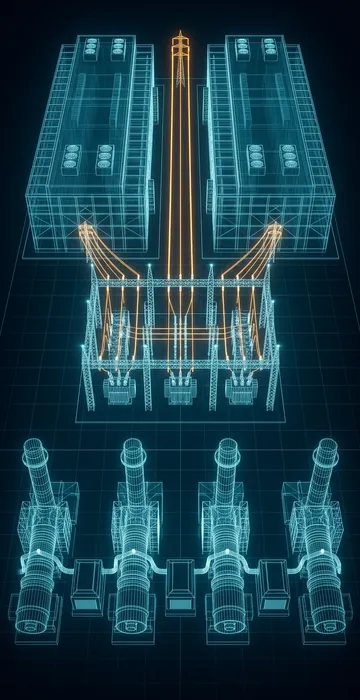
Mostly for speed to power. In many regions, a large new load can wait years for transmission upgrades and a grid connection. Building generation on site sidesteps part of that wait, and planning it alongside the data halls avoids the awkward situation of a finished building with nothing to plug into.
Grid operators have started to reward this pairing. The Southwest Power Pool (SPP), for example, approved a High Impact Large Load policy in September 2025 that offers a 90-day study and approval process for large loads paired with new or existing generation. The logic is simple: a load that brings its own power puts less strain on the grid than one that does not.
There are quieter reasons too. One master plan means one set of community meetings, one environmental review and one design team thinking about the whole site. That does not guarantee approval, but it is cleaner than stitching a power plant onto a campus later. Speed to power has changed site selection itself, a shift we cover in our piece on the power-first data center.
What Does a Real Energy Park Look Like?
Scale is the first surprise. In July 2026, the American Public Power Association reported on a U.S. Department of Energy data center partnership at its Paducah site in Kentucky. As described, the plan pairs a 1.8 gigawatt (GW) computing campus with about 2 GW of new natural gas generation and up to 2.6 GW of batteries, with total investment of more than $100 billion.
Notice the ratio. The generation and storage together far exceed the computing load. That is typical of serious energy park designs, because the site needs spare capacity for maintenance and unit trips, and batteries to smooth fast load changes.
How Much Fuel Does an Energy Park Need?
A lot, and the math shows why the gas line matters as much as the turbines. Illustrative example:
- Assume a 500 megawatt (MW) average facility load served entirely by gas generation.
- Daily energy: 500,000 kW × 24 hours = 12,000,000 kWh.
- At a heat rate of 8,500 British thermal units per kWh (Btu/kWh): 12,000,000 × 8,500 = 102 billion Btu, or 102,000 million Btu (MMBtu) per day.
- At about 1,036 Btu per cubic foot of gas: 102,000,000,000 ÷ 1,036 ≈ 98 million cubic feet per day (MMcf/d).
Nearly 100 MMcf/d is the output of a lot of wells and the capacity of a serious pipeline. It needs firm transportation, not leftover capacity, and the meter station, pressure and gas quality all have to be designed for it.
Who Owns the Power Plant?
It depends on the deal, and the answer shapes everything from financing to who answers the phone when a turbine trips. The common models are:
- Utility-owned: the local utility builds and runs the plant on or next to the campus and serves the data centers under a special tariff or contract.
- Independent power producer: a third party owns the plant and sells power to the campus under a long-term power purchase agreement.
- Developer or tenant-owned: the data center side owns the plant outright, often with an operations contractor.
Each model moves risk around. A utility brings operating experience and regulatory standing. A third party brings capital. Owning it yourself brings control, plus every forced outage, gas bill and overhaul.
How Do the Plant and the Data Halls Work Together Day to Day?
Like one machine with a shared control system. The plant controls watch campus load and dispatch generators to match it, keeping enough spare capacity online to survive the loss of the largest running unit. Batteries answer first when load jumps or a unit trips, buying seconds for the engines or turbines to respond.
If there is a grid tie, operators use it to cover planned maintenance and to soak up the mismatch while new phases come online. The data halls, in turn, need to tell the plant about big planned load changes before they happen.
What Are the Downsides?
Energy parks concentrate risk. A few to weigh:
- Fuel dependence: if the pipeline is interrupted, the whole campus feels it unless there is a grid tie, storage or backup fuel.
- Air permits and emissions: large gas plants need permits that can take a long time, and they draw community attention.
- Land and siting: generation, substations and buffers add hundreds of acres to a campus.
- Phasing mismatch: power and halls rarely finish on the same day, so someone carries idle capital.
- Equipment supply: turbines, transformers and switchgear all have long lead times.
- Ownership complexity: the power plant may be owned by a utility, an independent producer or the data center owner, and contracts must spell out who runs what.
An Energy Park Data Center Is a Power Plant With Tenants
An energy park data center puts generation, storage and computing on one campus, planned as one project. It answers the biggest constraint in the business right now, getting enough power fast enough, by building the power alongside the load. The cost is a heavier project: more land, more permits, firm fuel and a lot of capital in one place.
The order of diligence matters: check the fuel and the grid relationship before the buildings. Confirm the gas supply, the interconnection or non-export plan, and the permit path. If those hold up, the data halls are the easy part.