What Is a Microreactor? – Nuclear Power for Remote Sites
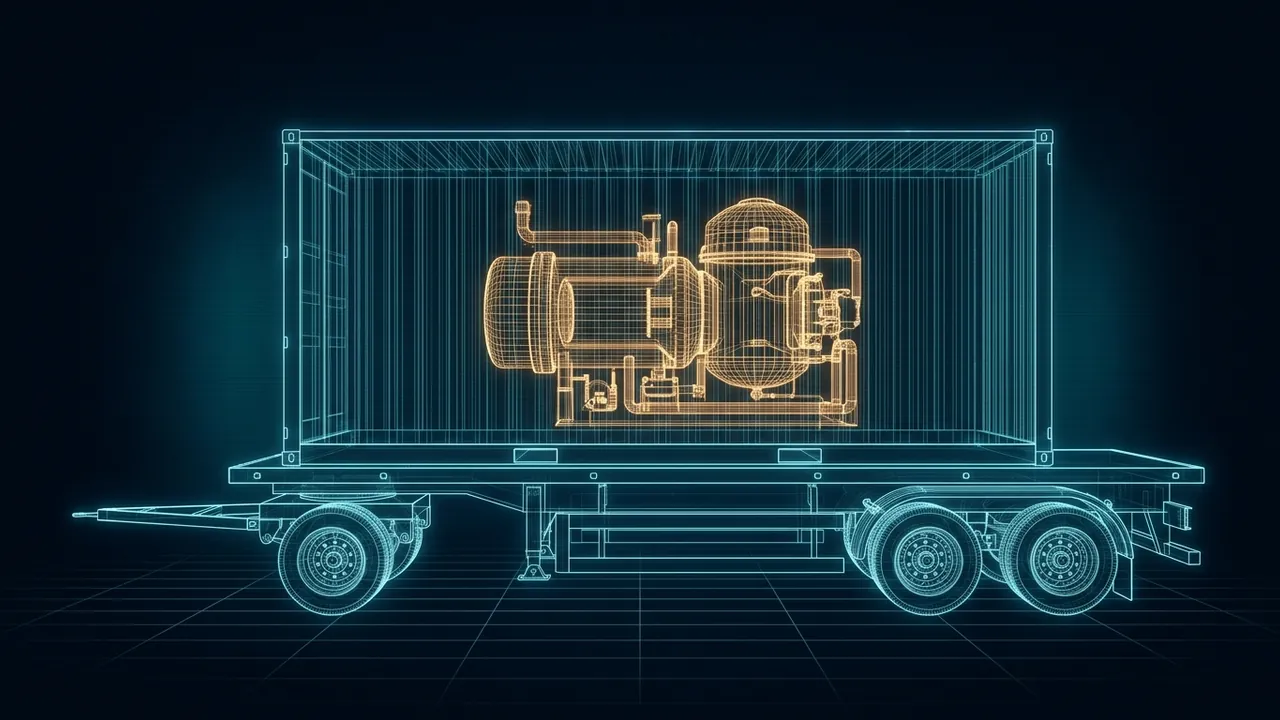
Out at the end of a long gravel road, power usually means diesel. A mine in northern Canada, a radar station, an island village or a remote compute site might burn millions of gallons a year, all of it trucked, barged or flown in. Fuel deliveries get canceled by weather, prices swing and generators need constant care. Now imagine a power plant that arrives on a truck, runs for years without refueling and burns nothing at all. What is a microreactor, and could it really power remote sites?
A microreactor is a very small nuclear reactor, roughly 1 to 20 megawatts of thermal output, built in a factory and designed to be shipped to a site by truck, rail, ship or air. Depending on the design, that heat produces a few megawatts of electricity, enough for a remote mine, military base, small town or modest data center.
Many designs aim to run for years, up to about a decade in some cases, without refueling, and to shut down and cool themselves safely without operator action. They aren't commercially available in the US yet, and their best early fit is where diesel is expensive and hard to deliver.
How Small Is a Microreactor?
A microreactor is small enough to fit, with its main systems, in one or a few shipping-container-sized modules. The US Department of Energy's microreactor explainer describes them as typically 1 to 20 megawatts thermal (MWth), factory built and transportable.
That thermal number matters. A reactor makes heat, and a power conversion system turns some of that heat into electricity. Conversion efficiency for small units is often around 30% to 40%. So:
- A 5 MWth microreactor at 30% conversion makes about 1.5 MWe
- A 15 MWth microreactor at 35% makes about 5.25 MWe
- A 20 MWth microreactor at 40% makes about 8 MWe
Always ask whether a quoted microreactor size is thermal (MWth) or electric (MWe). The difference is roughly a factor of three.
How Is a Microreactor Different From an SMR?
A microreactor is much smaller than a small modular reactor (SMR). The DOE describes SMRs as ranging from tens to hundreds of megawatts, while microreactors sit at the single-digit to low double-digit megawatt range.
The bigger difference is the business model. SMRs are mainly grid power plants, built on site from factory modules. Microreactors aim to be closer to a product: built and fueled in a factory, delivered nearly complete, run for years, then swapped out and taken back for refueling or disposal.
How Does a Microreactor Work?
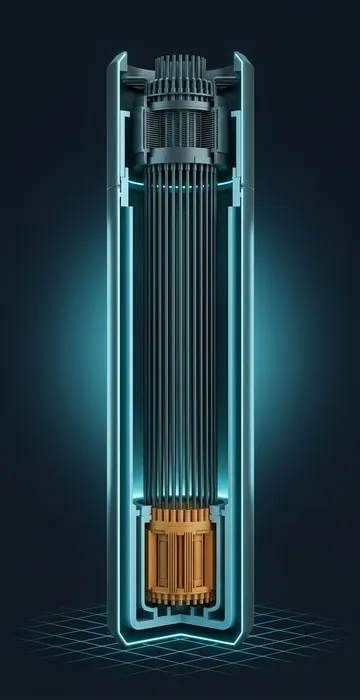
A microreactor works like any fission reactor: uranium atoms split, release heat, and that heat is carried away to make electricity or supply heat. What changes is the packaging.
- Coolant: designs use heat pipes, helium gas, liquid metal or water to move heat out of the core.
- Power conversion: the heat drives a turbine or engine cycle, often a closed gas cycle, to make electricity.
- Fuel: many designs use fuel enriched more than today's large reactors, which lets a small core run for years.
- Passive safety: designs aim to shut down and remove decay heat through natural physics, without pumps or operators.
Heat-pipe designs are a good example. Sealed metal tubes carry heat from the core to a heat exchanger by evaporating and condensing a working fluid inside, with no pumps. Fewer moving parts means fewer things to fix at a remote site.
Has This Been Done Before?
Small reactors have been done before, mostly by the military. The US Army ran a nuclear power program in the 1950s through the 1970s that built small reactors for remote bases, including one that powered a research station in Antarctica. Those plants proved small reactors could work in harsh places, but they were expensive and needed large crews.
Modern microreactor designs try to fix exactly those problems with factory production, passive safety and long refueling intervals. NASA and DOE also tested a small space reactor concept, called KRUSTY, in Nevada in 2018, showing heat-pipe technology at very small scale.
How Long Can a Microreactor Run Without Refueling?
The DOE says some microreactor designs could run up to about 10 years without refueling. The reason is the enormous energy density of nuclear fuel, and a little physics shows just how enormous.
- Output: 5 MWe at a 90% capacity factor for 10 years = 5 × 8,760 × 0.90 × 10 = 394,200 MWh of electricity
- At 30% conversion efficiency, the core must produce 394,200 ÷ 0.30 = about 1.31 million MWh of heat
- In megawatt-days: 1,314,000 ÷ 24 = about 54,750 MWd
- Fissioning one gram of uranium-235 releases roughly one megawatt-day of heat
- Uranium actually split: on the order of 55 to 60 kilograms
The core holds more fuel than that, since only part of it fissions before it's spent. Still, compare it with the diesel example below: about 28 million gallons over the same ten years. That gap is why a reactor small enough to ride on a truck can carry a site for a decade.
How Much Diesel Could a Microreactor Replace?
A single microreactor could replace millions of gallons of diesel a year at a remote site. Rough, assumed numbers make the case:
- Microreactor output: 5 MWe
- Assumed capacity factor: 90%
- Yearly energy: 5 × 8,760 × 0.90 = 39,420 MWh, or 39.4 million kWh
- Assumed diesel generator efficiency: 14 kWh per gallon
- Diesel avoided: 39,420,000 ÷ 14 = about 2.8 million gallons a year
- Tanker loads at 8,000 gallons each: about 350 a year, or roughly one a day
At a site where delivered diesel costs several dollars a gallon, that's a fuel bill well above $10 million a year, plus the logistics and spill risk of a truck every day. That's the economic case for microreactors in one picture.
Where Would Microreactors Make Sense?
Microreactors make the most sense where power is expensive, fuel delivery is hard and the load runs year-round.
- Remote mines and oil and gas operations far from the grid
- Military bases that want energy that doesn't depend on fuel convoys
- Arctic and island communities that rely on diesel
- Remote data centers and edge computing sites
- Disaster recovery, where a portable unit could restore power to critical facilities
- Industrial heat users that need steady high-temperature heat
For a remote compute site, the appeal is steady output with no fuel trucks. A 5 MWe unit could carry a modest data center around the clock, with batteries handling fast load changes.
What Stands in the Way?
Several real hurdles stand between microreactors and commercial use:
- Licensing: the Nuclear Regulatory Commission has to approve each design and site, and rules written for large plants don't always fit tiny ones.
- Cost: early units will be expensive per MWh, so they'll compete first against very expensive diesel, not against grid power.
- Fuel: many designs need high-assay low-enriched uranium, which has limited supply.
- Security: any nuclear site needs protection, which adds cost at remote, lightly staffed locations.
- Transport: shipping a fueled reactor raises its own regulatory questions.
- Public acceptance: local communities have to agree.
- End of life: the plan for spent fuel and returning units has to be clear from the start.
I'd put it this way: the technology looks workable. The question is whether factory production can bring costs down fast enough, and whether the licensing process can treat a 5 MW unit differently from a 1,000 MW plant without cutting corners on safety.
Microreactors vs Renewable Hybrids for Off-Grid Sites
Microreactors compete at remote sites with renewable hybrids: solar, wind, batteries and a backup generator. Those systems are available now, use familiar equipment and can cut diesel use a lot. Their weakness is weather, which means large batteries or a generator for long cloudy or calm stretches.
A microreactor's strength is steady output regardless of weather. Its weakness is that it isn't commercially available yet. For most remote projects today, a hybrid renewable off-grid system is the practical choice, with microreactors as an option to watch over a project's lifetime.
The Microreactor: A Big Promise in a Small Box
A microreactor is a truck-transportable nuclear power plant, usually 1 to 20 MW thermal, that aims to run for years without refueling. It's built for places where power is scarce and fuel is expensive: remote mines, bases, island towns and isolated compute sites.
The physics and engineering are well understood. What's left is licensing, cost, fuel and public trust. If those fall into place, microreactors could replace a lot of diesel. For a remote project being designed now, that suggests a simple plan: build with today's proven hybrid tools, but leave room on the pad and in the electrical design for a different firm source later. If a licensed microreactor shows up at a price that beats your diesel bill, you'll be ready to use it.