What Is Renewable Natural Gas? – RNG and Landfill Gas for Power
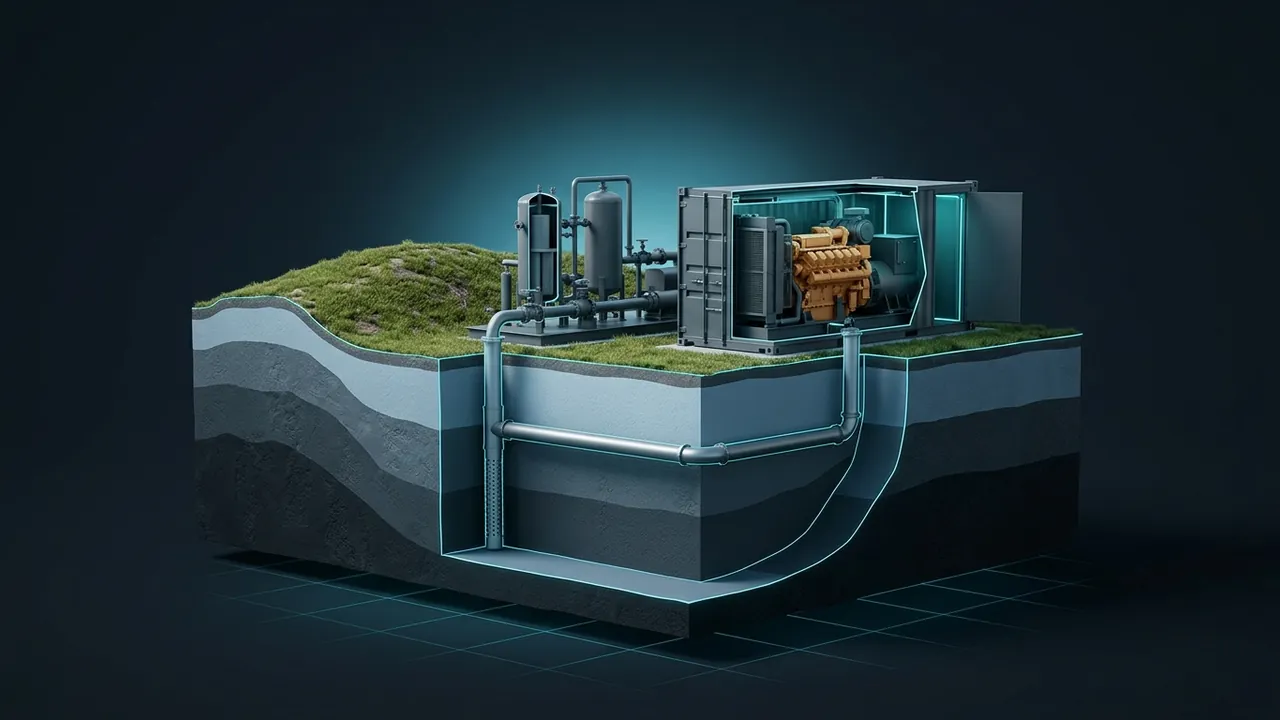
Every landfill is a slow-motion gas well. Buried food scraps, paper and yard waste break down without oxygen and give off a steady stream of methane and carbon dioxide for decades. Dairy lagoons and sewage plants do the same thing on a smaller scale. For years most of that gas was flared or simply escaped. Now it's being cleaned up, piped and sold as a fuel. What is renewable natural gas, and can it really power generators the way pipeline gas does?
Renewable natural gas (RNG) is methane made from decomposing organic waste, cleaned up until it is interchangeable with conventional pipeline natural gas. Its raw form, called biogas or landfill gas, is roughly half methane and half carbon dioxide, with traces of contaminants. Upgrading removes the CO2, moisture, sulfur and other impurities so the gas can be injected into a pipeline or burned in standard equipment.
Yes, it can fuel power generation: many landfills already run engines on raw landfill gas, and upgraded RNG can run any natural gas generator. The limits are supply, which is small compared with fossil gas, and cost, which is usually higher.
What Is the Difference Between Biogas and Renewable Natural Gas?
Biogas is the raw, wet, mixed gas that comes out of a landfill or digester. Renewable natural gas is that same gas after it's been upgraded to pipeline quality. The terms get blurred, but the distinction matters for equipment.
- Raw biogas or landfill gas: Typically about 45% to 65% methane, according to the U.S. Environmental Protection Agency (EPA), with most of the rest CO2. Its heating value is roughly half that of pipeline gas.
- Medium-Btu gas: Biogas that's been dried and filtered but still contains CO2. Specialized engines and boilers can burn it on site.
- RNG (high-Btu): Gas upgraded to well over 90% methane, often in the mid to high 90s, that meets a pipeline's quality specifications.
Where Does Renewable Natural Gas Come From?
Renewable natural gas comes from anywhere organic material breaks down without oxygen. The main sources in the United States are:
- Municipal solid waste landfills: The largest source. Gas is collected through a network of wells drilled into the waste and connected by header pipes under vacuum.
- Livestock farms: Covered lagoons or anaerobic digesters capture gas from dairy and swine manure.
- Wastewater treatment plants: Digesters that stabilize sewage sludge produce biogas as a byproduct.
- Food and organic waste digesters: Dedicated plants process food scraps, often alongside manure or sludge.
Landfill gas matters for climate reasons beyond energy. EPA's Landfill Methane Outreach Program notes that landfill gas is about 50% methane and that methane is at least 28 times more potent than CO2 as a greenhouse gas over a century. Capturing and burning it, even in a flare, is better than letting it escape. Using it for power is better still.
How Is Biogas Cleaned Up to Pipeline Quality?
Biogas is cleaned up in stages, each one targeting a different impurity. The exact train depends on the source, since landfill gas and dairy gas carry different contaminants.
- Moisture: Raw gas is saturated with water, which is removed by chilling and drying.
- Hydrogen sulfide (H2S): Corrosive and toxic. Removed with iron-based media, biological scrubbers or chemical systems.
- Siloxanes: Silicon compounds from consumer products, common in landfill and sewage gas. When burned, they leave hard silica deposits on engine parts. Activated carbon or similar media capture them.
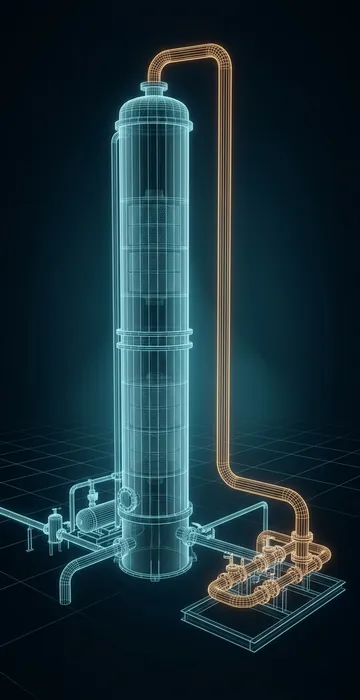
- Carbon dioxide: The big one. Removed by membranes, pressure swing adsorption, water wash or amine scrubbing.
- Nitrogen and oxygen: Landfill gas picks these up from air drawn into the collection wells. They're hard to remove and often limit whether a landfill can make pipeline-quality gas.
After upgrading, the gas is compressed, its heating value and composition are monitored continuously, and it passes through a meter into the pipeline. Pipelines set strict limits on contaminants and will shut in a supplier that sends off-spec gas.
Should Landfill Gas Be Burned on Site or Upgraded to RNG?
It depends on what pays better and what's nearby. Burning landfill gas directly in on-site engines is simpler and cheaper, while upgrading to RNG costs more but opens up higher-value markets. EPA's landfill methane program has reported that generating electricity is the most common type of landfill gas project in the country.
| Factor | On-site power from landfill gas | Upgrade to RNG |
|---|---|---|
| Gas treatment | Moisture, H2S and siloxane removal | Full cleanup including CO2, nitrogen and oxygen |
| Equipment | Engines tuned for low-Btu gas | Upgrading plant, compressors, pipeline interconnect |
| Main revenue | Electricity sales and renewable energy credits | Gas sales plus transportation fuel credits |
| Best fit | Smaller sites, nearby grid connection | Larger sites near a pipeline |
Engine makers build machines specifically for this job. Caterpillar's G3520C low energy gas generator, for example, is rated at 1,972 ekW with up to 40.1% electrical efficiency on landfill gas and biogas.
How Much Power Can a Landfill Produce?
A typical landfill gas power project produces a few megawatts, with large landfills reaching more. A hypothetical landfill shows the math.
- Gas collected: 1,000 standard cubic feet per minute (scfm) of landfill gas at 50% methane, so 500 scfm of methane.
- Energy content: methane's lower heating value is about 911 Btu per cubic foot. 500 × 911 ≈ 455,500 Btu per minute, or about 27.3 million British thermal units (MMBtu) per hour.
- Engine efficiency: 40.1% means a heat rate of 3,412 ÷ 0.401 ≈ 8,510 Btu/kWh.
- Power output: 27,300,000 ÷ 8,510 ≈ 3,200 kW, or about 3.2 MW.
That's enough for one or two large landfill gas gensets. Real output runs a bit lower after accounting for gas treatment, compressors and other plant loads. Gas flow also changes over a landfill's life, rising while waste is added and falling slowly for decades after it closes, so projects add or remove engines over time.
How Do RNG Credits Work?
RNG credits work by paying for the environmental value of the gas separately from the energy itself. The details are complicated, but the basic ideas are simple.
- Renewable Identification Numbers (RINs): Under the federal Renewable Fuel Standard, RNG used as vehicle fuel generates RINs that fuel suppliers must buy. Landfill and digester RNG qualifies in a high-value category. This is why much RNG ends up contracted to natural gas trucks and buses.
- State low carbon fuel programs: California and a few other states reward transportation fuels with low carbon intensity scores. RNG from manure can score below zero because it prevents methane that would otherwise escape.
- Renewable energy credits: Electricity made from landfill gas can generate renewable energy credits in many state programs.
- Contract path: Once RNG enters the pipeline, its molecules mix with fossil gas. Buyers claim it through contracts and tracking systems that follow the environmental attributes, not the physical molecules.
Credit prices swing with policy and markets, so project economics can change quickly. Anyone building a business around them should get advice from specialists and counsel.
Is Renewable Natural Gas Really Carbon-Neutral?
RNG is far lower-carbon than fossil gas over its life cycle, but "carbon-neutral" depends on the accounting. Burning RNG releases CO2, but that carbon was pulled from the air by plants within the last few years or decades, not locked away in ancient deposits. The bigger benefit is often the methane it keeps out of the air.
Two cautions keep the picture honest. Leaks at digesters, upgrading plants and pipelines erode the benefit, since methane is so potent. And supply is limited: all the RNG the country could realistically make would cover only a modest share of today's natural gas use. RNG is best treated as a valuable, scarce fuel, not a replacement for the whole gas system.
Can Renewable Natural Gas Power a Data Center?
Renewable natural gas can power a data center either directly or by contract. A facility next to a large landfill could burn its gas on site, though a single landfill rarely produces more than a few to a few tens of MW. More often, a buyer contracts for pipeline RNG produced elsewhere and burns ordinary gas in its own generators.
RNG has one big advantage over wind and solar: it's dispatchable. It can sit in the pipeline or in storage and burn whenever needed. That makes it a useful piece of a 24/7 carbon-free energy strategy, filling the hours when renewables fall short, as long as its higher price and limited supply are accounted for.
Renewable Natural Gas: A Real Fuel With Real Limits
So what is renewable natural gas? It's methane from waste, cleaned until it can flow through the same pipelines and burn in the same engines as fossil gas. Landfills, farms and sewage plants make it, and upgrading turns their messy raw gas into a fuel that can run power plants.
For power, the choices are clear. Burn landfill gas on site when the site is small and the grid is close; upgrade to RNG when a pipeline is near and fuel credits pay more. Either way, the methane it captures is a climate win in its own right.
A sensible first step for any project is a map: nearby landfills, digesters and pipeline interconnects within a reasonable distance. Then price both the gas and the credits, since the credits often decide the deal. Treat supply as scarce and contract early, because the best sources tend to be spoken for.