Will Small Modular Reactors Power Data Centers? – Timelines
Nuclear power has a strange new fan club. People who spend their days thinking about server racks and fiber routes are now reading about reactor licensing and uranium enrichment. The appeal is obvious: a data center wants steady, carbon-free power around the clock, and that's exactly what a reactor makes. The small modular reactor data center pitch promises that output in a package sized for an industrial campus instead of a whole region. But promises are cheap and reactors aren't. Will small modular reactors actually power data centers, and when?
Small modular reactors will likely power some data centers, but not at meaningful scale before the early 2030s, and most of the early output will flow through utilities and the grid rather than straight into a single campus. The first small modular reactor data center projects depend on reactors that are just now clearing key licensing steps: the NRC approved NuScale's 77 MWe module design in 2025 and issued TVA a construction permit for a 300 MWe BWRX-300 in 2026.
Tech companies have signed for future output, such as Google's deal with Kairos Power targeting a first unit by 2030. Cost, fuel supply and first-of-a-kind risk could push timelines further.
What Is a Small Modular Reactor?
A small modular reactor (SMR) is a nuclear reactor that's much smaller than a traditional plant and designed to be built largely in factories, then shipped and assembled on site. The US Department of Energy's Office of Nuclear Energy describes SMRs as ranging from tens to hundreds of megawatts, compared with about 1,000 MW or more for a large conventional reactor.
"Modular" carries two meanings. Components are factory-built modules, which should cut construction time and cost once production ramps up. And plants can add reactor modules over time, so capacity grows in steps.
Many SMRs also lean on passive safety, meaning they can cool the reactor after shutdown using natural circulation and gravity rather than pumps and operator action. That's one reason some designs propose smaller emergency planning zones than older plants.
Why Do Data Centers Want SMRs?
Data centers want SMRs because they need firm, round-the-clock power without carbon emissions, and few other sources check all three boxes. Solar and wind need storage and backup. Gas plants are firm but emit carbon dioxide. Geothermal works only in certain places. A reactor runs at full output for a year or more between refuelings.
Size is the other draw. A single SMR in the 75 to 300 MWe range lines up well with a large data center campus. That's easier to match than a 1,000 MW-plus reactor, which is more than most single sites can use.
Many tech companies have also set clean energy goals. Nuclear output helps them claim carbon-free supply every hour, not just on an annual average.
Which SMR Designs Are Closest to Reality?
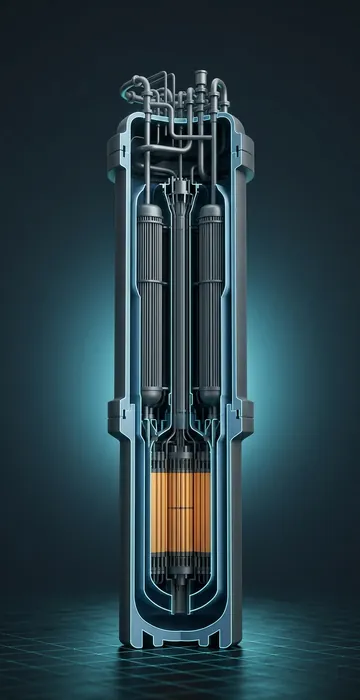
The designs closest to reality in the US are light-water SMRs, which use the same basic water-cooled technology as today's reactor fleet, just smaller. Advanced designs using other coolants are moving too, but they generally face more first-of-a-kind steps.
Light-Water SMRs
- NuScale US460: in 2025, the NRC granted standard design approval for NuScale's 77 MWe module, with up to six modules per plant, about 462 MWe total, as reported by POWER magazine.
- GE Hitachi BWRX-300: a 300 MWe boiling water reactor. World Nuclear News reported that the NRC issued the Tennessee Valley Authority a construction permit for a BWRX-300 at the Clinch River site in Tennessee in September 2026, after a 14-month review.
Advanced, Non-Light-Water SMRs
Advanced designs use coolants like molten fluoride salt, helium gas or liquid sodium. They can run hotter and more efficiently, and some can supply industrial heat. Kairos Power, which uses a fluoride salt-cooled design, signed an agreement with Google in October 2024 for up to 500 MW of reactors, with the first targeted by 2030 and more through 2035, according to Google's announcement.
Many advanced designs need high-assay low-enriched uranium (HALEU), which is enriched more than today's reactor fuel. US supply of HALEU is still limited, a real constraint on timelines.
What Is the Realistic Timeline for SMRs?
The realistic timeline for most SMRs runs into the early to mid 2030s for commercial operation, with the first units possibly arriving around 2030. DOE's SMR page says light-water SMRs could deploy in the late 2020s to early 2030s. History suggests treating the early end of any nuclear schedule with caution.
A new reactor has to clear several steps, and each takes time:
| Step | What happens | Typical duration (rough) |
|---|---|---|
| Design approval | NRC reviews the reactor design | Years, done once per design |
| Site work and permit application | Site studies, environmental review, application | 1 to 3 years |
| Construction permit | NRC review of the site-specific plant | About 1 to 2 years |
| Construction | Build and install modules | About 3 to 5 years for early units |
| Operating license and startup | Final approval, fuel load, testing | About 1 year or more |
Add those up and a project that starts its site work today is likely looking at power in the 2030s. Later units should go faster as designs repeat and supply chains mature. The first few are always the slowest.
How Many SMRs Does a Data Center Need?
A large data center campus might need one to several SMRs, depending on its load and how much redundancy it wants. Run a hypothetical campus through the numbers:
- Campus facility load: 400 MW
- Option A: six NuScale-style 77 MWe modules = 462 MWe
- Margin over load: 462 − 400 = 62 MW, enough to cover one module offline (462 − 77 = 385 MW) only with some load reduction or grid support
- Option B: two 300 MWe BWRX-300-style units = 600 MWe
- With one unit offline: 300 MW, well short of 400 MW
Reactors go offline for refueling and maintenance on a regular schedule, and they can trip unexpectedly. A campus that relies only on its own reactors needs extra units or a grid connection. Many small modules give finer redundancy steps. A few large units give better economics per MW but bigger holes when one is out.
Yearly output is impressive, though. One 300 MWe unit at an assumed 93% capacity factor makes 300 × 8,760 × 0.93 = about 2.44 million MWh a year, close to what a 280 MW data center uses running flat out all year.
What Does an SMR Site Need?
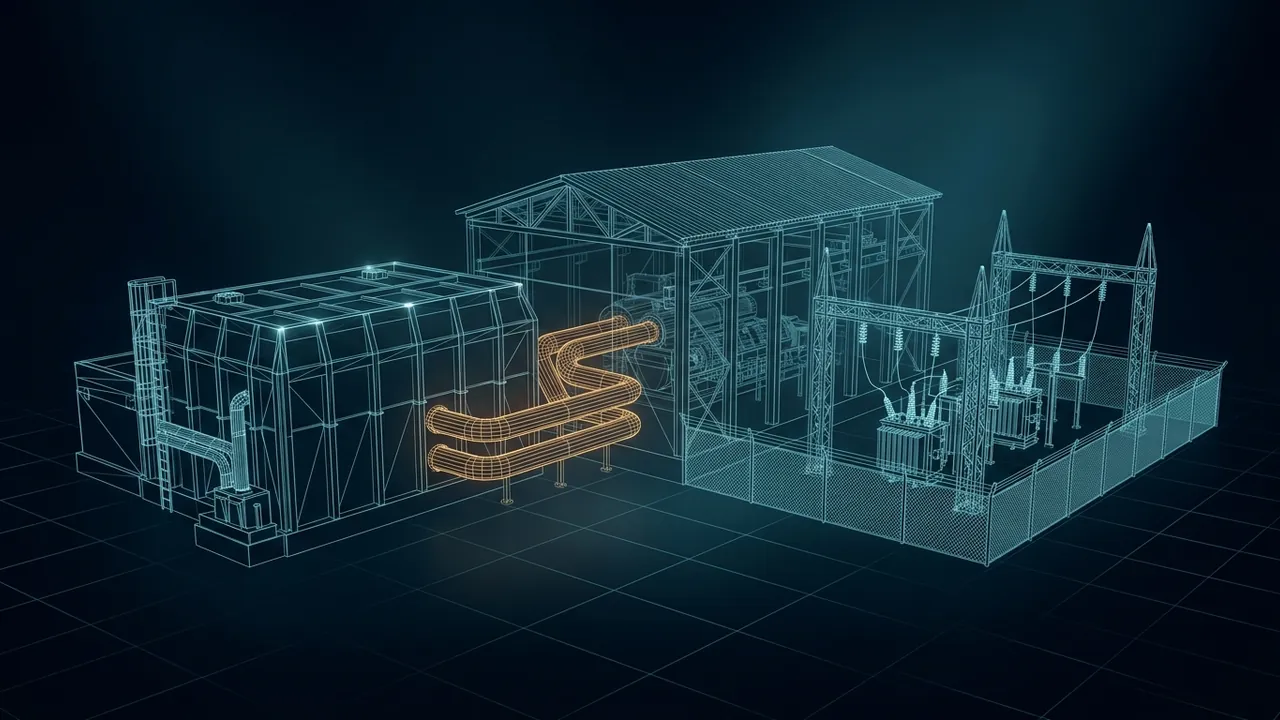
An SMR site needs more than a flat pad and a fence. Before a developer pencils in a reactor next to a data center, it helps to know what the site has to provide.
- Cooling: most SMRs make electricity with a steam turbine, so they need to reject heat through cooling towers, a river or lake, or air-cooled condensers, which cost more and cut output on hot days.
- Transmission: even a reactor serving one campus usually needs a grid tie for startup power, backup supply and selling surplus output.
- Geology and hazards: regulators review earthquakes, flooding and other natural hazards in detail.
- Security and emergency planning: nuclear sites have security perimeters and emergency plans, and the planning zone size depends on the design and NRC approval.
- Community support: local officials, first responders and neighbors all have a role, and early engagement matters.
Existing nuclear sites and retiring coal plants check many of these boxes already. They have transmission, cooling water, trained workers and a community used to large power plants. That's why so many early SMR proposals point to those locations rather than brand-new greenfield sites.
Will SMRs Connect to the Grid or Directly to Data Centers?
Most early SMRs will connect to the grid, with data centers buying their output through contracts. Utilities like TVA are leading the first builds, and they have the balance sheets, nuclear operating experience and regulatory relationships to do it.
Direct, behind-the-meter SMRs serving a single campus are possible later. They raise hard questions: who operates the reactor, who holds the NRC license, how the site handles outages, and whether regulators are comfortable with a reactor serving one private customer. The broader debate over plants serving data centers directly is covered in our article on nuclear power data centers.
My take: expect the first wave to look like utility-owned SMRs with long-term power contracts to tech companies. Developer-owned reactors behind a data center fence are a second-wave idea.
What Could Slow Small Modular Reactors Down?
Several things could slow SMRs down, and most aren't about the reactor physics:
- Cost: first-of-a-kind plants tend to cost more than projected. NuScale's planned first project with a Utah power agency was cancelled in 2023 after estimated costs rose.
- Fuel: advanced designs need HALEU, and US supply is still being built.
- Supply chain: reactor vessels, specialized forgings and nuclear-grade components have limited suppliers.
- Workforce: building and operating reactors needs specialized crafts and licensed operators.
- Licensing: the NRC has moved faster recently, but each new design and site still needs review.
- Local acceptance: communities may welcome jobs and tax base or push back on waste storage and safety.
What Should Data Center Developers Do Now?
Developers who want SMR power should plan for it as a later phase, not the first one. A sensible approach looks like this:
- Secure near-term power from the grid, gas or both.
- Pick sites that could host or connect to future nuclear, such as land near existing nuclear plants or retiring coal plants with transmission.
- Track which utilities in your region are pursuing SMRs and open talks about future supply.
- Structure contracts to switch or add nuclear supply when it's available.
- Budget realistically; early nuclear power is unlikely to be cheap.
Put the Small Modular Reactor Data Center in Phase Two
The small modular reactor data center is a real prospect. Designs are clearing NRC review, the first US construction permit for a BWRX-300 has been issued, and tech companies have signed agreements for future output. But for most projects, SMR power arrives in the 2030s, mostly through utilities and the grid.
If you need power in the next few years, SMRs won't get you there. If you're planning a campus that will grow for decades, they're worth building into the long-range plan, alongside a near-term power source you can count on today.