How Is Battery Storage Used at Data Centers? – Backup and Smoothing
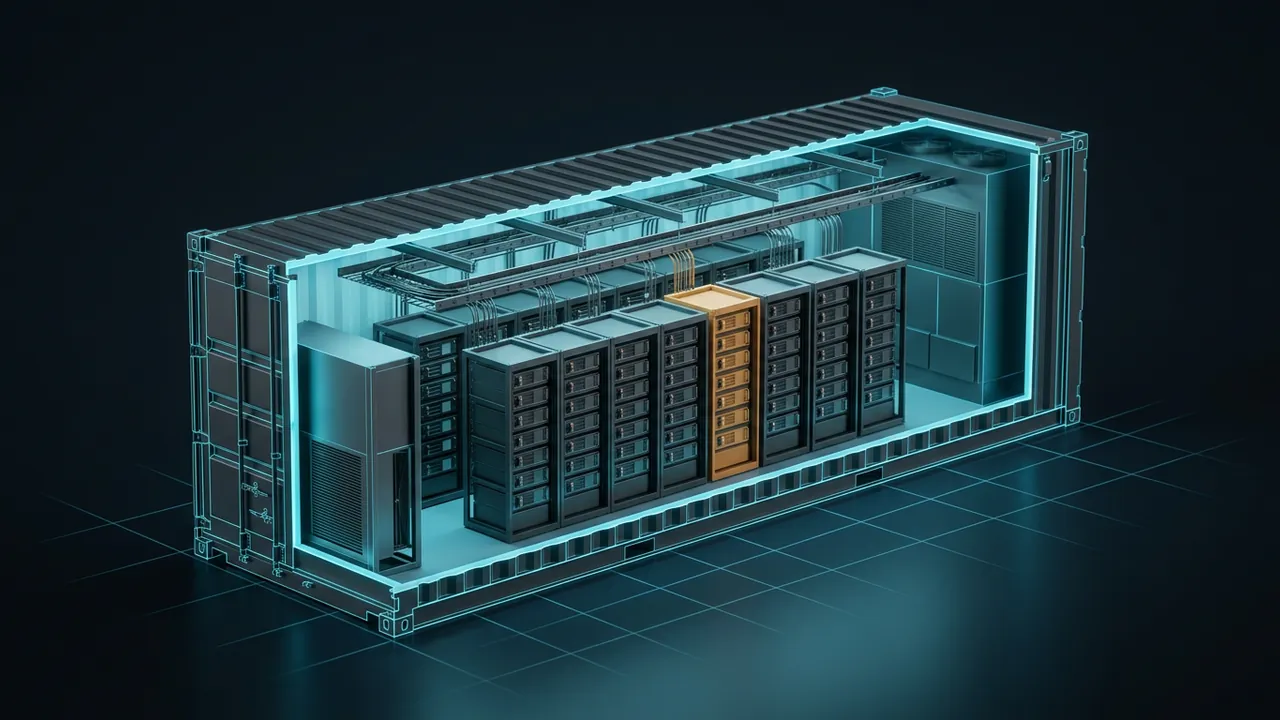
Data center batteries used to have one modest job: hold the servers up for a few minutes until the diesels started. That job hasn't gone away, but the batteries are getting bigger and busier. AI training clusters swing their power draw up and down in seconds, utilities are charging more for peak demand, and some campuses are adding battery yards the size of small power plants. How is battery storage used at data centers today, from backup to smoothing out those swings?
A battery storage data center setup usually does three jobs: uninterruptible power supply (UPS) batteries bridge the seconds to minutes before generators start, larger battery energy storage systems (BESS) shave peaks and provide longer backup, and fast-acting batteries smooth the sharp power swings of AI training loads. UPS batteries sit inside the building and are measured in minutes of runtime.
Grid-scale BESS units sit outside in containers and are measured in MW and MWh, often with one to four hours of energy. Smoothing is the newest role, driven by clusters of graphics processing units (GPUs) that can jump tens of megawatts in moments. Each job needs a different balance of power rating and energy capacity.
What Do UPS Batteries Do in a Data Center?
UPS batteries keep servers running during the gap between a utility outage and the moment backup generators take the load. Servers can't tolerate even a brief interruption, so the UPS carries them with no break at all.
That gap is short. Data center generators are typically designed to start and take load within seconds, often around 10 seconds. UPS batteries are usually sized for about 5 to 15 minutes at full load, which covers the generator start plus margin for a failed start and a retry.
The chemistry is shifting. Older UPS systems used valve-regulated lead-acid (VRLA) batteries. According to Vertiv's guide to lithium-ion UPS batteries, lithium-ion units last 8 to 10 years or more, two to three times longer than VRLA, take up less space, weigh less and recharge in under four hours.
Quick UPS Sizing Math
- Critical IT load: 10 MW
- Target runtime: 5 minutes
- Energy needed: 10 MW × (5 ÷ 60) hours = about 0.83 MWh
- Add margin for aging and inverter losses: plan for about 1 MWh
Notice the ratio. The UPS must deliver 10 MW, but only for minutes. It's a high-power, low-energy battery.
UPS systems also react to grid disturbances, not just full outages. NERC's January 2025 incident review described a July 2024 fault on a 230 kV line that caused about 1,500 MW of data center load to transfer to backup power at once. Each site did what it was designed to do, but the grid suddenly lost a power plant's worth of demand. That event is one reason grid planners now ask how data center UPS and protection settings respond to voltage dips.
What Is a BESS Used for at a Data Center?
A battery energy storage system (BESS) at a data center is used for jobs that last longer than a UPS can handle: peak shaving, demand response, longer backup and support for on-site generation. These systems usually sit in outdoor containers and connect at medium voltage.
- Peak shaving: discharge during the site's highest-demand intervals to cut utility demand charges.
- Demand response: reduce grid draw when the utility or grid operator calls for it, without shutting down servers.
- Extended backup: cover outages long enough to avoid starting diesel generators for short events.
- Generator support: carry sudden load steps so on-site gas engines can ramp up gradually.
- Energy shifting: store solar output or cheap off-peak power for later use.
Most data center BESS projects stack several of these. A battery that only waits for outages earns nothing most of the year, so owners look for daily jobs to help pay for it.
Why Do AI Data Centers Need Power Smoothing?
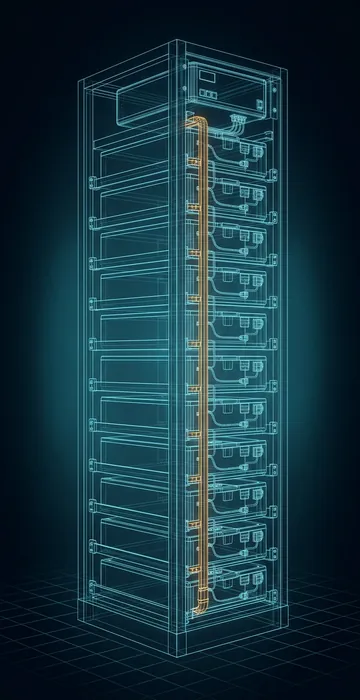
AI data centers need power smoothing because large training jobs make the whole cluster's power draw rise and fall together. Thousands of GPUs compute in sync, pause to exchange results, then compute again. That rhythm can swing a facility's load by a large share of its total in seconds.
Researchers at Microsoft, OpenAI and NVIDIA described this in 2025: synchronous training alternates between compute-heavy and communication-heavy phases, creating large power oscillations. They proposed a mix of fixes in software, in the GPUs themselves and in the facility, including energy storage.
Grid operators are paying attention. ERCOT's board materials from September 2026 describe a draft rule that would limit how fast large loads can vary their power, at 10 MW per 5 seconds. Whether or not that exact number sticks, the direction is clear: big loads will be expected to behave smoothly.
Smoothing Math: Power Matters More Than Energy
Consider a hypothetical training cluster:
- Facility load: 100 MW, swinging between 70 MW and 100 MW
- Swing size: 30 MW
- Battery role: discharge when the load jumps, charge when it drops, so the grid sees a steady draw near the average
- Battery power rating: at least 30 MW, with margin, say 40 MW
- Energy needed: small, because each swing lasts seconds; even 15 minutes at full output is 40 × 0.25 = 10 MWh
A smoothing battery looks a lot like a UPS: lots of power, modest energy. The difference is that it cycles constantly, so cycle life and thermal management matter more.
How Do Batteries Help On-Site Generators?
Batteries help on-site generators by absorbing the sudden load changes that engines and turbines handle poorly. A natural gas reciprocating engine can only accept a certain percentage of its rating in one step without the frequency sagging. A large, sudden jump in server load can trip it.
With a battery in the system, the battery picks up the step instantly and the engines ramp at their own pace. That lets the plant run fewer spinning units, which saves fuel and maintenance. It also helps when one generator trips, since the battery covers the gap while the others pick up the slack.
The same logic applies to slower sources. A fuel cell data center gets steady, efficient power from its fuel cells, but solid oxide fuel cells don't follow fast load changes well, so designs often pair them with batteries.
How Long Can a Data Center Run on Batteries?
A data center can run on batteries for as long as the stored energy lasts at its load, which is usually minutes for a UPS and one to four hours for a typical BESS. Long runtime is expensive.
- BESS: 50 MW / 200 MWh (a four-hour system)
- Data center load: 40 MW
- Usable energy at 90% depth of discharge: 200 × 0.9 = 180 MWh
- Runtime: 180 ÷ 40 = 4.5 hours
That covers most grid outages, which tend to be short. It doesn't cover a multi-day event. For that, data centers still rely on generators with fuel on site, and the battery acts as a buffer that reduces how often they start.
Can Batteries Replace Diesel Generators?
Batteries can replace diesel generators for short outages, but not yet for long ones at most sites. The economics and the physics both push against it. Covering 48 hours of a 40 MW load would take 1,920 MWh of usable storage, a battery that would sit idle almost all year.
What's changing is the mix. Some operators are adding batteries to cut generator runtime and testing hours, which reduces emissions and air permit pressure. Others pair batteries with cleaner on-site generation, using the battery for instant response and the generator for duration. I expect the near-term future to be batteries plus a fuel-based source, not batteries alone.
What Should You Watch for When Adding Battery Storage?
Adding battery storage at a data center brings new design and safety questions:
- Chemistry: lithium iron phosphate (LFP) is common for stationary storage because of its thermal stability.
- Fire codes: NFPA 855 sets spacing, detection and suppression rules, and local fire officials enforce them.
- Cycle life: smoothing and peak shaving add cycles, so warranties should match the planned duty.
- Controls: the battery, UPS, generators and utility connection have to coordinate, which is a software and protection job.
- Space: containerized BESS needs yard space and setbacks.
Battery Storage at a Data Center: Name the Job, Then Size the Battery
Battery storage at data centers has grown from a single job, UPS ride-through, to three: instant backup, longer-duration peak shaving and backup, and smoothing the fast power swings of AI training loads. Each needs a different balance of MW and MWh.
On a new site, write the jobs down before anyone requests a battery quote. Size the UPS for generator start, size any BESS for the peak shaving or backup duration you need, and check whether your load profile or your grid operator demands smoothing. Then make sure the controls tie it all together.