What Is Associated Gas? – Oil Wells and the Gas They Bring Up
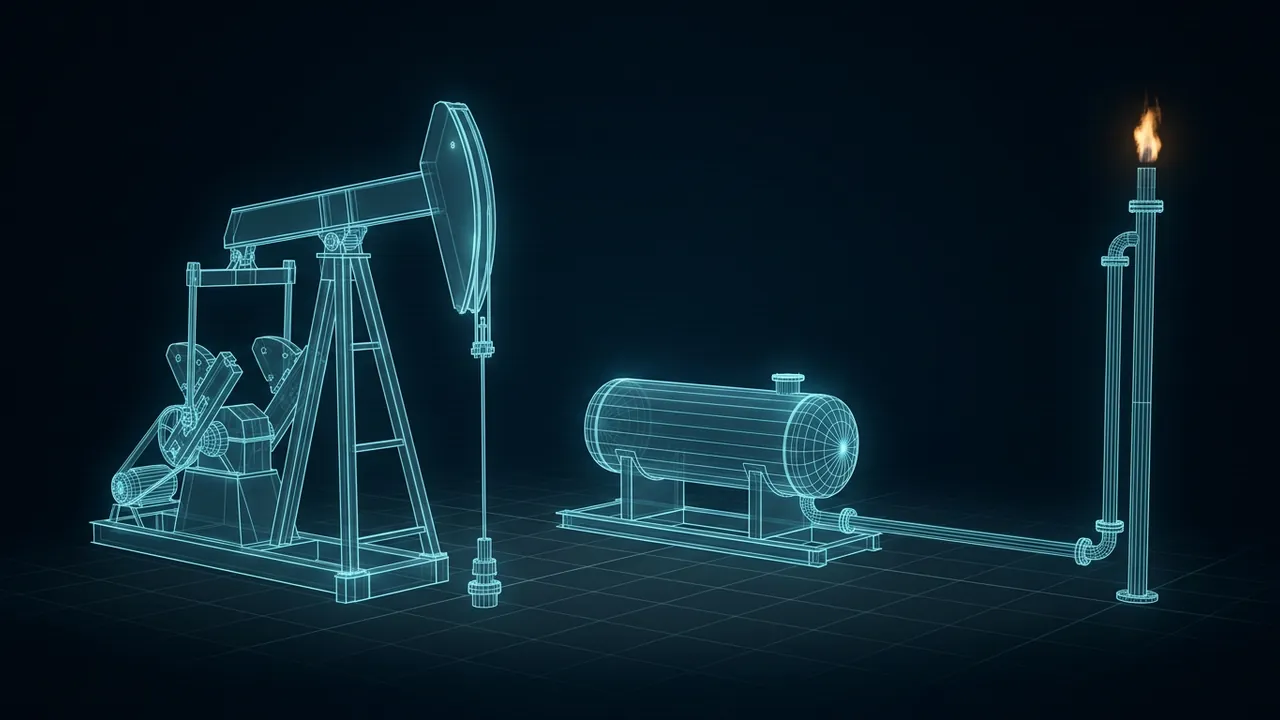
Ask a pumper what an oil well produces and you will get a funny look, then a list: oil, water, and gas. Lots of gas, some days. That gas did not come from a gas well. It rode up the tubing with the crude, and it has to go somewhere once it reaches the surface. That is associated gas, and it is behind most of the flaring you see from the highway in the Permian and the Bakken. So what exactly is associated gas, and why is it such a headache to handle?
Associated gas is natural gas produced by oil wells, either dissolved in the crude underground or sitting as a gas cap above it. When oil comes up and the pressure drops, the dissolved gas bubbles out, much like the fizz in a soda when you twist the cap. It is usually rich in ethane, propane and heavier hydrocarbons, so it carries more energy per cubic foot than typical pipeline gas. Because operators drill these wells for oil, the gas volume follows the oil, not the gas price. If a gathering line is not there or is full, that gas often ends up flared.
Where Does Associated Gas Come From?
It comes from the same rock as the oil. Deep underground, high pressure keeps a lot of gas dissolved in the crude. The U.S. Energy Information Administration's official definition of associated-dissolved gas covers both forms: gas that sits in a crude oil reservoir as free gas, and gas dissolved in the oil itself.
The key idea is the bubble point. That is the pressure at which gas starts coming out of solution. Above it, the oil holds its gas. Below it, gas breaks out, first in the wellbore and the separator and eventually down in the reservoir as the field ages and pressure falls.
Old hands call it casinghead gas, because in older wells it came up the annulus and was taken off at the casing head. You will still see that term in Texas rules and on older lease paperwork.
How Is Associated Gas Different From Gas Well Gas?
The difference starts with why the well was drilled, and it carries through to the gas itself.
| Feature | Associated gas | Non-associated (gas well) gas |
|---|---|---|
| Source | Oil wells, as a byproduct | Gas wells drilled for gas |
| Typical makeup | Rich: more ethane, propane, butanes and heavier | Often leaner, closer to pure methane, though some gas fields are wet too |
| Heating value | Often well above 1,000 Btu per cubic foot | Often near 1,000 Btu per cubic foot |
| What drives volume | Oil drilling and oil prices | Gas prices and gas demand |
| Usual first stop | Separator on the lease, then gathering line or flare | Gathering line, sometimes with dehydration at the well |
The richness is both a gift and a nuisance. Those heavier hydrocarbons, called natural gas liquids (NGLs), are valuable once a processing plant strips them out. But raw rich gas can knock an engine or drop liquids in a cold line, which is why people building wellsite power pay close attention to the gas analysis.
How Much Gas Does an Oil Well Make?
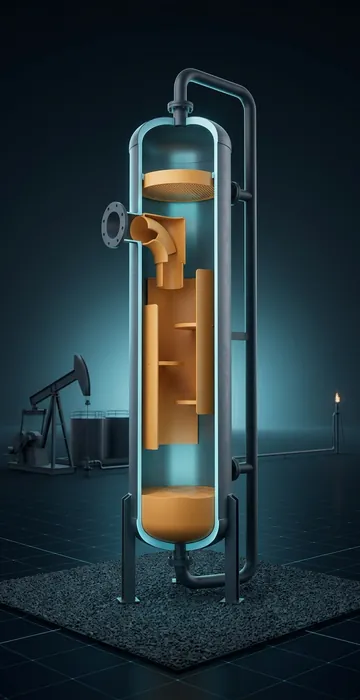
It depends on the gas-oil ratio, or GOR, which is the cubic feet of gas produced per barrel of oil. Every formation has its own range, and the GOR on a single well usually climbs over time as reservoir pressure drops below the bubble point.
Try it with some example numbers:
- Oil rate: 400 barrels per day
- GOR: 1,200 standard cubic feet per barrel
- Gas rate: 400 × 1,200 = 480,000 cubic feet per day, or 480 Mcf per day
- Heating value: 1,250 Btu per cubic foot
- Energy: 480,000 × 1,250 = 600 million Btu per day, or 600 MMBtu per day
That is a meaningful amount of energy from a well nobody drilled for gas. At a generator heat rate around 10,000 Btu per kWh, it could support roughly 2.5 MW of average load. And a pad with several wells can make many times that.
Why the Gas Lasts Longer Than You Expect
Here is a wrinkle that catches people off guard. Shale oil wells decline steeply in their first couple of years, so you might expect the gas to fall just as fast. Often it does not, at least not at first. As the reservoir pressure near the well drops, more gas breaks out of the oil, so the GOR rises while the oil rate falls. The gas curve flattens compared with the oil curve.
That does not make associated gas a forever fuel. It still declines. But anyone sizing equipment to a well should ask for the gas forecast specifically, not just assume it tracks the oil line on the operator's chart.
At the regional scale, the numbers get big fast. EIA reported in 2019 that associated gas contributes a growing share of U.S. natural gas production: five major oil regions produced about 12.0 billion cubic feet per day (Bcf/d) of it in 2018. The Permian produced 5.8 Bcf/d, about 51% of that region's gas, and in the Bakken associated gas made up 92% of all the gas produced.
Why Does So Much Associated Gas Get Flared?
Because the oil pays the bills and the gas often has nowhere to go on day one. A few reasons stack up:
- Timing. New wells can be drilled and completed faster than gathering lines and processing plants get built.
- Full pipes. Even where a line exists, it may be at capacity, and the midstream company cannot take more.
- Small volumes. A single remote well may not make enough gas to justify miles of pipe.
- Economics. When gas prices are low, the gas can be worth less than the cost to gather, compress and process it.
- The oil does not wait. An operator cannot easily slow the gas without slowing the oil, so shutting in the well to save the gas costs real money.
States limit how long that can go on. Texas and North Dakota, for example, allow short flaring periods and require operators to get permission or meet capture targets beyond that. Regulators also want to know how much gets burned, which is a whole job of its own. Good flare gas measurement mixes meters, estimates and paperwork, and it matters to anyone hoping to use that gas.
What Can Operators Do With Associated Gas?
The best answer is usually to sell it, but there are several options when that is slow or impossible.
- Sell into a gathering system for processing, where the NGLs get stripped out and the dry gas goes to market.
- Use it on the lease to fuel heater treaters, compressors and engine-driven pumps.
- Run gas lift, injecting gas back down the well to help lift fluids.
- Reinject it into the reservoir to hold up pressure or store it for later.
- Generate electricity on site, either for the lease or for a portable load like a computing container.
- Strip the liquids on site with a small skid and truck them out.
Each one has costs and limits. Gas lift and reinjection need compressors. Flare gas to power projects need conditioning so the engines survive the rich gas. And any deal that moves gas to a third party involves the operator, the mineral owners and royalties, so the paperwork deserves as much attention as the equipment.
Associated Gas Follows the Oil, So Plan Around It
Associated gas is natural gas that comes from oil wells, either dissolved in the crude or sitting above it in the reservoir. It tends to be rich, it arrives on the oil's schedule, and when the pipe is not ready it gets flared.
Before you treat associated gas as a fuel or a business opportunity, get three things in hand: a current gas analysis, a production forecast that shows the decline, and a clear picture of what the gathering system will look like in a year or two. That is what separates a good project from a pile of equipment waiting on gas that already found a pipeline.