How Does Flare Gas to Power Work? – Waste Gas Into Electricity
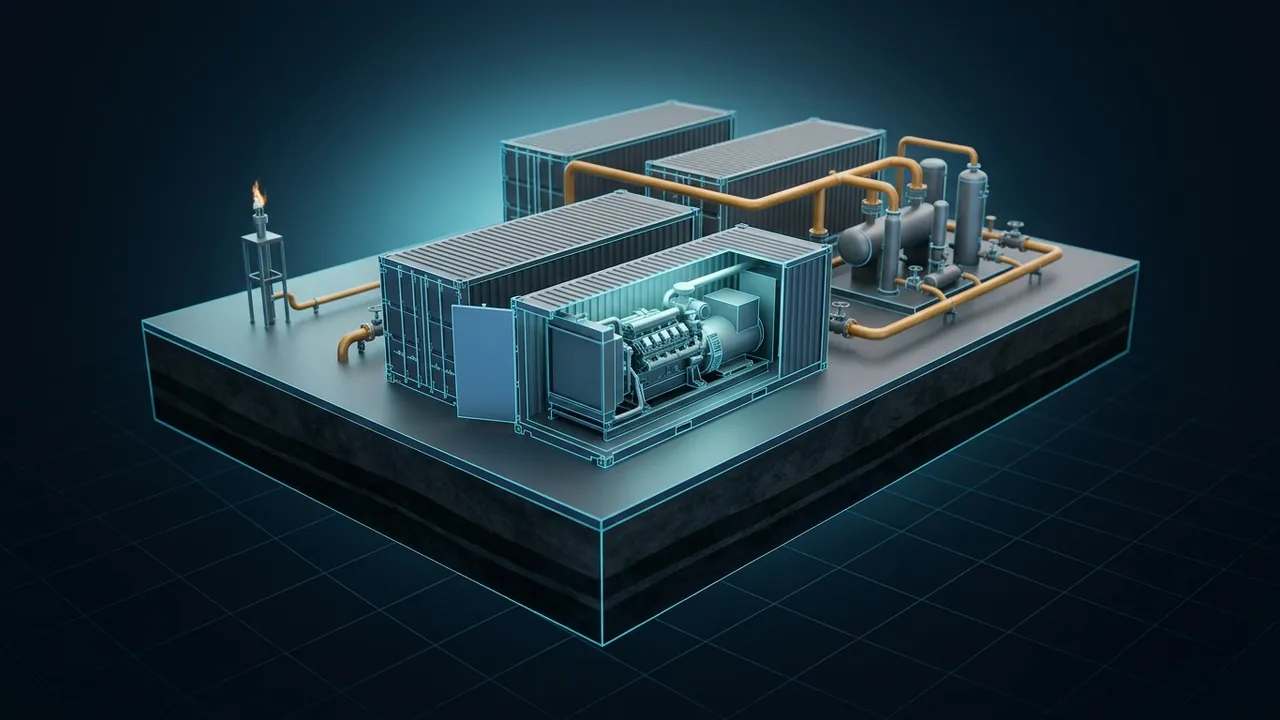
You can see a flare from miles away at night on the plains. It is gas that came up with the oil and had nowhere to go, so somebody lit it. Anyone who has stood on a lease and watched that flame roar has had the same thought: that is fuel, and we are burning it for nothing. Flare gas to power is a simple idea, but the details decide whether it works or just makes a mess. How does flare gas to power work, and what does it take to turn waste gas into electricity?
Flare gas to power works by diverting gas that would otherwise be burned in a flare into a fuel system that cleans it up and feeds it to on-site generators, usually natural gas reciprocating engines, which turn it into electricity. Along the way it is scrubbed of liquids and conditioned to tame heavy hydrocarbons and hydrogen sulfide (H2S). The power can run equipment on the lease, feed a nearby grid connection or supply a mobile computing load. A few hundred thousand cubic feet of gas a day can make a few megawatts. The hard parts are gas quality, falling volumes and lease agreements.
Where Does Flare Gas Come From?
Most flare gas is associated gas, the gas that comes out of solution when oil is produced. Oil wells in plays like the Bakken and the Permian bring up a lot of it. When there is no gathering line yet, when the gathering system or processing plant is full, or when the volume is too small to be worth a pipeline, the operator flares it rather than release raw methane.
It is not a small amount. The U.S. Department of Energy's National Energy Technology Laboratory (NETL) estimated in its Stranded Natural Gas Roadmap that U.S. flaring and venting ran about 1.25 billion cubic feet per day in 2018, and it noted that Permian flaring alone hit a record 661 million cubic feet per day in early 2019. Spread across thousands of wells, though, each individual flare is usually modest.
How Does Flare Gas to Power Work, Step by Step?
The basic path from flare to electricity looks like this:
- Tie-in. A connection is made on the gas outlet of the separator or heater treater, upstream of the flare. The flare stays in place as a safety backup.
- Liquids knockout. A scrubber removes water and condensate droplets that would damage an engine.
- Compression, if needed. Low-pressure gas may need a small compressor to reach the pressure the engine's fuel train wants.
- Conditioning. A skid removes or reduces heavy hydrocarbons, water vapor and sometimes H2S, so the fuel is steady and clean enough to burn.
- Fuel train and gensets. Regulators deliver gas at the right pressure to one or more engine generators.
- Electrical gear. Switchgear, transformers and controls connect the gensets to the load and keep them in sync.
- Monitoring. Remote controls and meters track gas flow, engine health and power output, often over a satellite or cellular link.
When the gensets can take all the gas, the flare goes quiet except for its pilot. When gas outruns the engines or a unit trips, the extra goes back to the flare. That safety valve is part of what makes these setups practical.
What Equipment Turns Flare Gas Into Electricity?
Reciprocating gas engines do most of this work, with microturbines and small gas turbines filling some niches.
| Option | Typical unit size | Strengths | Weak spots |
|---|---|---|---|
| Reciprocating gas engines | A few hundred kW to a few MW | Efficient, modular, easy to move, wide fuel range | Sensitive to rich gas and knock; frequent maintenance |
| Microturbines | Tens of kW to about 1 MW | Tolerate varied gas, low emissions, fewer moving parts | Lower efficiency, higher cost per kW |
| Small gas turbines | A few MW and up | Handle large, steady volumes | Need more gas than most single flares make |
Engines win most often because they come in convenient sizes, ship in containers on a truck and can be added or removed as the gas changes. A lease making 300 thousand cubic feet a day might run one or two units. A central pad collecting gas from several wells might run a whole row.
How Much Power Can a Flare Make?
More than most people guess. Run the math on an example flare:
- Gas flow: 500 thousand cubic feet per day (Mcf/d).
- Heat content: associated gas is often rich, so assume 1,300 British thermal units per cubic foot (Btu/scf).
- Energy per day: 500,000 scf × 1,300 Btu = 650 million Btu (MMBtu) per day.
- Engine heat rate: assume 9,500 Btu per kilowatt-hour (Btu/kWh).
- Electricity per day: 650,000,000 ÷ 9,500 ≈ 68,400 kWh.
- Average power: 68,400 kWh ÷ 24 hours ≈ 2.85 MW.
So a single 500 Mcf/d flare could, in theory, run close to 3 MW of generation. In practice, rich gas often forces engines to run below their nameplate rating, and conditioning removes some of the heavy hydrocarbons, so plan on a bit less. Try your own numbers in the fuel calculator below, switching the heat content to match your gas analysis.
Why Is Raw Flare Gas Hard to Burn in an Engine?
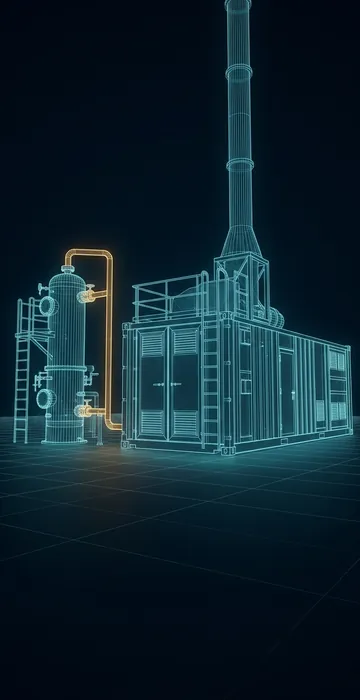
Because it is not pipeline gas. Pipeline gas has been processed to a steady heat content of roughly 1,000 to 1,100 Btu per cubic foot, with most of the heavy stuff removed. Associated gas straight from a separator can carry a lot of ethane, propane, butane and heavier hydrocarbons. Those make it richer in energy but more prone to knock, the uncontrolled early ignition that damages engines.
Engine makers rate fuel by methane number, a measure of knock resistance where pure methane scores 100. Richer gas has a lower methane number. Conditioning vendors such as GTUIT explain that heavy components in raw wellhead gas lower the methane number and can cause derates and engine failures, which is why fuel gas conditioning skids sit between so many flares and their engines.
Other troublemakers include:
- Liquids. Slugs of water or condensate can wreck an engine fast.
- H2S. Sour gas corrodes engine parts and turns engine oil acidic, and it is deadly to people at high concentrations, so it is handled by trained crews with monitors and treating equipment.
- Swings. Gas flow and composition change as wells load up, unload or get worked over, and engines prefer steady fuel.
Where Does the Power Go?
It goes wherever there is a load close enough to use it. The common options are:
- Lease power. Electric submersible pumps, compressors, heater treaters and lighting on the same lease or nearby leases. This often replaces diesel generators or a long utility extension.
- Grid export. Where a utility line is close and an interconnection agreement is possible, power can be sold to the grid. Interconnection and metering rules vary a lot by utility and state.
- Mobile computing. Containerized loads, most often bitcoin mining, set up right on the pad. They can follow the gas, ramping down when volumes fall and moving when the well declines.
The best fit depends on how long the gas will last. Flare gas is often a short-term problem, solved when a gathering line finally arrives. That is part of what makes it a classic case of stranded gas: valuable fuel with no economic path to market, at least for now.
Does Flare Gas to Power Make Money?
It can, but the margins depend on the details. The value comes from a few places:
- Avoided fuel costs, such as diesel that no longer has to be trucked in.
- Avoided utility bills or line-extension costs on the lease.
- Revenue from selling power or running a computing load.
- Lower flaring volumes, which can help an operator stay within state flaring limits and permits.
The costs are just as real: gensets and conditioning (often rented), installation, fuel analysis, maintenance, remote monitoring and the cost of moving equipment when the gas runs down. Shale wells decline steeply, so a setup sized for the first months of a well may be oversized a year later. Modular gear that can be redeployed is the usual answer.
There is also the question of who gets paid. The gas belongs to the mineral owners and the operator under the lease, and royalty may be owed on gas used off the lease or sold. Before any deal, the operator, the power provider and their counsel need to work through the lease terms and state rules.
Is Flare Gas to Power Better for the Environment?
Usually, yes, with some fine print. A flare and an engine both burn the gas and produce carbon dioxide. The difference is that the engine also makes useful electricity, which can replace power from diesel or from the grid. A well-run engine also tends to burn its fuel more completely and consistently than a flare in a gusty wind.
Engines are not perfect, though. They let a little unburned methane slip through, they emit nitrogen oxides and carbon monoxide, and they may need an air permit depending on size and location. The fair way to say it: flare gas to power turns waste into work, but it is still combustion, and it should be permitted and monitored like any other.
What Should You Check Before Building One?
Start with the gas, then the paperwork, then the hardware. A practical checklist looks like this:
- Gas analysis. Get a recent lab analysis of the gas, including heat content, heavy hydrocarbons, H2S, carbon dioxide and water. One sample is a start; several over time are better.
- Flow history and forecast. Look at measured or estimated flare volumes over months, not days, and ask the operator what the decline curve looks like.
- Pipeline timing. Find out whether a gathering line is planned. If gas will be connected to sales in six months, a long-term power setup may not make sense.
- Load match. Decide where the power goes and how much the load can flex when gas drops.
- Permits. Check air permit needs for the engines and any state rules on flaring and gas use.
- Agreements. Settle gas purchase terms, royalty treatment, site access and liability with the operator.
- Logistics. Confirm road access for heavy trucks, a level pad and a communications link for remote monitoring.
Skipping any of these is how projects end up with expensive engines idling next to a flare that is still burning. The engineering is usually the solvable part. A bad gas forecast or a deal that does not hold is much harder to fix after the equipment shows up.
How the Gas Gets Measured
Measurement matters for royalties, flaring reports and the power provider's bill. A dedicated meter on the line feeding the gensets shows how much gas went to power, separate from what still goes to the flare. Engine fuel logs and generator output data provide a useful cross-check. Clean measurement keeps the operator, the royalty owners and the regulator on the same page.
Turning Flare Gas Into Power That Lasts
Flare gas to power takes associated gas that would be burned for nothing, cleans it up and runs it through on-site generators to make electricity. A single flare making a few hundred Mcf a day can support a few megawatts, enough to run a lease, export to a nearby line or power a mobile computing load.
When you size up a flare, start with a gas analysis and a realistic flow forecast for the next year or two. Size modular equipment to that, plan for conditioning, and get the operator and royalty questions settled early. The flame on the horizon is real energy. Catching it takes good engineering and good paperwork in equal measure.