Why Do Oil Wells Flare Gas? – Economics and Rules
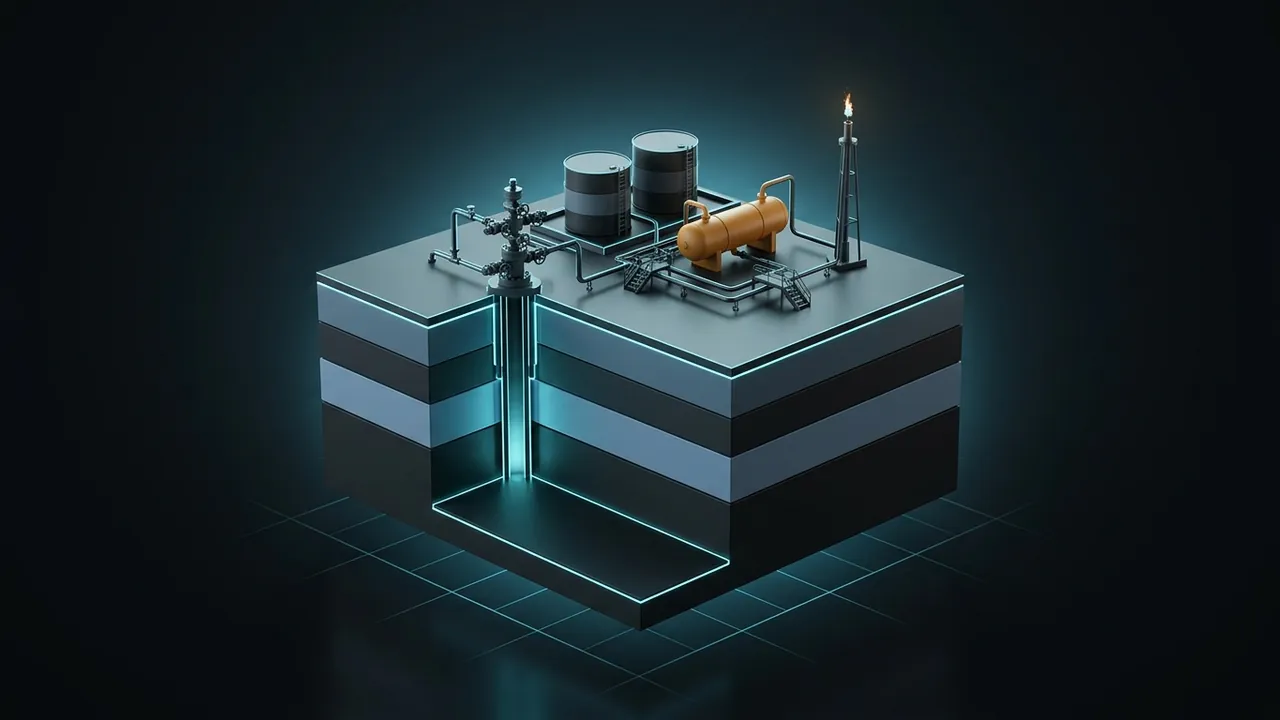
Out west of here, you can drive at night and count flares like streetlights. People who have never worked in the oilfield usually ask the same thing the first time they see one: isn't that gas worth money? It is. The reason it burns anyway is a mix of economics, plumbing, safety and the rules each state sets. None of it is as simple as people on either side of the argument like to claim. So why do oil wells flare gas, and what decides how long they can do it?
Oil wells flare gas mainly because the gas comes up with the oil and there is no economic or physical way to get it to market at that moment, so burning it is safer and cleaner than releasing it raw. The usual causes are a missing or full gathering line, a processing plant or compressor that is down, gas volumes too small to justify a pipeline, low local gas prices, or gas quality that a pipeline will not accept. Because oil is far more valuable than the gas that comes with it, operators rarely shut in oil to stop a flare. State rules limit how long they can flare.
Why Does an Oil Well Produce Gas at All?
Because oil in the reservoir has gas dissolved in it, much like a soda has carbon dioxide. Under high pressure deep underground, the gas stays in solution. As the oil rises up the wellbore and pressure drops, the gas bubbles out. That is called associated gas, and some plays produce a lot of it.
On the surface, a separator splits the stream into oil, water and gas. The oil goes to tanks or a pipeline. The water goes to disposal. The gas needs somewhere to go right now, because a separator cannot store it. If the sales line is ready, gas flows to the gathering system. If not, it goes to the flare.
Why Do Oil Wells Flare Gas Instead of Selling It?
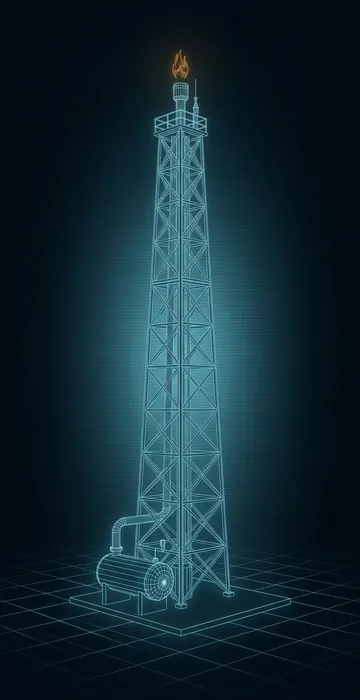
Here are the most common reasons, roughly in order of how often you run into them:
- No pipeline yet. New wells are often drilled and completed before the gathering line reaches them. The gas flares until the connection is built.
- Full or down infrastructure. A gathering line at capacity, a compressor that tripped or a processing plant in maintenance can back gas up to the well.
- Small volumes. A well making a little gas, far from any line, may never justify the cost of a connection.
- Low prices. When pipelines out of a region are full, local gas prices can fall close to zero, so the gas earns little even when it can be sold.
- Bad gas quality. Gas with high hydrogen sulfide (H2S), nitrogen or carbon dioxide may not meet pipeline specs without treatment.
- Completions and testing. During flowback after a well is fractured, gas often flares briefly before the well is turned to sales.
- Safety and upsets. Sudden pressure surges or equipment failures send gas to the flare to protect people and equipment.
Some of these last days. Others last months. The temporary kind is common in fast-growing plays, where drilling outruns pipe. The chronic kind usually involves remote or small wells.
How Do the Economics Work?
The oil pays the bills, and that drives everything. Look at an example well, using illustrative prices:
- A new well makes 400 barrels of oil per day and 600 thousand cubic feet (Mcf) of gas per day.
- Oil at $60 per barrel: 400 × $60 = $24,000 a day.
- Gas at a weak local net price of $1.50 per Mcf: 600 × $1.50 = $900 a day.
In this example, the gas is under 4% of the well's revenue. If the choice is between flaring gas for a few months or shutting in $24,000 a day of oil until a pipeline shows up, most operators will flare, as long as the rules allow it. That is not because they do not care about the gas. It is because the oil is the business.
Building the connection has its own math. A gathering company has to lay pipe, add compression and sometimes expand a processing plant. It will usually commit when there is enough volume from enough wells over enough years. A single well on the edge of a play may wait a long time.
Do Gas Wells Flare Too?
Much less, and for different reasons. At a gas well, the gas is the product, so the operator usually will not complete the well until a sales line is ready. Gas wells may flare briefly during completion, testing or an upset, but long-term flaring at a gas well would mean throwing away the very thing the well was drilled for.
That is why flaring clusters in oil-focused plays. In a gassy basin, pipelines are built ahead of the drilling. In an oily play, especially a new or fast-growing one, the gas can be an afterthought until the volumes get big enough to demand attention. Many experienced operators now plan gas takeaway alongside the oil from the start, partly because the rules expect it and partly because flaring draws scrutiny nobody wants.
Why Flare Instead of Just Venting?
Because raw natural gas is mostly methane, a powerful greenhouse gas, and a flammable cloud of it is dangerous. Burning it turns most of the methane into carbon dioxide and water, which has far less warming effect in the near term. Flaring also prevents explosive gas from collecting around equipment.
Most states push operators toward flaring rather than venting when gas cannot be sold. The comparison is not perfect, since flares do not always burn completely. The methane math behind flaring vs venting shows why both are worse than capturing the gas.
How Much Gas Gets Flared in the U.S.?
It peaked in 2019 and has generally come down since. The U.S. Energy Information Administration (EIA) reported that U.S. venting and flaring hit a record of about 1.48 billion cubic feet per day in 2019, about 1.3% of gross withdrawals. North Dakota and Texas together accounted for about 85% of it, and North Dakota flared about 19% of its gas withdrawals that year.
Those two states make sense. The Bakken in North Dakota and the Permian in Texas are oil-focused plays producing large volumes of associated gas, and both grew faster than their pipelines for a time. As gathering and processing caught up, and as state rules tightened, flaring rates fell.
What Rules Limit Flaring?
States set the main rules for oil and gas wells on private and state land, and they differ. Two examples show the range:
- Texas. The Railroad Commission's Statewide Rule 32 lets operators flare for up to 10 days after a well is completed. Beyond that, they need an exception, granted in 45-day periods up to 180 days, with anything longer requiring a Commission order. The Commission's flaring regulation FAQ reports that exceptions fell from 6,972 in fiscal year 2019 to 3,667 in fiscal year 2022.
- North Dakota. The state's Industrial Commission adopted gas capture targets in 2014 that stepped up to 91% capture, and operators that miss them can face production limits.
Flared volumes have to be reported in both states. Federal rules also apply in some cases, and they have changed over the years, so operators and project developers should check current state and federal requirements with counsel or the state regulator. If you work in Texas, it pays to understand how Texas flaring permits are granted and renewed.
Can Flare Gas Be Put to Use Instead?
Often, yes, at least while a pipeline is on its way. The usual options are:
- Running generators on the lease to power pumps and compressors.
- Stripping out natural gas liquids and trucking them to market.
- Compressing the gas and trucking it as compressed natural gas.
- Reinjecting it into the reservoir where geology and rules allow.
- Powering portable computing loads, such as bitcoin mining containers, that can move when the gas runs down.
Each option has to beat the cost and hassle of simply waiting for the pipeline. For short-lived flares, that bar is high. For flares expected to last a year or more, the numbers can work.
Why Oil Wells Flare Gas, in Plain Terms
Why do oil wells flare gas? Because gas comes up with the oil, it has to go somewhere immediately, and when the pipe is missing, full or down, burning it is safer and cleaner than venting it. The oil is worth far more than the gas, so operators keep producing and flare within the limits states allow, while gathering systems catch up.
Looking at a flare as an opportunity? Ask why it is burning and how long that reason will last. A flare waiting on a pipeline next quarter is a very different prospect from one on a remote lease with no line in sight. Get that answer first, and the rest of the plan gets a lot easier.