What Are Data Center Tiers? – Tier I to Tier IV Explained
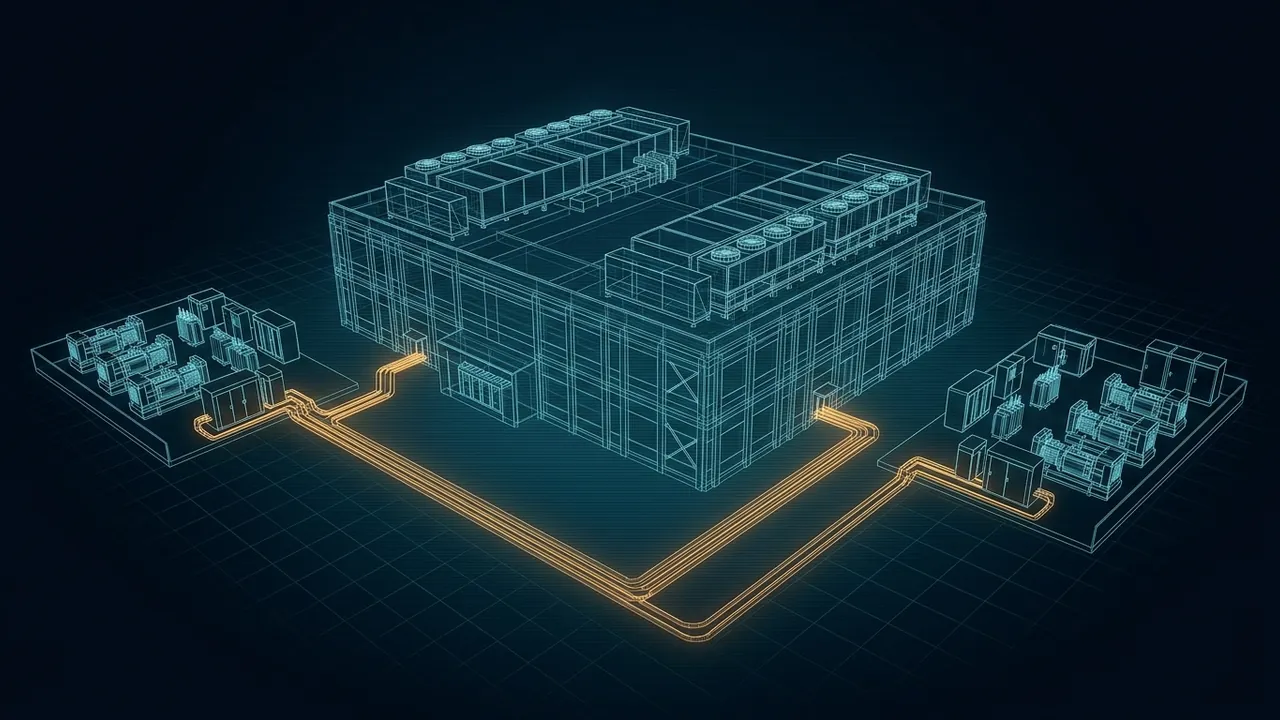
A tenant's requirements sheet lands on your desk, and one line is in bold: Tier III or better. The lender's checklist says the same thing. Your engineer says the design is "basically Tier III," and the tenant's consultant asks whether it is certified. Everyone is using the same word, but they may not mean the same thing. What are data center tiers, and what does each level actually require?
Data center tiers are a four-level rating system, created by the Uptime Institute, that describes how well a facility's power and cooling can survive maintenance and failures.
Tier I is basic capacity with no redundancy. Tier II adds spare components but keeps a single distribution path. Tier III is concurrently maintainable, meaning any piece of equipment or path can be taken out for planned work without shutting down the computers. Tier IV is fault tolerant, meaning the site rides through any single unplanned failure on its own. The tiers describe topology, not quality of operations, and a real Tier rating comes only from Uptime's certification process.
Who Created the Data Center Tier System?
The Uptime Institute developed the Tier Classification System in the 1990s and still owns it. Its Tier Standard: Topology document defines the four levels, and Uptime staff are the only people who can award a Tier certification. When someone says a site is "Tier III," the honest follow-up question is "certified by whom, and for what stage?"
Two other frameworks show up in specs. The ANSI/TIA-942 telecommunications standard uses "Rated-1" through "Rated-4," and BICSI 002 uses Classes F0 through F4. They cover similar ground, but they are separate documents with their own rules. Don't treat a TIA rating as an Uptime Tier, or the reverse, in a contract.
What Do Tier I, II, III and IV Mean?
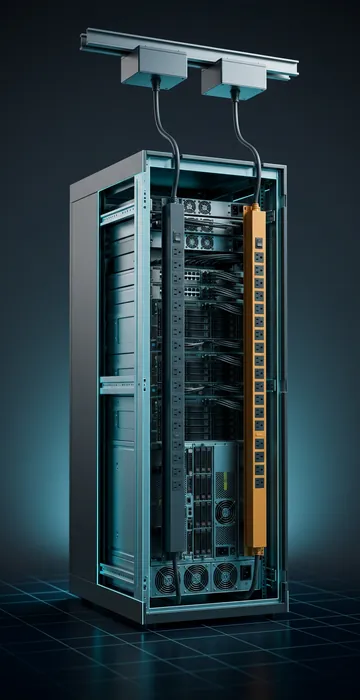
Each tier builds on the one below it. The Uptime Institute Journal's plain-language explanation of the Tier Classification System sums them up as basic capacity, redundant capacity components, concurrently maintainable and fault tolerant. Here is what that looks like on a one-line diagram.
Tier I: Basic Capacity
A Tier I site has a UPS, a generator and dedicated cooling for the computer room, but only enough of each to carry the load (N). There is one path for power and one for cooling. When a breaker, UPS or chiller needs service, the IT equipment goes down with it. Small enterprise server rooms often live here, and that can be perfectly reasonable for the right workload.
Tier II: Redundant Capacity Components
Tier II adds spare capacity components, usually N+1 on generators, UPS modules and cooling units. Lose one generator and the others carry the load. But the distribution path is still single. A failed switchboard, a bad cable or work on the main bus still takes the site down.
Tier III: Concurrently Maintainable
Tier III is where most commercial data centers aim. Every capacity component and every distribution path can be removed from service for planned maintenance without affecting the IT load. On a one-line diagram, that means at least two paths for power and cooling, with redundant components on each, though only one path has to be active at a time. Servers with dual power supplies get fed from both. The key word is planned: Tier III protects your maintenance window, not every possible fault.
Tier IV: Fault Tolerant
Tier IV adds fault tolerance. Any single failure of equipment or a distribution path, at any time, must not affect the computers. That usually means two simultaneously active, physically separated systems (often called 2N), compartmentalized so a fire or flood in one room can't take out both sides, plus continuous cooling so servers don't overheat while the plant transfers. It is the most expensive tier to build and to run.
How Much Downtime Does Each Tier Allow?
The short answer is that the current Tier Standard doesn't promise an availability number. Older industry papers attached percentages to each level, and you will still see them in sales decks: 99.671% for Tier I, 99.741% for Tier II, 99.982% for Tier III and 99.995% for Tier IV. Uptime has since moved away from publishing those figures as part of the rating, because real uptime depends heavily on how a site is operated.
Still, the math helps people feel the difference. A year has 8,760 hours.
| Tier | Old quoted availability | Math | Downtime per year |
|---|---|---|---|
| Tier I | 99.671% | 8,760 × 0.00329 | about 28.8 hours |
| Tier II | 99.741% | 8,760 × 0.00259 | about 22.7 hours |
| Tier III | 99.982% | 8,760 × 0.00018 | about 1.6 hours |
| Tier IV | 99.995% | 8,760 × 0.00005 | about 26 minutes |
Treat that table as a feel for scale, not a guarantee. A Tier IV design run by a careless crew can go down. A well-run Tier II site can go years without an outage.
Why Do Data Center Tiers Care So Much About Generators?
Because under the Tier Standard, the engine generators are the primary power source, and the utility is treated as an economical alternative that is expected to fail. The Uptime Journal piece linked above spells this out. That flips the usual mindset. A site cannot lean on a strong utility feed to meet its tier. The on-site plant has to carry the full load, with the required redundancy, for as long as an outage lasts.
That has real equipment consequences. Generators need ratings that allow unlimited running hours at the design load, so a standby-rated unit with an annual hours cap generally doesn't qualify without derating. Fuel storage, fuel delivery and cooling for the generator room all fall inside the tier's redundancy rules too. More engines, rated for longer runs and tested regularly, also means more sound to manage at the property line, which is why generator noise becomes a design topic on most Tier III and Tier IV projects.
Developer's rule of thumb: the tier you promise a tenant decides your generator count, your fuel tank size and often your zoning fight. Settle it before the site plan, not after.
Do Tiers Work for Sites With Their Own Power Plant?
Yes, and in some ways the Tier logic fits them better than it fits grid-fed buildings. Since the standard already assumes the utility will fail, a site that runs on its own gas engines or turbines is simply living the assumption every day. The difference is that those units are now running all year, not sitting in standby, so the redundancy count has to cover routine maintenance as well as failures.
Here is a quick example. Say the IT load and cooling need 20 MW and each engine is rated 2.5 MW at site conditions. N is 8 units. Concurrent maintainability means you must be able to pull any unit for service and still carry the load, so you need at least 9. If you also want to survive a surprise trip while one unit is in its overhaul, that is 10. The same thinking applies to the gas supply, the switchgear and the cooling plant.
What Does Tier Certification Involve?
Uptime certifies in stages, and each one means something different:
- Tier Certification of Design Documents (TCDD): Uptime reviews the drawings and confirms the design meets the target tier on paper.
- Tier Certification of Constructed Facility (TCCF): Uptime staff visit the built site and witness live demonstrations, such as taking components and paths out of service under load.
- Operational Sustainability: a separate review of staffing, maintenance, procedures and training, which is where many real outages are won or lost.
A design certification alone does not mean the building was built that way. Phrases like "Tier III design," "Tier III ready" or "built to Tier III standards" usually mean nobody from Uptime has looked at the finished facility. That may be fine for your needs, but price it accordingly and put the exact claim in writing.
Which Data Center Tier Do You Actually Need?
Start from the cost of an outage, not from a label. Ask what an hour of downtime costs the business, how often it can tolerate one, and whether the software can fail over to another site. Then pick the cheapest topology that meets that need.
- Tier I or II fits test labs, small offices, batch processing and workloads that can wait.
- Tier III is the default for colocation and most enterprise facilities, because maintenance without shutdowns is what tenants expect.
- Tier IV earns its cost where a single outage is unacceptable and the application can't simply move to another building.
Some large operators skip formal tiers and spread workloads across several sites instead, so one building going dark doesn't matter much. That approach shifts redundancy from concrete and copper into software, and it is a legitimate choice if your applications are built for it. If you want to compare redundancy schemes in more detail, the N+1 vs 2N redundancy math is a good next step.
Data Center Tiers Are a Contract Term, So Write Them Like One
Data center tiers answer one question: what can this facility survive? Tier I survives nothing, Tier II survives a failed component, Tier III survives planned maintenance and Tier IV survives a single unplanned failure. Everything else in the sales pitch is detail.
So decide the tier early, because it drives generator count, fuel, land and noise. Say whether you mean an Uptime certification, a TIA rating or just a design goal. And remember that people and procedures decide most outages, so budget for operations, not just topology.