What Are the Types of Data Centers? – Hyperscale, Colo, Edge
The phrase "data center" covers a closet with two racks and a wheezing air conditioner. It also covers a campus of warehouse-sized buildings pulling more power than a small city. Somewhere in between are the shared facilities where banks rent cages, the steel boxes parked beside cell towers and the modules bolted onto concrete pads at remote sites. Lumping them together makes for confusing headlines and bad planning. What are the types of data centers, and how do they differ?
The main types of data centers are enterprise, colocation, hyperscale, cloud, edge, modular and micro data centers. They differ by who owns the building, who owns the computers inside, how big the site is and where it sits.
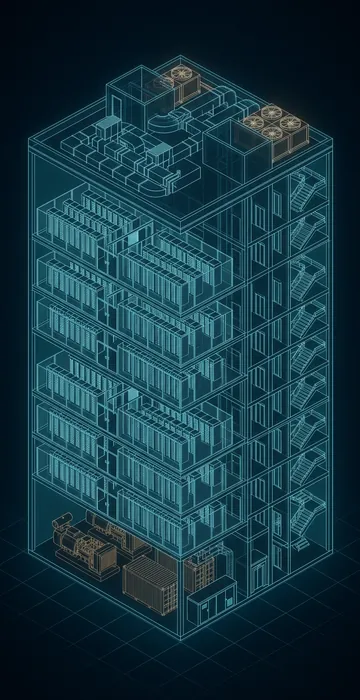
An enterprise data center is owned and used by one company. A colocation facility rents space, power and cooling to many tenants. Hyperscale sites are giant campuses run by the largest internet and cloud companies. Edge, modular and micro data centers are smaller facilities placed close to users or equipment, often prefabricated. Each type has its own power needs, redundancy level and cost structure.
Why Do the Types of Data Centers Matter?
Because the type shapes almost every design decision: how much power the site needs, how it is cooled, how redundant it must be, how it gets financed and who signs the utility contract. Data centers are already among the most power-hungry buildings around. The U.S. Department of Energy notes on its data centers and servers page that they can use 10 to 50 times the energy per square foot of a typical office building. How that energy is used, and who pays for it, depends a lot on the type.
What Is an Enterprise Data Center?
An enterprise data center is owned and operated by a single company for its own use. Banks, hospitals, universities, government agencies and manufacturers all run them. They range from a server room in an office building to a dedicated multi-megawatt facility on a corporate campus.
The advantage is control: the company decides on security, hardware, location and maintenance. The downside is that it carries the whole cost of building, staffing and upgrading the facility, even if it only uses part of the capacity. Many companies have moved some or all of their computing out of their own buildings and into colocation or the cloud for that reason.
What Is a Colocation Data Center?
A colocation data center, or colo, is a building where the operator provides space, power, cooling, security and network connections, and tenants bring their own servers. Think of it as an apartment building for computers.
Colocation comes in two broad flavors:
- Retail colocation: tenants rent by the cabinet, cage or small suite. Many customers share one building, and the operator handles most services.
- Wholesale colocation: a single tenant leases a large block of capacity, often a whole data hall or building, usually priced by the kilowatt of power reserved.
Colos often sit in major metro areas where many networks meet, so tenants can connect directly to carriers, cloud providers and each other. That interconnection is a big part of their value.
What Is a Hyperscale Data Center?
Hyperscale data centers are the very large facilities run by the biggest internet, social media and cloud companies. A commonly cited definition, attributed to the research firm IDC, sets the bar at 5,000 or more servers and 10,000 or more square feet, but most modern hyperscale campuses are far larger, with several buildings and power demand in the tens or hundreds of megawatts.
These sites are built for scale and efficiency. They use standardized designs, custom servers and highly automated operations. Because the operators spread their software across many sites, a single building can sometimes use less physical redundancy than a traditional enterprise facility. Hyperscale operators both build their own campuses and lease large wholesale facilities from developers.
How Is a Cloud Data Center Different?
"Cloud data center" describes what the building does more than how it is built. Cloud providers rent computing, storage and software to customers over the internet, and the physical facilities behind that service are usually hyperscale campuses or leased wholesale space. To the customer, the building is invisible. To the power planner, it is a large, steady load just like any other big data center.
What Is an Edge Data Center?
An edge data center is a smaller facility placed close to where data is created or used, such as near a cell tower, a factory, a city neighborhood or an oil and gas field. The goal is to cut delay, reduce the amount of data sent over long links, or keep a site running when its connection to a distant facility goes down.
Edge sites can be a few racks in a shelter or a small building of a megawatt or two. They are often unstaffed, monitored remotely and built to handle harsh conditions. Power can come from the local utility, a generator or, at very small sites, solar and batteries.
What Are Modular and Micro Data Centers?
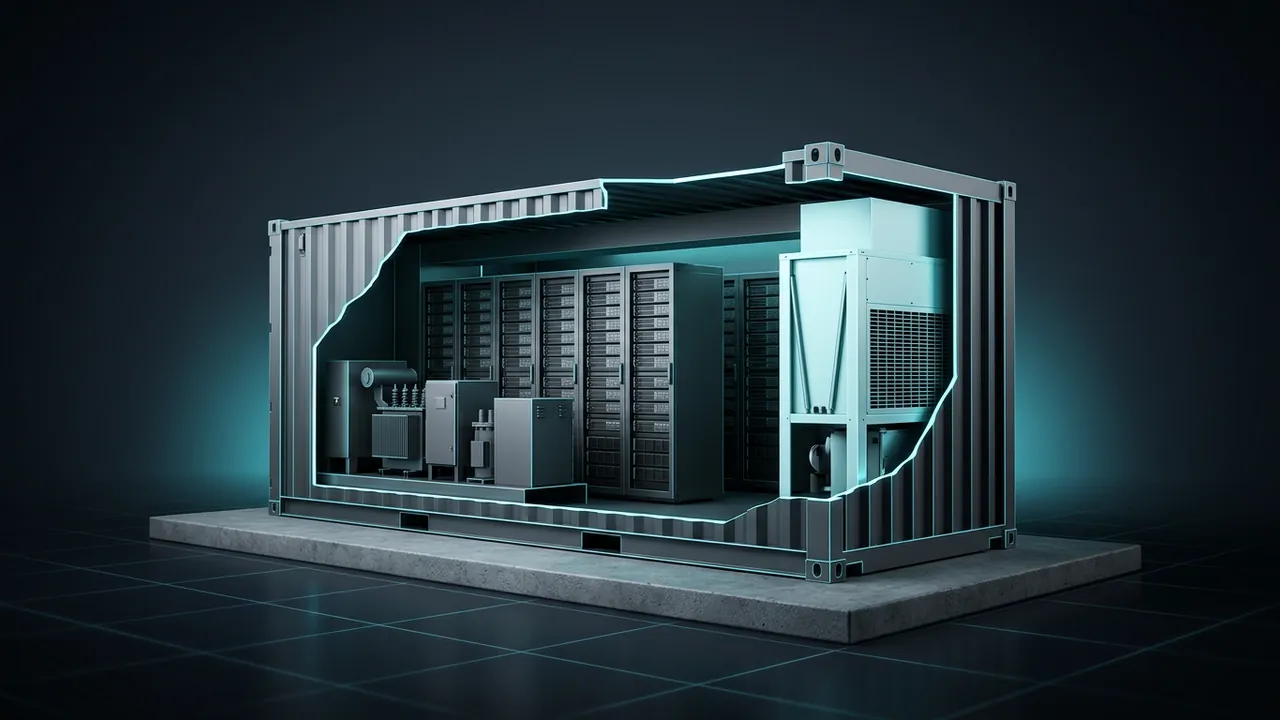
These are defined by how they are built more than by who uses them. A modular data center is made from prefabricated units built and tested in a factory, then shipped to site. Schneider Electric's discussion of modular and prefabricated definitions makes a useful point: "modular" is a loose term, while a prefabricated module is a pre-engineered, factory-integrated and pre-tested group of systems on a skid or in an enclosure. Containerized data centers, built inside shipping-container-sized boxes, are one common form.
A micro data center is smaller still: often a single rack or a handful of racks in a sealed, self-contained enclosure with its own power protection, cooling, fire suppression and monitoring. Micro units suit branch offices, factory floors and remote industrial sites.
Are Bitcoin Mining Sites Data Centers?
In a physical sense, yes, though they work very differently from the types above. A mining facility is packed with specialized machines built for one job, and it usually skips most of the redundancy a colo or enterprise site needs. If power goes out, the machines stop and simply start again later. There are no customer records to lose.
That makes mining sites unusually flexible loads. They tend to locate wherever power is cheapest, sometimes in simple sheds or containers, sometimes right on an oil and gas lease running on gas that would otherwise be flared. Some agree to shut down during grid emergencies in exchange for lower rates. For power planners, they behave less like a data center and more like an interruptible industrial customer.
How Do the Types of Data Centers Compare?
The table below gives typical traits. Real facilities vary widely, so treat the sizes as rough ranges, not definitions.
| Type | Who owns the building | Who owns the servers | Typical scale |
|---|---|---|---|
| Enterprise | The company | The company | A server room to several MW |
| Retail colocation | Operator | Many tenants | A few MW per building |
| Wholesale colocation | Developer or operator | One or a few large tenants | Several to tens of MW |
| Hyperscale | Cloud or internet company, or a developer leasing to one | Cloud or internet company | Tens to hundreds of MW per campus |
| Edge | Telecom, operator or end user | Varies | A few kW to a few MW |
| Modular | Varies | Varies | Hundreds of kW to MW per module |
| Micro | End user | End user | A few kW to tens of kW |
How Does the Type Change Power Planning?
Size is only the start. A hyperscale campus negotiates directly with the utility for transmission-level service and may consider on-site generation. A retail colo needs strong redundancy because every tenant expects uptime and many have contracts that say so. An enterprise site's power bill hits one company's budget. An edge site may need to run on a generator or solar for days if its utility line is unreliable.
The type also shapes who pays for power and how. Wholesale tenants often pay their own electricity costs directly or as a pass-through, while retail tenants usually pay a bundled price per kilowatt or per circuit. Our guide to data center electricity cost walks through rates, demand charges and how the monthly bill adds up.
Matching the Types of Data Centers to the Job
The types of data centers line up along two questions: who owns what, and how big and how close to the user it needs to be. Enterprise and colocation answer the ownership question in opposite ways. Hyperscale and cloud facilities answer it at enormous scale. Edge, modular and micro data centers answer the location question, putting computing where the work happens.
Name the type before you do anything else. It tells you the likely load, the redundancy tenants will expect and the kind of power deal you need, which is most of the early plan.