Is Immersion Cooling Worth It? – Single-Phase vs Two-Phase
The first time you see a server lowered into a tank of clear fluid, it feels wrong. Every instinct says liquids and electronics do not mix. Then you notice the tank is silent, the server is running happily and nobody in the room is shouting over fans. Immersion cooling has been around for years in labs and bitcoin mines, and it keeps coming up in planning meetings. Is immersion cooling worth it, and should you pick single-phase or two-phase?
Immersion cooling is worth it when racks are dense, power or water is expensive, or the site is dusty, hot or remote. For most operators, single-phase is the right pick: simpler tanks, cheaper fluid and easier service. Submerging hardware in a fluid that does not conduct electricity removes heat far better than air and gets rid of server fans. Two-phase systems, where the fluid boils off the chips, cool even better but cost more and face fluid supply and environmental questions.
What Is Immersion Cooling?
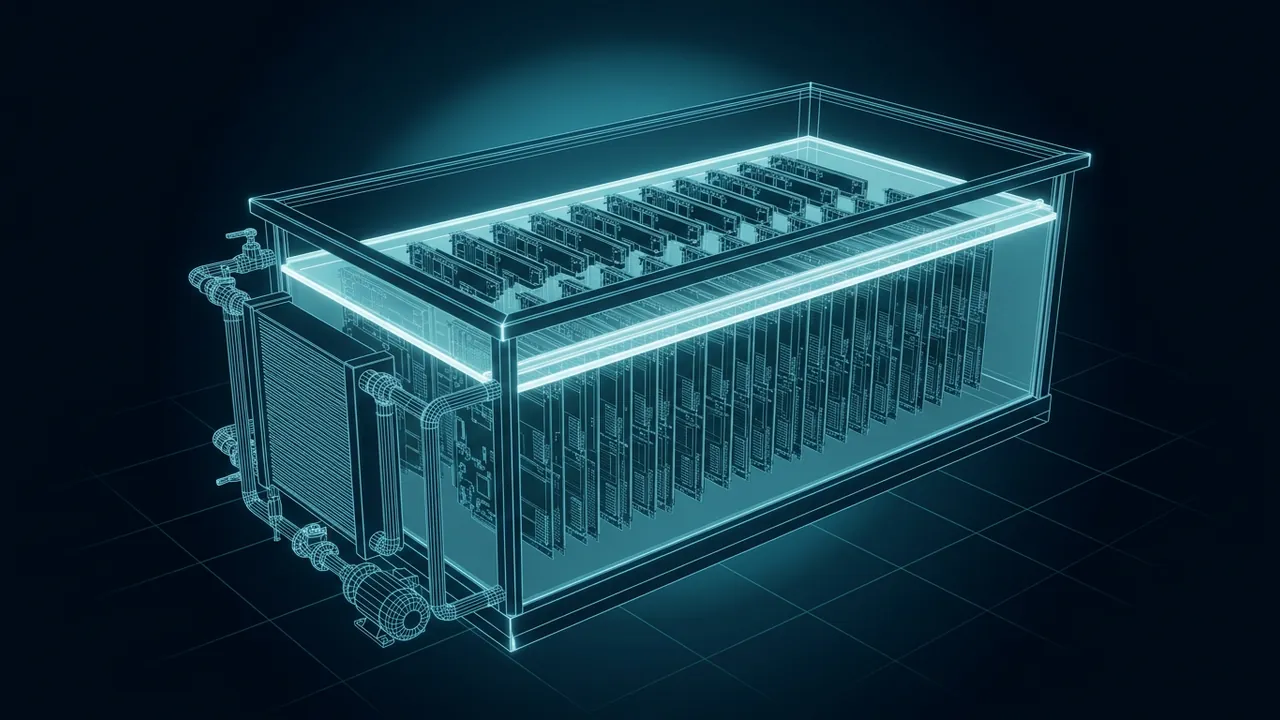
Immersion cooling means placing whole servers, boards and all, into a bath of fluid that does not conduct electricity. The fluid touches every component directly and carries heat away, so there is no need for fans, heat sink airflow or a cold aisle.
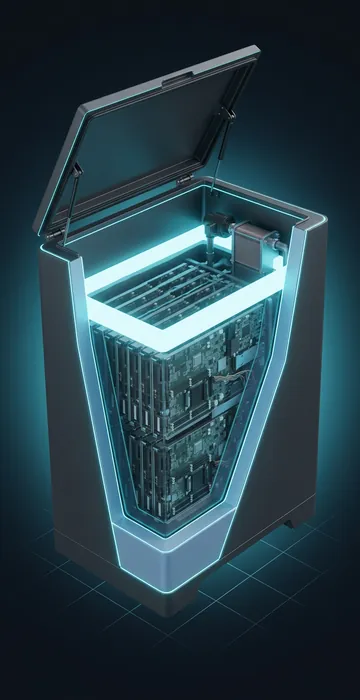
Most systems use horizontal tanks that look a bit like chest freezers. Servers hang vertically from the top, power and network cables come in from above, and a pump or natural convection moves the fluid. Heat leaves the tank through a heat exchanger to a water loop and then to dry coolers or cooling towers outside.
The fluids are the key. They are dielectric, which means a fully powered board can sit in them without shorting. They also carry heat much better than air, so components run cooler and more evenly.
How Does Single-Phase Immersion Cooling Work?
In single-phase immersion, the fluid stays liquid the whole time. It absorbs heat from the components, gets warmer and is pumped to a heat exchanger, where it gives that heat to a water loop. Then it returns to the tank, cooler, and does it again.
Common single-phase fluids are synthetic hydrocarbons, refined mineral oils and engineered fluids. They have high boiling points, so they do not evaporate in normal use. Tanks can stay open at the top for service with only a lid to keep dust out, and fluid losses are mostly whatever drips off a server when you pull it.
That simplicity is the selling point. Pumps, a heat exchanger and some filtration are familiar equipment to any facilities crew. The downside is that the fluid is somewhat viscous, so it needs steady pumping, and boards come out slick, which makes maintenance slower and messier than on an air-cooled rack.
How Does Two-Phase Immersion Cooling Work?
In two-phase immersion, the fluid boils right on the surface of the hot chips. Common choices boil somewhere around 50 to 60°C (roughly 120 to 140°F), well below the temperature limits of the hardware. The vapor rises, hits a cooled condenser coil near the top of a sealed tank, turns back into liquid and rains down into the bath.
Boiling soaks up a huge amount of heat at a nearly constant temperature, which is why two-phase handles extreme hot spots so well. There is no pump needed inside the tank. The physics does the circulating.
The catch is the fluid. Two-phase systems typically rely on fluorinated chemicals that are expensive, and any vapor that escapes when the lid opens is money floating away. Tanks must be well sealed. Many of these fluids also belong to the broad PFAS family that regulators and manufacturers have been scrutinizing, which raises long-term supply and disposal questions an operator has to weigh before committing.
Single-Phase vs Two-Phase: Which Is Better?
For most buyers, single-phase is the better bet, and two-phase is a specialist tool. Here is how they stack up in practical terms.
| Factor | Single-phase | Two-phase |
|---|---|---|
| How heat moves | Fluid warms and is pumped to a heat exchanger | Fluid boils, vapor condenses on a coil |
| Fluid type | Hydrocarbon oils or engineered fluids | Low-boiling fluorinated fluids |
| Fluid cost and losses | Lower cost, minimal evaporation | High cost, vapor losses if not sealed |
| Tank design | Simple, can open for service | Sealed, more complex |
| Cooling headroom | Very good | Excellent for extreme hot spots |
| Environmental questions | Fewer | PFAS and supply scrutiny |
Vendors claim both get very close to perfect efficiency. Submer, which sells single-phase systems, cites figures of about 1.02 for two-phase and 1.03 for single-phase in its comparison of single-phase vs two-phase immersion cooling. Treat any vendor number as a best case, but the point holds: the efficiency gap between the two is small, while the cost and complexity gap is not.
Does Immersion Cooling Really Save Energy?
Yes, often by a lot, for three reasons. First, server fans go away entirely, and those fans can be a meaningful share of server power in a dense air-cooled machine. Second, the fluid can run warm, so heat can often leave through dry coolers without chillers for most of the year. Third, there is no room air to condition, so big air handlers shrink or vanish.
The usual yardstick is power usage effectiveness (PUE), total facility energy divided by IT energy. Here is a rough example with labelled assumptions. Say an air-cooled hall with 1,000 kW of IT runs at a PUE of 1.5, using 1,500 kW total. Move the same work into single-phase tanks, remove fans worth an assumed 5% of IT power and run the cooling at an assumed PUE of 1.05:
- New IT load: 1,000 kW × 0.95 = 950 kW
- New facility load: 950 kW × 1.05 ≈ 998 kW
- Savings: 1,500 − 998 ≈ 502 kW, or about 4,400 MWh a year
Your numbers will differ, and the comparison is only fair against a similar air design. A well-run air hall with economizers at a PUE of 1.2 leaves much less on the table. Still, the direction is clear.
What Drives the Cost of Immersion Cooling?
The cost comes down to tanks, fluid, the heat rejection plant and the labor to adapt hardware. Prices vary so much by vendor, scale and fluid choice that any single number would mislead you, so it helps to know what moves the total.
- Fluid volume and type. A tank holds hundreds of gallons, and two-phase fluids cost many times more per gallon than single-phase oils.
- What you avoid building. Immersion can shrink or remove chillers, raised floors and large air handlers, which offsets part of the tank cost on a new build.
- Hardware prep. Removing fans and swapping thermal materials takes time per server unless you buy immersion-ready machines.
- Energy price. The higher your cost per megawatt-hour, the faster the cooling savings pay back.
On a retrofit, you pay for the new system while the old air plant still sits there, so the math is tougher. On a new site designed around tanks from the start, it looks much better.
What Are the Downsides of Immersion Cooling?
The downsides are mostly practical, not physical. I would not talk anybody out of immersion on thermal grounds. I might talk them out of it on operational ones.
- Hardware compatibility. Fans must come out, some thermal pastes and labels break down in oil, some plastics and cable jackets swell, and standard spinning hard drives are not built for it.
- Warranties. Server makers need to approve immersion or you may be on your own when something fails.
- Maintenance. Pulling a board means lifting it out, letting it drip and working on a slippery part. It is slower than swapping a tray in an air rack.
- Weight and space. A full tank weighs a lot more than an empty rack, and floor loading matters. Tanks lie horizontal, so density per floor tile can be lower than tall racks even though density per server is higher.
- Fluid management. Filtration, periodic testing and a plan for spills and disposal.
Where Does Immersion Cooling Make the Most Sense?
Immersion cooling shines where heat is extreme, the hardware is uniform and the environment is rough. Bitcoin miners figured this out early. Mining machines are dense, identical and run flat out, so tanks of them are easy to standardize, and the fluid protects electronics from dust. Many flare gas bitcoin mining operations on remote oil leases run in containers where dust, heat and wind would chew through air-cooled gear.
Other good fits include remote and harsh edge sites where sealed tanks block dust and humidity, noise-sensitive locations, sites that want warm water for heat reuse, and power-limited sites where cutting cooling overhead frees up megawatts for compute. Weak fits include mixed enterprise rooms full of different vendors' gear and buildings where nobody wants to retrain the staff.
So, Is Immersion Cooling Worth It for Your Site?
The deciding question is less about physics than about your hardware. If it is dense and uniform enough to standardize, and energy or water is precious, single-phase tanks will likely pay. Two-phase earns its place only where the extra headroom justifies the fluid cost and the environmental questions.
Before you buy a single tank, run a pilot with your actual hardware, get the server maker's blessing in writing and price the fluid for the life of the project. If those three check out, immersion can cut cooling energy sharply and keep equipment alive in places air cooling would struggle to survive.