Prime Power vs Standby Power – What Generator Ratings Mean
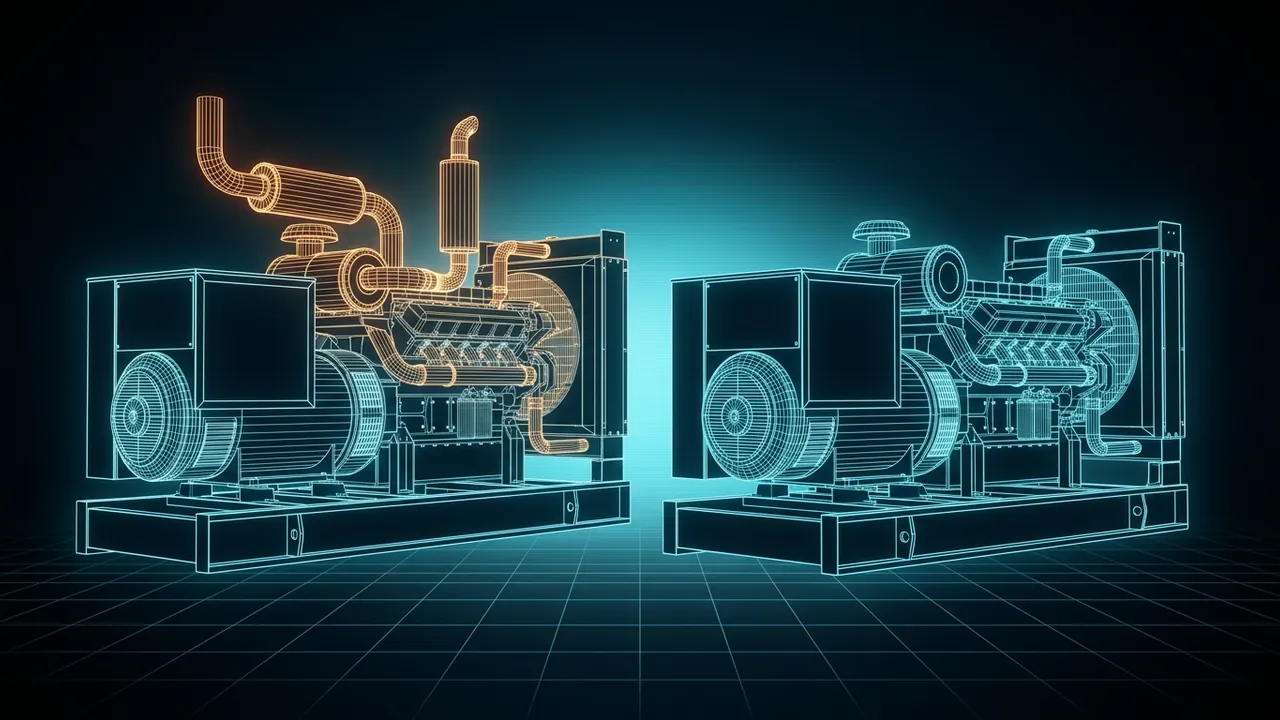
Two identical generators sit on a dealer's lot. One data sheet says 2,000 kW. The other says about 1,800 kW. Nobody made a typo. The difference is the job each number assumes, how many hours the machine will run and how hard it will be pushed. Mix up those jobs and you can wear out an engine early or void a warranty without ever overloading it on paper. So what is the real difference in prime vs standby power, and which rating does your project need?
Standby power is the rating for a generator that only runs during utility outages, for a limited number of hours a year, while prime power is the rating for a generator that serves as the main source of electricity for unlimited hours at a varying load.
Prime duty is harder on the engine, so the same genset usually carries a lower prime rating, often around 10% lower. Standby ratings under the ISO 8528 standard typically assume no more than about 200 hours a year at an average of 70% load. Prime ratings allow unlimited hours at a 70% average with a short 10% overload. Continuous ratings cover constant full load and are lower still.
What Do Generator Ratings Actually Mean?
A generator rating is a promise from the manufacturer: run the machine within these conditions and it will deliver this power for its expected life. The international standard that defines the categories is ISO 8528-1, and most manufacturers rate their gensets against it.
Cummins summarizes the categories clearly in its guide to ISO 8528 generator set ratings. The core idea is that a rating is not just kilowatts. It is kilowatts plus hours per year plus average load plus whether overloads are allowed. Change any of those and the honest kilowatt number changes too.
What Is Standby Power?
Emergency standby power is the rating for backup service. The generator runs only when the normal source fails, plus testing and maintenance. The usual terms are:
- Limited to about 200 hours of operation per year
- Average load over a 24-hour period of no more than 70% of the standby rating
- No overload capability; the standby rating is the ceiling
- Not intended for running in parallel with the utility or for peak shaving
That 70% average surprises people. A standby genset can carry its full rating during an outage, but over a day the average should stay lower. The reasoning is wear: an engine that rarely runs can be pushed hard for short periods because it accumulates so few hours.
What Is Prime Power?
Prime power is the rating for a generator that is the primary source of electricity, with no utility behind it or in place of the utility. The usual terms are:
- Unlimited hours per year
- Variable load, averaging no more than 70% of the prime rating over a 24-hour period
- A 10% overload allowed for 1 hour in every 12 hours of operation
Prime-rated generators run remote mines, oilfield operations, construction sites, islands and off-grid facilities. The lower rating gives the engine margin to run day after day for thousands of hours.
What Is Continuous Power?
Continuous power is the rating for a constant, non-varying load at 100% of the rating for unlimited hours, with no overload. It is the most conservative number on the data sheet. It fits applications like a base-load plant that runs flat out year-round.
Some manufacturers also offer a limited-time running power rating, which allows up to about 500 hours a year at the full rating. It suits uses like planned peak shaving or seasonal demand where running hours are known and capped.
Prime vs Standby Power: How Do the Ratings Compare?
| Rating | Hours per year | Average load limit | Overload | Typical use |
|---|---|---|---|---|
| Emergency standby | About 200 | 70% over 24 hours | None | Outage backup |
| Limited-time running | Up to about 500 | Up to 100% | None | Planned peak shaving |
| Prime | Unlimited | 70% over 24 hours | 10% for 1 hour in 12 | Main power, variable load |
| Continuous | Unlimited | 100% | None | Constant base load |
Why Does the Same Generator Have Different Ratings?
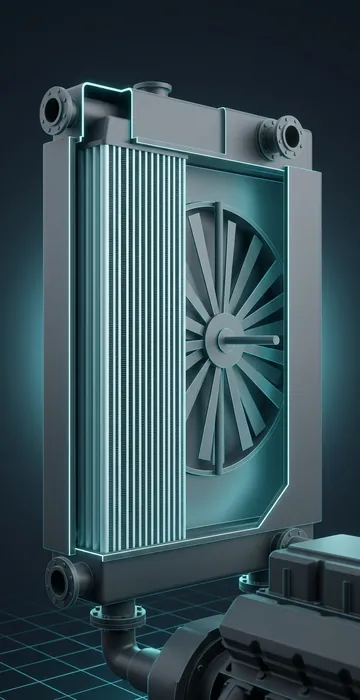
Because wear depends on hours, load and heat. Combustion pressure and temperature drive wear on pistons, rings, valves and bearings. An engine that runs 100 hours a year can tolerate higher stress per hour than one that runs 8,000.
Here is a worked example with illustrative numbers. Say a genset carries a 2,000 kW standby rating and a 1,800 kW prime rating.
- As standby: during an outage it can carry up to 2,000 kW, but its 24-hour average should stay at or below 0.70 × 2,000 = 1,400 kW, and total running time should stay near 200 hours a year.
- As prime: it can run all year, with its 24-hour average at or below 0.70 × 1,800 = 1,260 kW, and it can briefly carry 1.10 × 1,800 = 1,980 kW for 1 hour in every 12.
- As continuous: if the load is flat and constant, the manufacturer's continuous rating applies, which is lower still.
Notice what happens if someone buys this unit on its 2,000 kW standby rating and runs it as the main power source at a steady 1,600 kW. On paper it is "only at 80%." In reality, it is operating well outside its intended duty, and the engine will wear faster than expected. Many warranties are written around the rating category, so ask the manufacturer before using a genset outside it.
Which Rating Does a Data Center Need?
It depends on the generator's job.
- Backup to a reliable utility: standby ratings are common, with careful attention to whether the expected outage hours and test schedule fit the limits.
- Primary on-site power with no utility, or long bridge periods before a grid connection: prime or continuous ratings, sized for the real load profile.
- High-reliability designs: some data center standards and owners require generators rated for unlimited running hours at the site's load, since the utility is treated as something that can be gone for days. Check the specific standard you are designing to.
Data center load is fairly steady compared with a construction site or a mine, which pushes the choice toward continuous or a manufacturer's data-center-specific rating where offered. Read each manufacturer's definitions carefully, since the names are similar but the terms are not always identical.
How Do Air Permits Fit In?
Ratings are an engineering question, but run hours are also a regulatory one. In the United States, engines permitted as emergency units generally face annual limits on non-emergency operation, such as testing and maintenance, under federal and state air rules. An engine permitted as an emergency unit cannot simply be turned into a prime power source because the business needs it; that usually means a different permit and possibly emissions controls. Check with your state air agency and counsel before changing how any generator is used.
Restarting a whole site after a total outage is another job that depends on rating and equipment choices. Our guide to black start capability explains how plants come back from zero.
Read the Duty, Not Just the Kilowatts
The difference in prime vs standby power is the job the generator is expected to do. Standby ratings assume limited hours during outages and allow the highest kilowatt figure. Prime ratings assume unlimited hours at a varying load and carry a lower number. Continuous ratings assume a flat load all year and are lower again.
Before you buy, write down how many hours a year the generator will run, what its average load will be and whether it will ever run as the main source. Then match those answers to the rating, and get the manufacturer to confirm it in writing.