How Much Land Does a Solar Farm Need per MW?
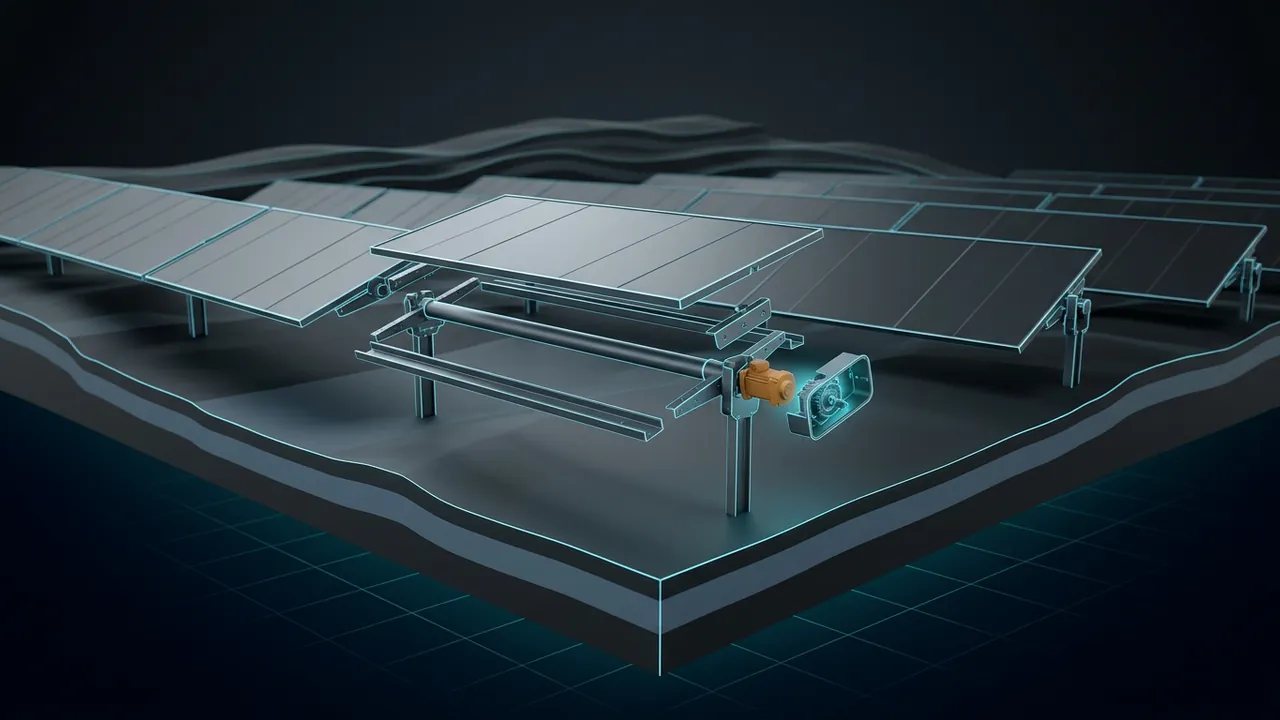
The call usually comes before anyone in town has said "solar farm" out loud. A developer wants to lease a few hundred acres, maybe more, and the landowner wants to know whether that's a lot or a little. County commissioners want to know how much farmland a proposed project will cover. Engineers want a number to start a layout. How many solar farm acres per MW does a project need?
A utility-scale solar farm typically needs about 5 to 10 acres per MW of AC capacity, with most published studies landing around 7 to 8 acres per MW of total project area. The National Renewable Energy Laboratory (NREL) found a capacity-weighted average of 7.9 acres per MWac for large photovoltaic (PV) plants, and a later study of 94 Virginia facilities found an average of 6.93 disturbed acres per MWac.
The range depends on whether you count the whole fenced site or just the panels, on tracking versus fixed-tilt racks, and on terrain, setbacks and panel efficiency. For planning, 100 MW of solar usually means roughly 600 to 800 acres.
How Many Solar Farm Acres per MW Do Studies Show?
Studies show solar farm acres per MW clustering in the 6.5 to 8 range, depending on the method. The best-known source is NREL's report on land-use requirements for solar power plants in the United States, which surveyed existing projects and found 7.9 acres per MWac of total area for large PV plants over 20 MW. A Virginia Department of Energy and Virginia Commonwealth University study, re-evaluating land use for utility-scale solar, measured 6.93 disturbed acres per MWac across 94 facilities, with newer builds at a median of 6.72.
The chart below lines up those published figures, along with a U.S. Department of Agriculture Economic Research Service estimate of 7.5 acres per MW cited by the American Farm Bureau Federation.
Acres per MW of AC capacity
NREL, Land-Use Requirements for Solar Power Plants in the United States (2013); USDA ERS estimate as cited by the American Farm Bureau Federation (2024); Virginia Dept. of Energy and VCU, Re-Evaluating the Land Use Impacts of Utility-Scale Solar (2024).
View the data
| Acres per MWac | |
|---|---|
| NREL: large PV, total area | 7.90 acres |
| USDA ERS estimate | 7.50 acres |
| NREL: all solar, direct area | 7.30 acres |
| Virginia: 94 sites, average disturbed | 6.93 acres |
| Virginia: 2021 to 2024 builds, median | 6.72 acres |
The slight downward drift makes sense. Panels have become more efficient over the years, so each acre holds more watts than it used to.
Why Do Solar Land Estimates Vary So Much?
Solar land estimates vary because people measure different things. A single project can honestly be described as 5 acres per MW or 9, depending on the definition.
- Total area vs direct area: Total area includes everything inside the project boundary, such as roads, setbacks, wetlands left alone and buffer zones. Direct area counts only land covered by panels, inverters and roads.
- MWac vs MWdc: Solar farms install more DC panel capacity than their AC inverter rating, often 20% to 40% more. Acres per MWdc is always a smaller number than acres per MWac for the same site.
- Fixed tilt vs tracking: Single-axis trackers need wider row spacing to avoid shading as panels rotate.
- Terrain: Hills, slopes facing the wrong way, floodplains and odd parcel shapes all waste space.
- Panel efficiency: Higher-wattage modules pack more capacity into the same rows.
- Local rules: Setbacks from roads, homes and property lines can claim a big share of a small site.
How Much Land Does a Solar Farm Need per GWh?
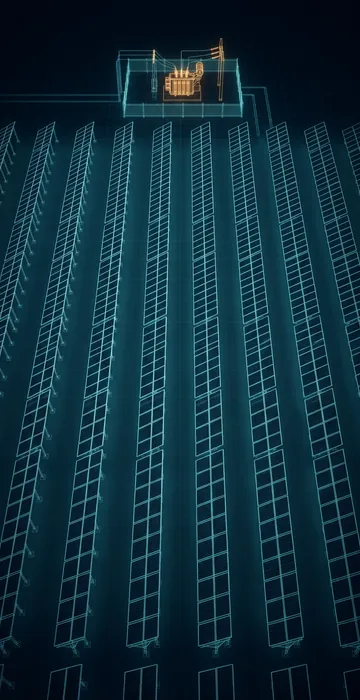
Measured by energy instead of capacity, NREL's report found large fixed-tilt PV plants used about 2.8 acres of directly occupied land per gigawatt-hour (GWh) of annual generation, or 3.7 acres counting the whole site, and large single-axis tracking plants about 3.3 to 3.5 acres per GWh. Trackers use a bit more land per MW but produce more energy per MW, so the gap narrows on an energy basis.
The energy view is handy when the question is "how much solar to supply a given load?" Try it on a hypothetical load:
- A steady 10 MW load uses 10 × 8,760 = 87,600 MWh, or 87.6 GWh a year.
- Assume a solar capacity factor of 25% (AC basis). Required capacity: 87,600 ÷ (8,760 × 0.25) = 40 MWac.
- Land at 7.5 acres per MWac: 40 × 7.5 = 300 acres.
- Check by energy: 87.6 GWh × 3.4 acres per GWh ≈ 298 acres. The two methods agree.
Keep in mind that this covers annual energy, not every hour. Solar doesn't produce at night, so a load that runs around the clock would also need storage or another source, which adds more equipment and sometimes more land.
How Do You Estimate Acres for a Specific Project?
You estimate acres for a specific project by starting with a per-MW rule of thumb, then adjusting for the site. A quick worked example for a 100 MWac tracking project:
- Base estimate: 100 MWac × 7 acres = 700 acres.
- DC capacity at a 1.3 ratio: 130 MWdc. With assumed 400-watt modules, that's 130,000,000 ÷ 400 = 325,000 panels.
- Add a margin for setbacks, wetlands and irregular boundaries: perhaps 10% to 20% on a typical parcel.
- Result: roughly 770 to 840 acres under lease, or about 1.2 to 1.3 square miles (640 acres per square mile).
A layout engineer will refine this with a ground coverage ratio, the share of the land actually shaded by panels, which commonly runs from roughly a third to a half depending on latitude and racking.
How Does Solar Land Use Compare With Gas Power?
Solar uses far more land per MW than gas generation, though comparing them fairly means counting energy, not just capacity. A natural gas engine plant can fit tens of megawatts on a few acres, and it can run around the clock. Solar needs hundreds of acres for the same nameplate and produces only during daylight.
Gas has its own footprint upstream, in wells, gathering lines and pipelines. In oil country, though, the gas is sometimes already there and being burned off. A flare gas to power project can put generators on a pad of an acre or two next to an existing well, which is about as compact as power generation gets.
Does a Solar Farm Take Land Out of Farming?
A solar farm takes land out of crop production for the life of the lease, usually decades, but the share of total farmland involved is small and the land can return to farming afterward. The American Farm Bureau Federation has noted that about 1.25 million acres of farmland were in solar, around 0.14% of US farmland, while also flagging that projections of future growth are much larger.
Many projects now plant native grasses or pollinator habitat under the panels, and some graze sheep to control vegetation. Rules on decommissioning and soil restoration vary by state and county, so landowners should read lease terms carefully and check with counsel.
Solar Farm Acres per MW: Plan on About Seven, Then Check the Site
How much land does a solar farm need per MW? Plan on roughly 7 to 8 acres per MWac of total project area, with a realistic range of 5 to 10. NREL's 7.9 acres per MWac and Virginia's 6.93 disturbed acres per MWac bracket the typical answer, and newer projects trend slightly lower as panels improve.
Definitions explain most disagreements: total versus direct area, AC versus DC capacity, and fixed versus tracking racks. Site details like setbacks and terrain explain the rest.
For a landowner or county reviewer, the quick test is simple. Divide the acres on the table by the project's AC capacity in MW. Anything between about 5 and 10 is normal; well outside that range deserves a question. Then ask the developer for the racking type and a preliminary layout, which will explain most of the difference.