Why Do Communities Oppose Data Centers? – Noise, Water, Power
Plenty of zoning hearings that were supposed to take half an hour have run past midnight once a data center is on the agenda. Neighbors line up at the microphone. Some worry about a hum they heard near another site. Others ask about wells, power bills or why a company that wants a tax break won't say its own name. Developers often walk out surprised by how fast the mood turned. Why do communities oppose data centers, and what is behind the pushback?
Data center community opposition usually comes down to five concerns: noise, water, electricity costs and grid strain, the size and look of the buildings, and a sense that the community gives more in tax breaks than it gets back in jobs. Underneath all five is trust.
Projects often arrive under code names, with non-disclosure agreements and little early detail, so residents hear about them late and assume the worst. Some concerns are overstated and some are very real, depending on the site and design. Developers who answer each one with specifics, early, tend to fare better than those who show up with a rendering and a jobs number.
How Common Is Data Center Community Opposition?
Common enough to move real money. In a widely cited report, the research group Data Center Watch counted about $64 billion of US data center projects blocked or delayed by local opposition, $18 billion blocked outright and $46 billion delayed. It identified 142 activist groups across 24 states, citing water, noise, power and taxes.
Those numbers come from one tracker with its own methods, so treat them as a sense of scale. But anyone who follows county agendas sees the pattern. Opposition is no longer limited to Northern Virginia. It shows up in farm counties, small towns and suburbs that never had a data center before.
Why Do People Worry About Data Center Noise?
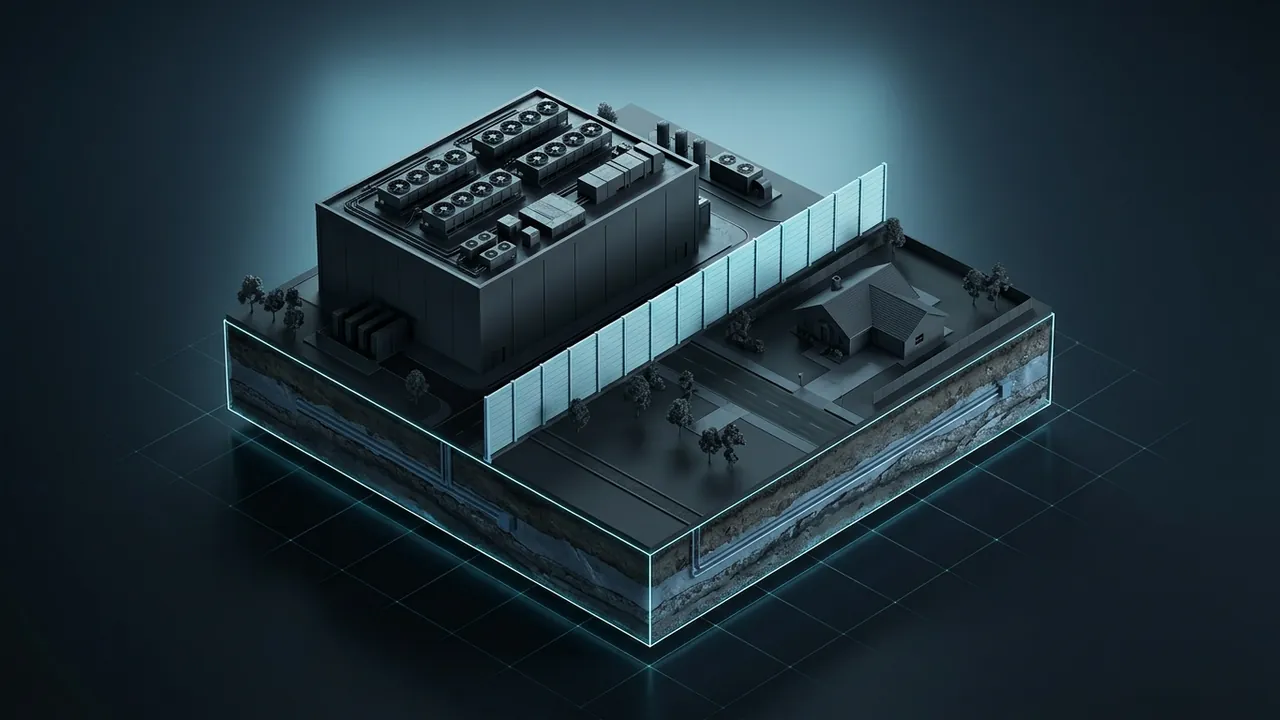
Because a large campus makes a steady sound that never fully stops. Rooftop chillers, dry coolers and exhaust fans run day and night. To neighbors, the problem is often less the loudness than the constant, low-pitched hum, which can carry farther than people expect and is hard to block with a fence.
Then there are the backup generators. A big campus may have dozens or hundreds of diesel units. They sit idle most of the time, but each one is tested regularly, and in a real outage many run at once. Local noise limits at homes often fall somewhere around 50 to 55 dBA by day and lower at night, and a single loud test can cross that line at a nearby property.
Counties are writing rules around this. Fairfax County, Virginia, amended its zoning ordinance in 2024 to require data center buildings to sit 200 feet from residential lot lines and generators 300 feet away (unless screened by the building), along with noise studies before and after construction.
Do Data Centers Really Use That Much Water?
Some do and some barely use any, which is why this argument gets confusing. Sites that cool with evaporative systems or cooling towers can use a lot of water on hot days. A local government guide from Wayne County, Michigan, published in 2026, put the average data center at around 300,000 gallons a day. Sites with closed-loop or air-cooled designs use far less water, but they typically use more electricity for cooling.
The worry is sharpest where water is already tight: drought-prone areas, towns on small municipal systems and rural places where families depend on private wells. Residents want to know where the water comes from, whether it competes with farms and homes in a dry year, and who decides if it runs short. A vague answer here costs more goodwill than almost anything else.
Will a New Data Center Raise My Electric Bill?
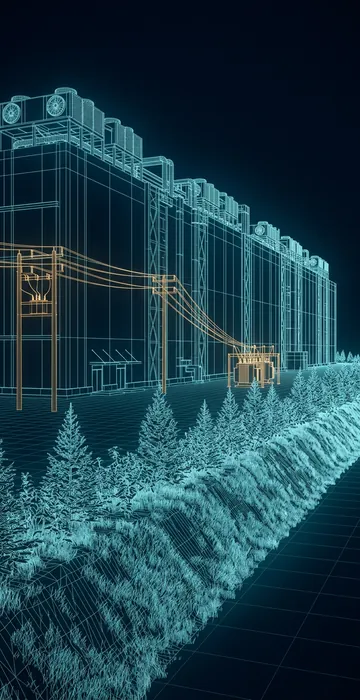
It depends on how the utility and regulators handle the costs, and that is a fair thing to ask. A large campus can require new substations, transmission lines and generation. If those costs are spread across all customers, households can end up paying part of the bill. If the data center pays its own way under a special tariff, the impact on others can be small, or even helpful when fixed grid costs are spread over more sales.
Regulators have started writing rules for this. In 2025, Ohio regulators approved a tariff requiring new AEP Ohio data centers over 25 MW to pay for at least 85% of the capacity they sign up for, for up to 12 years, whether they use it or not. Rules like that aim to keep a canceled project from leaving everyone else with stranded costs.
Power concerns also include the visible stuff: new high-voltage lines across farms and backyards, and fears about grid reliability during heat waves. Those fights can be louder than the data center fight itself.
What About Construction, Traffic and Light?
These get less press, but they matter to the people living next door. A large campus can take years to build in phases, which means years of heavy trucks, concrete pours, dust and early-morning crews on rural roads that weren't built for them. Some neighbors also notice the glow from security lighting on buildings that run all night.
Diesel exhaust from generator tests is another concern, especially where hundreds of units are planned. Air permits cap how many hours those engines can run outside emergencies, but residents still want to know what the stacks will put out and how often. A traffic plan, shielded lighting and a published testing schedule cost little compared with a lost zoning vote.
Why Do Tax Breaks and Jobs Cause Friction?
Because the math looks lopsided to many residents. A data center can represent a billion dollars or more of investment but employ a relatively small permanent staff once construction ends. Many states exempt server equipment from sales tax, and local governments sometimes add property tax deals.
Supporters point out that data centers can pay large property taxes while using few school, road or emergency services. Opponents counter that the same land could host employers with more jobs. Both points can be true at the same site. The best answer is a clear, public accounting of taxes paid, abatements given and jobs promised.
Why Do Projects Arrive Under Code Names?
Because the end user usually wants to stay hidden until the deal is done. Big tech companies and large operators often buy land through a local entity with a bland name, ask officials to sign non-disclosure agreements and use a project code name. They do it to keep land prices from jumping and to keep competitors from reading their plans.
From the business side, that logic makes sense. From the kitchen table, it looks like something is being hidden. When residents learn that their own county officials knew the company's name for months and couldn't say it, trust drops fast. The secrecy then colors every other issue: if they wouldn't tell us who they are, why believe the noise study? I think the confidentiality window should be as short as possible, and the developer should be ready to answer basic questions about size, power, water and timing even before the tenant is public.
How Are Counties Responding to Opposition?
Mostly by taking away the easy path. Loudoun County, Virginia, home to one of the densest data center clusters in the world, ended by-right data center development in March 2025. Every new data center there now needs a special exception with public hearings. Other places have paused applications while they write new rules. The Wayne County guide notes that Gibraltar, Michigan, adopted a one-year moratorium.
Common tools in new ordinances include:
- Minimum setbacks from homes for buildings and generator yards
- Noise studies before construction and verification after
- Limits on generator testing hours
- Landscaping, berms and height limits for screening
- Water use disclosure or caps
- Restricting data centers to industrial zones
What Can Developers Do to Earn Local Support?
Show up early, be specific and put promises in writing. Here is the checklist I would bring to any new county:
- Meet with neighbors before the first public hearing, not after the agenda is posted.
- Commission a real sound study that includes generators, and share the results.
- Pick a cooling design that fits the local water situation, and say how much water it uses in a hot month.
- Buy enough land for buffers. Distance is the cheapest noise control there is, which is why data center land requirements keep growing.
- Explain who pays for the substation, lines and generation.
- Test generators on weekday daytime schedules and publish them.
- Consider a binding community benefit agreement with measurable commitments.
- Use honest renderings from the neighbors' actual viewpoints.
Data Center Community Opposition Is Mostly About Trust
Communities oppose data centers for concrete reasons: a constant hum, water in a dry year, the fear of higher bills, massive buildings next to farmland and tax deals that seem one-sided. Not every worry fits every site, but each is reasonable to raise.
The projects that win usually answer those questions before anyone has to ask, with numbers, maps and enforceable commitments. If you are a developer, plan the community work as carefully as the power plan. If you are a resident, ask for the sound study, the water figure and the tariff. Those three documents tell you most of what you need to know.