How Does a Flare Stack Work? – Combustion Efficiency and Design
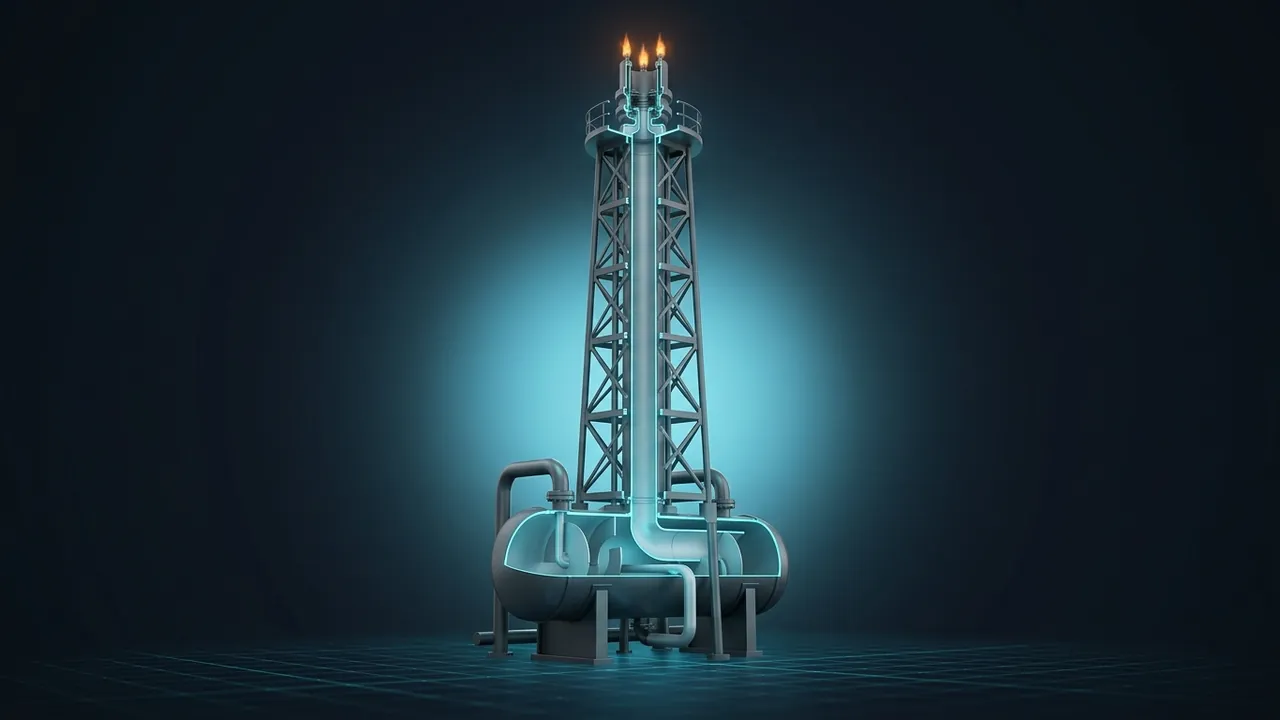
On most leases, the flare is the one piece of equipment everybody notices and almost nobody looks at closely. It is just a pipe with a flame on top, right? Not quite. A good flare is a small, carefully designed combustion system, and the difference between a good one and a sloppy one shows up in what drifts downwind. How does a flare stack work, and what makes one burn cleanly?
A flare stack is a tall pipe that safely burns gas that cannot be sold or used, lifting the flame high enough that heat and fumes stay away from people and equipment. Gas first passes through a knockout drum that catches liquids, then through a seal that keeps air and flame from traveling back down the line. It rises to a tip where pilot flames keep it lit. When the gas has enough heating value and the flare runs within its design limits, it destroys about 98% of the hydrocarbons it burns. When those conditions slip, efficiency drops, sometimes a lot.
What Are the Main Parts of a Flare Stack?
The U.S. Environmental Protection Agency's AP-42 section on industrial flares breaks a typical flare system into a handful of pieces. Walking from the process side out to the flame:
- Knockout drum. A vessel that drops out liquids and condensate so they do not get carried up the stack and rain down burning.
- Seal. A water seal, a proprietary seal or a steady purge of gas that keeps air from leaking back in and prevents flashback, where flame travels backward into the line.
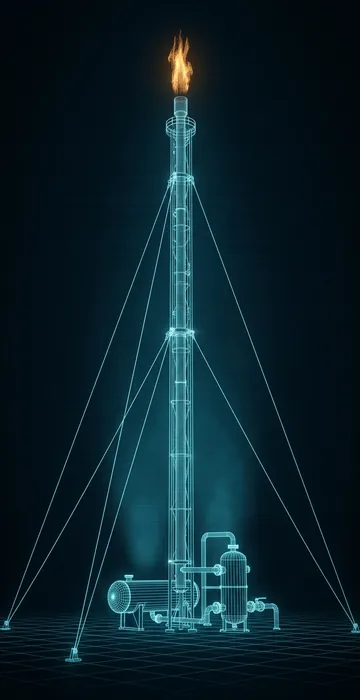
- Riser. The stack itself, which may be self-supporting, held up by guy wires or carried in a steel tower.
- Tip. The burner at the top, designed to mix gas and air and hold a stable flame.
- Pilots and igniter. Small continuous flames, with an ignition system to light them, that keep the main flame going.
- Assist system, if used. Steam or forced air injected at the tip to help the gas burn without smoke.
On a small well pad, that whole list might be a compact package: a knockout pot, a short stack and a single pilot. At a refinery or gas plant, the same functions are scaled up with big headers and tall towers.
How Does a Flare Stay Lit?
The pilots do the work. A flare is not lit once and left alone. It has one or more pilot flames burning all the time, fed by a steady gas supply, so that any gas reaching the tip catches immediately.
Igniters light the pilots, often electronically or with a flame front sent up a tube. Thermocouples or other sensors watch the pilots and alarm if they go out. That matters. A flare with dead pilots is just a vent, sending raw gas into the air. Crews on windy days know the trouble a gust can cause when it blows a weak pilot sideways.
What Is Flare Combustion Efficiency?
Two terms get mixed up here, and AP-42 defines them separately:
- Combustion efficiency is the share of hydrocarbons fully converted to carbon dioxide and water.
- Destruction efficiency is the share of a specific pollutant, like methane, turned into anything else.
Destruction efficiency always runs higher. AP-42 notes that about 96.5% combustion efficiency roughly equals 98% destruction efficiency. When you see "98%" in reports, it usually means destruction.
What Keeps Efficiency High?
Gas quality and operating conditions. EPA's flare technology fact sheet says properly operated flares reach at least 98% destruction when the gas heating value is above about 300 Btu per standard cubic foot. Below that, the flare may need extra fuel gas to burn well. Other factors:
- Exit velocity. Too fast and the flame can lift off the tip; AP-42's 98% basis assumes velocity below the design maximum.
- Wind. Crosswinds can pull the flame apart and let unburned gas escape.
- Over-assisting. Too much steam or air dilutes the flame and can actually lower efficiency.
- Liquids. Carryover from a full knockout drum causes smoking and sputtering.
A few points sound small until you put gas behind them. Say a flare burns 500 Mcf per day of gas that is 80% methane, so 400 Mcf per day of methane. At 98% destruction, 8 Mcf of methane slips through each day. At 91% destruction, 36 Mcf slips through. Same flare, same gas, four and a half times the methane.
Why Are Flare Stacks So Tall?
Heat, mostly. A big flame radiates a lot of heat, and the people and equipment around it need protection. Raising the flame puts distance between the fire and the ground. Designers calculate flare height and location from how much gas the flare might have to handle in a worst-case release and how much radiant heat is acceptable at grade. Industry practice for that work is laid out in American Petroleum Institute guidance on pressure relief and flare systems.
Height also helps disperse combustion products and keeps the flame away from any vapors near the ground. On small pads with modest flow, stacks can be shorter, and enclosed combustors hide the flame inside an insulated shell.
What Types of Flares Are There?
| Type | How it works | Where you see it |
|---|---|---|
| Non-assisted stack | Gas burns at the tip with no help | Well pads, low flows, gases that burn clean |
| Steam-assisted | Steam at the tip adds mixing and cuts smoke | Refineries and plants with steam on hand |
| Air-assisted | Blowers push air into the flame | Sites without steam or water |
| Pressure-assisted | High gas pressure drives mixing at the tip | High-pressure systems |
| Enclosed ground flare or combustor | Flame burns inside a refractory-lined shell | Tank vapors, sites near homes or roads |
EPA's fact sheet puts flare flame temperatures in the range of roughly 500 to 1,100 °C (about 930 to 2,000 °F), depending on the gas and design.
A Flare Is Still Burning Somebody's Gas
It is easy to forget that the gas going up a flare stack belongs to somebody. Mineral owners, working interest owners and the state all have a stake in it, and whether anyone gets paid on flared gas depends on the lease and state law. The question of flare gas royalties comes up the moment anyone proposes putting that gas to work instead, so it is worth understanding before you pitch an operator.
A Good Flare Stack Is a Burner, Not a Chimney
Here is the whole flare stack in one breath. Gas gets cleaned of liquids, sealed against flashback, carried up a riser and burned at a tip held lit by pilots, sometimes with steam or air to keep it smokeless. Done right, it destroys about 98% of the hydrocarbons.
Done carelessly, with lean gas, blown-out pilots or a flooded knockout drum, it can do much worse. If you run or inspect flares, watch the pilots, keep the knockout drum drained, and check that the gas heating value stays where the flare was designed to burn it. Those three habits do more for clean flaring than anything else.