Can Flare Gas Run an AI Data Center? – Scale, Uptime and the Math
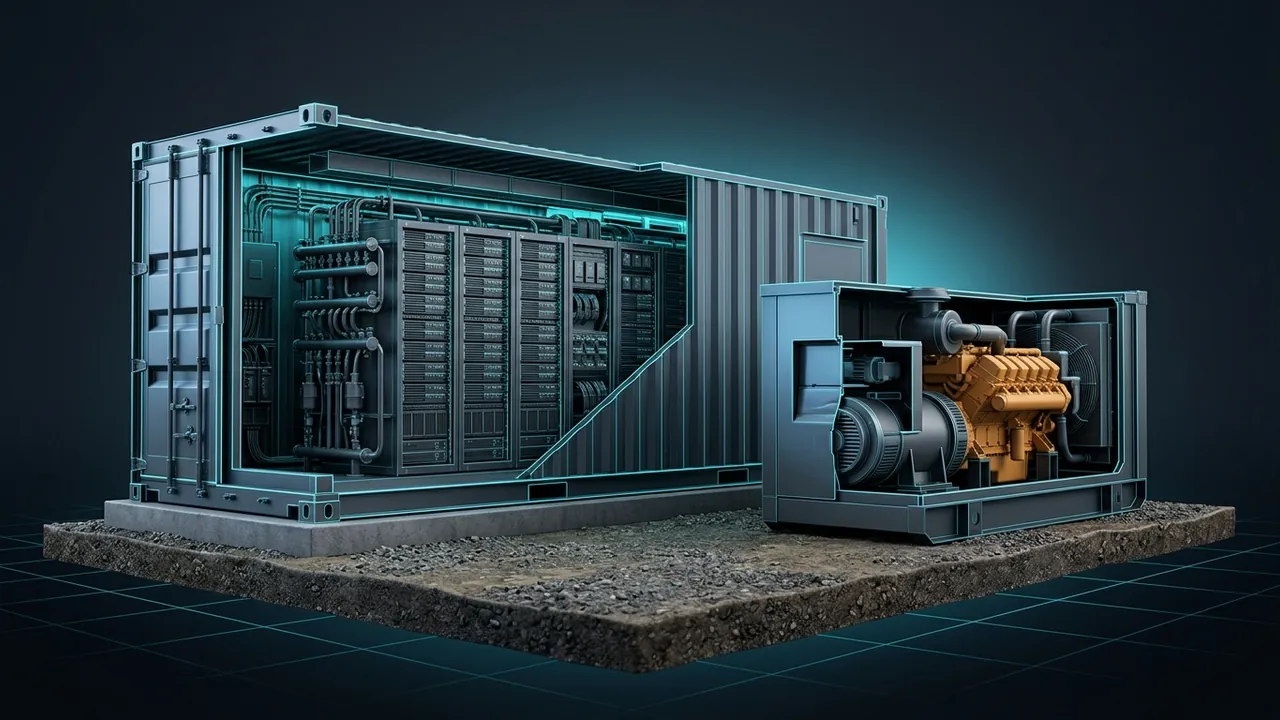
Every few months someone pitches the same picture: flares burning all over the oil patch, an AI industry desperate for power, so why not put the data centers where the flares are? It is a tidy story, and parts of it are true. But an AI campus is a very different animal from a container of bitcoin miners. Before anyone pours a slab, the numbers deserve a hard look. A flare gas data center has to work in the field, not just in a pitch deck. Can flare gas run an AI data center, and what does the math say?
Flare gas can power small, flexible computing loads, but it is a poor fit for a large AI data center on its own. A typical flare produces a few hundred thousand cubic feet of gas a day, enough for a few megawatts, while AI campuses are planned at 100 MW and up. Shale wells also decline quickly, and flare gas is interruptible by nature, which clashes with expensive GPU clusters that need to run nearly all the time. Projects that call themselves flare-powered at scale usually end up gathering gas from many wells, processing it and running a conventional gas plant. That can work, but it is really an oilfield gas plant.
How Much Gas Does an AI Data Center Need?
A lot more than one flare can give. Run the numbers for a 100 MW facility, a modest size by current AI standards:
- Facility load: 100 MW, or 100,000 kW, around the clock.
- Heat rate of on-site generation: assume 9,000 British thermal units per kilowatt-hour (Btu/kWh).
- Fuel per hour: 100,000 × 9,000 = 900 million Btu (MMBtu).
- Fuel per day: 900 × 24 = 21,600 MMBtu.
- Volume at about 1,037 Btu per cubic foot: 21,600 ÷ 1.037 ≈ 20,800 thousand cubic feet (Mcf), or about 20.8 million cubic feet per day (MMcf/d).
For comparison, Enverus estimates that a 1 GW data center uses about 140 MMcf/d of gas, or roughly 14 MMcf/d per 100 MW. The gap comes from assumptions: 140 MMcf/d per gigawatt implies a heat rate near 6,000 Btu/kWh at full load, which only the best combined-cycle plants approach, or a plant running well below full output. On-site engines and simple-cycle turbines running flat out land closer to the example above. Either way, the answer is tens of millions of cubic feet a day. Try your own numbers in the calculator below.
How Big Is a Typical Flare?
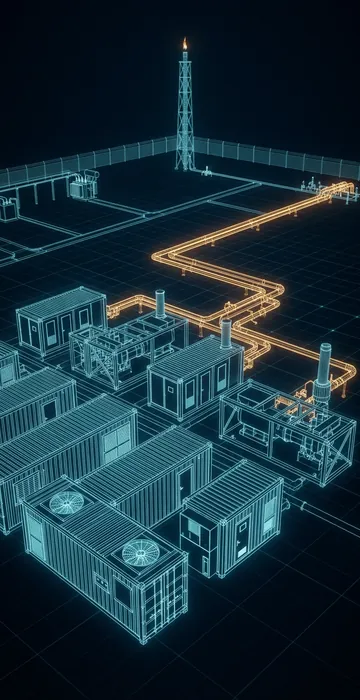
Most single-well or single-pad flares are small, often in the range of a few hundred Mcf per day, sometimes up to a million or two cubic feet a day early in a well's life. Using the example above, a 100 MW AI campus would need the combined gas from dozens of good flares, all tied together and all staying steady.
The global picture shows how tempting the idea looks from a distance. The World Bank reported in June 2026 that 167 billion cubic meters of gas were flared worldwide in 2025. Here is the rough conversion:
- 167 billion cubic meters × 35.31 cubic feet per cubic meter ≈ 5.9 trillion cubic feet a year.
- Divided by 365 days ≈ 16 billion cubic feet per day.
- At 9,000 Btu/kWh, that could theoretically run something like 75 to 80 GW of generation.
That is a huge number, but it is spread across thousands of sites in many countries, with the World Bank noting that nine countries account for more than 80% of flaring. Much of it sits in places with weak grids, limited fiber and difficult security. The gas is real. Gathering it into data-center-sized bundles is the hard part.
Why Does Uptime Matter So Much for AI?
Because the hardware is too expensive to sit idle. A bitcoin miner is cheap enough that turning it off when gas drops is an acceptable trade. GPU servers for AI cost many times more per kilowatt, so every hour offline burns money in depreciation and lost revenue. Customers buying AI capacity also expect it to be available, often under contracts with uptime targets.
Large training jobs add another wrinkle. They run across thousands of chips in sync, and an unexpected power dip can force the job back to its last saved checkpoint. Data center operators try hard to avoid that with redundant generation, batteries and careful load management. Flare gas, which rises and falls with well behavior and shuts off when the operator does a workover, is the opposite of what those designs want.
The pattern is simple: the more a computing load costs per kW and the more it values uptime, the worse it fits on interruptible gas.
What About Well Decline?
It is the quiet killer. Shale wells come on strong and drop fast, often losing a large share of their output in the first year or two. A flare that could run 5 MW today may only run 2 MW next year. AI facilities are planned for 10 to 20 years of service. Matching a 15-year asset to gas that fades in 18 months requires constantly connecting new wells, which means building and running a gathering system.
And once you are building a gathering system, the gas usually gets better options. A gathering company can send it to a processing plant and sell it into a pipeline. The flare disappears, which is good news for the environment and bad news for the original business plan.
What Else Makes Flare Sites Hard for AI?
A few practical problems stack up:
- Gas quality. Raw associated gas is rich, wet and sometimes sour. Feeding steady, clean fuel to a large generation plant usually means real processing, not just a scrubber.
- Connectivity. Satellite links that are fine for bitcoin mining are thin for serving AI customers or moving large datasets. Big AI sites want fiber, and fiber rarely runs to remote well pads.
- Water and cooling. Dense AI racks often need liquid cooling, and the heat still has to go somewhere. Many oilfield areas are hot, dusty and short on water.
- Workforce and access. Data centers need technicians close by. Remote pads mean long drives on lease roads, especially in bad weather.
- Rights and rules. The gas belongs to operators and mineral owners under lease terms, and state flaring and air rules apply.
Could Batteries or a Grid Tie Fill the Gaps?
They help, but they do not change the basic math. A battery system can cover seconds to a few hours of shortfall and smooth out the fast swings that engines struggle with. It cannot replace gas that has declined for good. A grid connection could back up the site, but if a strong grid line were available, the project probably would not need flare gas in the first place.
The honest role for storage at an oilfield computing site is ride-through and load smoothing. Firm energy over days and months still has to come from a firm fuel supply.
So Where Does Flare Gas Fit in AI and Computing?
It fits at the small, flexible end. Containerized computing that can pause, move and tolerate thin connectivity is a natural match. So far that has mostly meant flare gas bitcoin mining, where a miner can switch off with the gas and lose nothing but a few hours of revenue.
Smaller edge computing also makes sense where the data is created on site. Oil and gas operators run analytics on sensor, video and drilling data right at the pad, often with modest hardware drawing a few kilowatts. That kind of edge AI on industrial sites is a much better match, and a small genset on local gas can be a sensible way to power it.
Some developers also look at deferrable AI work, such as batch jobs that can wait or pause. That stretches the fit somewhat, but the hardware cost problem remains. In most cases, flare gas makes a better bridge or supplement than the sole power source for an AI facility.
What Would a Realistic Oilfield AI Project Look Like?
It would look less like a flare project and more like a gas plant that happens to be in the oilfield. A workable design usually includes:
- Gas from many wells collected through a gathering system or bought from a processing plant tailgate.
- Firm gas contracts and, ideally, access to a pipeline for backup supply.
- Generation with spare units, such as N+1 or N+2 engines or turbines, plus battery storage for fast swings.
- Fiber connectivity, even if it means building a long lateral.
- A plan for the gas supply over the full life of the facility, not just the first year.
That kind of project can make sense in basins with lots of gas and constrained takeaway. It also stops relying on flares. The gas it burns might otherwise have been flared, which is a fair environmental point to make, but the business model is a conventional gas-fired data center.
The Flare Gas Data Center, Seen Clearly
Can flare gas run an AI data center? Not by itself at any meaningful scale. A single flare supports a few megawatts, AI campuses need a hundred or more, wells decline fast, and GPU clusters cannot afford to stop every time the gas does. The math points toward small, flexible loads on flare gas and toward conventional, firm gas supply for big AI sites.
If you are evaluating a flare gas data center pitch, ask four questions: how many MMcf/d, from how many wells, for how many years, and what happens when the gas drops? Good answers will mention gathering, firm contracts and backup supply. If the answers are vague, the project probably is too.