How Are NOx Emissions Controlled on Gas Turbines? – DLN and SCR
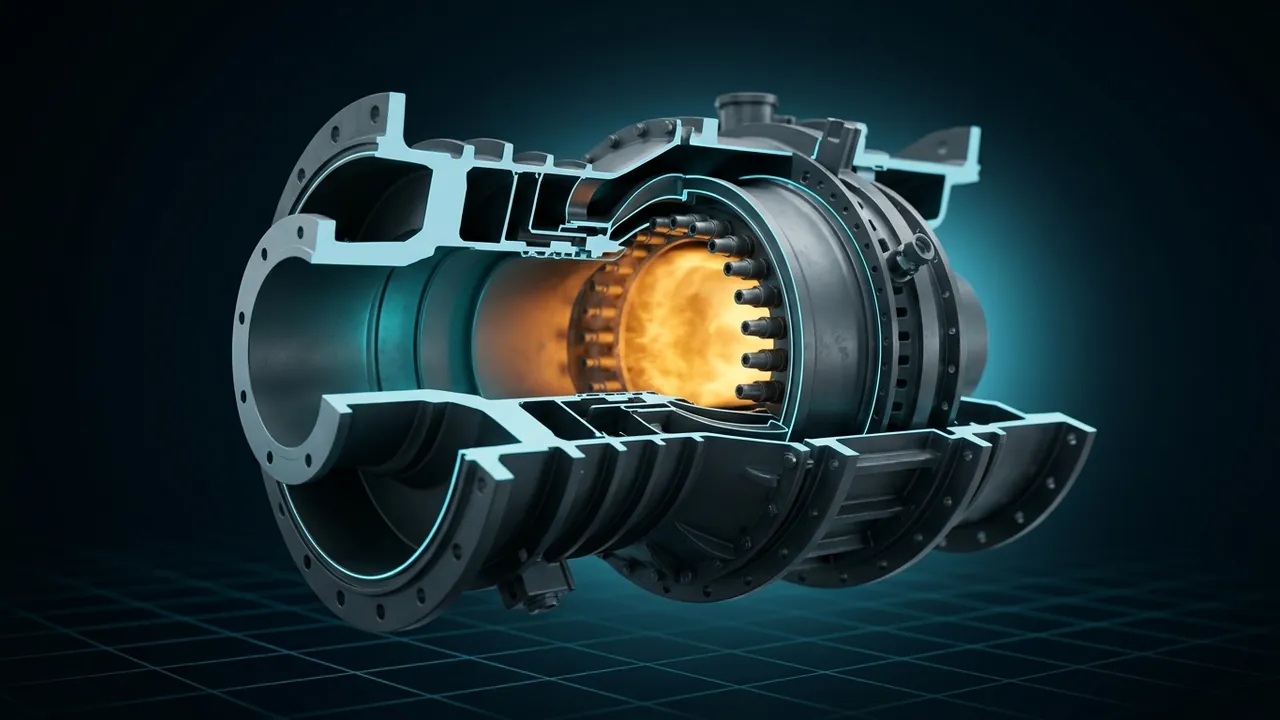
Burn natural gas hot enough and the air itself starts to react. Nitrogen and oxygen, which ignore each other at room temperature, combine in a turbine flame to form nitrogen oxides, the stuff behind smog and the reason air permits for gas turbines run so many pages. Turbines need that heat to be efficient, so engineers cannot simply turn the flame down. How are NOx emissions controlled on gas turbines, and what do DLN and SCR actually do?
NOx emissions control on gas turbines works in two stages: first limit how much nitrogen oxide (NOx) the flame makes, then clean up what is left in the exhaust. Combustion controls include water or steam injection, which cools the flame, and dry low NOx (DLN) combustors, which premix fuel and air so the flame burns lean and cooler without added water. Post-combustion control usually means selective catalytic reduction (SCR), where ammonia or urea reacts with NOx over a catalyst to form nitrogen and water. A U.S. Environmental Protection Agency review put SCR at roughly 90% reduction. Plants in strict air districts typically combine DLN and SCR to reach single-digit parts per million.
Why Do Gas Turbines Make NOx?
Gas turbines make NOx because their flames are very hot and full of air. The air we breathe is about 78% nitrogen and 21% oxygen. At ordinary temperatures, those molecules stay apart. In a flame, the high temperature breaks them up and lets them recombine as nitric oxide and nitrogen dioxide, which together are called NOx.
This "thermal NOx" climbs steeply with flame temperature, especially above roughly 2,800°F (about 1,540°C), and with the time gas spends at that temperature. Natural gas contains almost no nitrogen of its own, so nearly all turbine NOx comes from the air. That is good news, because it means controlling flame temperature controls most of the problem.
How Is NOx Measured on a Turbine?
Turbine NOx is usually reported in parts per million by volume, dry, corrected to 15% oxygen, written ppmvd at 15% O2. The correction keeps anyone from "diluting their way" to a lower number by adding extra air.
Here is how the correction works. Say an analyzer reads 20 ppm NOx in exhaust that contains 16% oxygen:
- Formula: corrected ppm = measured ppm × (20.9 − 15) ÷ (20.9 − measured O2).
- Plug in: 20 × (5.9 ÷ 4.9) = 20 × 1.20 ≈ 24.1 ppm at 15% O2.
Permits also set limits in mass terms, like pounds per hour, tons per year or pounds per million British thermal units (lb/MMBtu). Continuous emissions monitoring systems (CEMS) track compliance on larger units around the clock.
What Does Water or Steam Injection Do?
Water or steam injection was the first widely used fix. Spraying highly purified water or injecting steam into the combustor absorbs heat and drops the peak flame temperature, which cuts thermal NOx sharply.
The EPA's 1993 Alternative Control Techniques document for stationary gas turbines reported uncontrolled NOx on natural gas from about 99 to 430 ppmv, depending on the turbine, and roughly 25 to 42 ppmv with water or steam injection. It works, but it has costs. The plant needs a steady supply of demineralized water, which is a real burden at a dry or remote site. Efficiency drops a little, carbon monoxide (CO) can rise and combustor parts may wear faster. Water injection is still common on some aeroderivative units and on turbines burning liquid fuel.
How Do Dry Low NOx Combustors Work?
DLN combustors (also called dry low emissions, or DLE, by some manufacturers) attack the problem without water. Instead of spraying fuel into a hot diffusion flame, where pockets of near-perfect fuel and air mix burn extremely hot, they premix the fuel with plenty of extra air before it reaches the flame. That lean mixture burns at a lower, more even temperature.
The same EPA document listed early DLN results at roughly 9 to 42 ppmv. Combustor designs have improved since then, and current models are offered with a range of NOx guarantees, so always check the specific vendor rating for your machine and site conditions.
The Catches With DLN
Lean premix flames sit closer to the edge of stability. Push them too lean and they blow out; get the balance wrong and they hum with combustion dynamics that can crack hardware. DLN systems use staged fuel nozzles and careful tuning to stay in the sweet spot.
They also lose their advantage at low load. On many designs, below a certain output the combustor shifts to modes with more diffusion flame, and NOx rises. That matters for plants that cycle up and down, including on-site plants following a variable load. It is also why fuel quality matters: big swings in gas composition can throw off DLN tuning.
What Is Selective Catalytic Reduction?
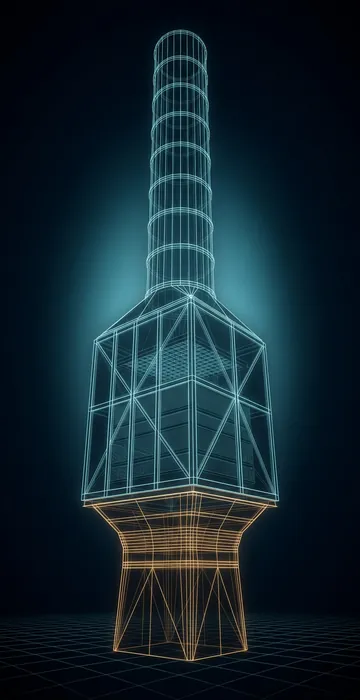
SCR cleans up NOx after the flame. A grid of nozzles sprays ammonia, either aqueous ammonia or ammonia made from urea, into the exhaust ahead of a catalyst bed. On the catalyst surface, ammonia reacts with NOx to form harmless nitrogen and water vapor.
The EPA document cites SCR at about 90% NOx reduction, down to 9 ppmv or less. The math is simple. A turbine making 25 ppm with DLN, followed by a 90% effective SCR, ends at 25 × (1 − 0.90) = 2.5 ppm. That is how plants reach the very low limits common in strict air districts.
SCR has its own requirements. Conventional catalysts work best in a temperature window, commonly cited around 600 to 750°F. That fits nicely inside the heat recovery steam generator of a combined cycle or combined heat and power plant, where the exhaust has already cooled. Simple-cycle exhaust runs hotter, so those plants use tempering air fans to cool the gas or high-temperature catalysts built for it.
Ammonia Slip and Other Trade-Offs
Ammonia that passes through unreacted is called slip, and permits usually cap it at a few ppm. Ammonia storage, especially anhydrous ammonia, is a hazardous material that triggers its own safety planning, which is why many plants choose aqueous ammonia or urea. Catalysts age and must be replaced on a schedule, and the system adds backpressure that trims output slightly.
Which NOx Control Methods Do Plants Use Together?
Most modern plants layer methods. A typical progression looks like this:
| Approach | How it cuts NOx | Typical fit |
|---|---|---|
| Water or steam injection | Cools the flame | Older units, some aeroderivatives, liquid fuel |
| DLN alone | Lean premixed flame | Areas with moderate limits, smaller sites |
| DLN plus SCR | Low flame NOx, then catalyst cleanup | Strict air districts, larger plants |
| DLN plus SCR plus oxidation catalyst | Adds CO and VOC control | Plants with tight CO and VOC limits |
The oxidation catalyst in that last row deals with carbon monoxide and volatile organic compounds (VOCs), which can rise as NOx controls push the flame cooler. CO and NOx often pull in opposite directions, and tuning a plant is partly a balancing act between them.
Do Gas Engines Use the Same NOx Controls?
Partly. Reciprocating gas engines face the same chemistry, but the toolbox looks a little different. Lean-burn engines run with lots of excess air to keep combustion temperatures down, much like a DLN combustor, and many add SCR when permits demand it. Rich-burn engines run close to the exact fuel-to-air ratio and use a three-way catalyst, similar to a car, which cuts NOx, CO and hydrocarbons at once but needs tight air-fuel control. The units and limits differ too, since engine rules are often written in grams per horsepower-hour rather than ppm. If your site is weighing engines against turbines, compare the full emissions package, not just the nameplate output.
Who Decides How Low NOx Must Go?
Federal rules set a floor. EPA's New Source Performance Standards for stationary combustion turbines apply to new units, but the tighter numbers usually come from site permits. Under the EPA's New Source Review program, large new sources in areas that meet air quality standards need Prevention of Significant Deterioration permits with best available control technology, and sources in nonattainment areas face even stricter requirements. State and local agencies issue most of these permits.
For on-site power at data centers or industrial plants, NOx is often the pollutant that sets the permit path, the stack design and the schedule. If you are not sure where your project stands, start by learning when you need an air permit for generators and how long one takes. Talk to your state agency and an experienced permitting consultant early, because the control technology you need can change the equipment you buy.
NOx Emissions Control Comes Down to Flame Temperature and Catalyst
Gas turbines control NOx by keeping the flame cooler, with water injection or DLN combustors, and then scrubbing the exhaust with SCR when the limits get tight. Each method has trade-offs in water, stability, ammonia handling and cost, and most modern plants combine them.
When you shop turbines for an on-site project, ask each vendor for NOx guarantees across the full load range, not just at full load. Then match those numbers to your likely permit limits and decide early whether SCR belongs in the design. It is far easier to leave room for a catalyst than to wedge one in after the stack is built.