Why Are Power Transformers So Hard to Get? – Lead Times and Options
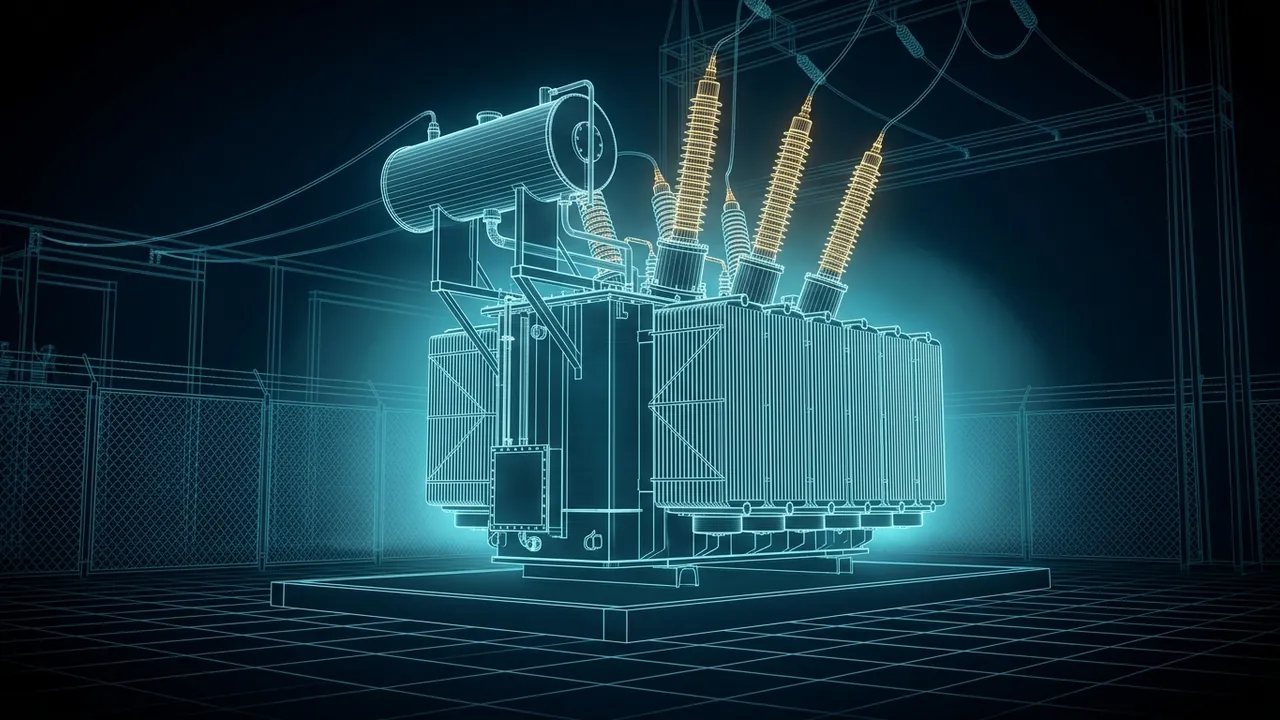
A data center can be designed in months and built in a year or two. The utility can sometimes find the transmission capacity. Then someone asks about the substation transformers, and the schedule falls apart. Engineers who used to order a large power transformer and get it within a year now talk about waits measured in years. Why are transformer lead times so long, and what can a project actually do about it?
Transformer lead times are long because demand for power transformers has surged while the number of factories, skilled workers and specialty steel suppliers that make them has not kept up. A report prepared for the President's National Infrastructure Advisory Council (NIAC) in 2024 found that typical lead times for large power transformers rose from about 50 weeks in 2021 to about 120 weeks in 2024, with the largest units taking up to 210 weeks.
Large units are custom-built, hand-wound, factory-tested and mostly imported. Projects cope by ordering early, standardizing designs, buying spares, considering refurbished or mobile units, and sometimes generating power at site voltage to need fewer big transformers.
What Kinds of Transformers Are We Talking About?
The shortage hits several classes, and they behave differently.
- Distribution transformers: pole-mounted and pad-mounted units that feed homes and businesses, and the smaller step-down units inside a campus.
- Substation or medium power transformers: units of roughly 10 to 100 megavolt-amperes (MVA) that step transmission or sub-transmission voltage down to distribution voltage.
- Large power transformers (LPTs): units of 100 MVA and up, used at transmission substations and as generator step-up transformers at power plants.
A large data center campus can need all three: a pair or more of large transformers at its high-voltage substation, dozens of medium-voltage to 480-volt units inside the buildings, and step-up transformers if it has on-site generation.
How Long Are Transformer Lead Times Now?
The best public benchmark comes from the draft NIAC report on the critical shortage of power transformers, published in June 2024. Citing Wood Mackenzie data, it put typical large power transformer lead times at about 50 weeks in 2021 and about 120 weeks in 2024, with large units ranging from 80 to 210 weeks. The same report said prices had risen roughly 80% above pre-pandemic levels and that domestic factories meet only about 20% of U.S. needs for large power transformers.
The chart below shows those figures.
Weeks from order to delivery
President's National Infrastructure Advisory Council, draft report on the critical shortage of power transformers (June 2024), citing Wood Mackenzie.
View the data
| Lead time | |
|---|---|
| Typical, 2021 | 50 weeks |
| Typical, 2024 | 120 weeks |
| Large units, 2024 (low end) | 80 weeks |
| Large units, 2024 (high end) | 210 weeks |
Smaller units are not immune. The National Renewable Energy Laboratory (NREL) reported in early 2024 that distribution transformer lead times had stretched to as long as two years, roughly four times pre-2022 levels. A year later, Wood Mackenzie's view was still grim: as T&D World reported in August 2025, the firm expected 2025 supply deficits of about 30% for power transformers and 10% for distribution transformers, with power transformer demand up 116% since 2019 and imports covering about 80% of U.S. power transformers.
Lead times move with orders and factory expansions, so treat any figure as a snapshot. Check current quotes with suppliers before you build a schedule around them.
Why Are Power Transformers So Hard to Make?
Because a large power transformer is closer to a custom-built ship engine than a catalog product. Several bottlenecks stack up:
- Custom design: each large unit is engineered for a specific voltage, impedance, cooling and site, so factories cannot simply build ahead for stock.
- Specialty steel: transformer cores use grain-oriented electrical steel, made by only a handful of mills worldwide and by a single U.S. producer.
- Skilled labor: winding coils, stacking cores and assembling insulation take experienced workers and a lot of hand work.
- Factory testing: every large unit goes through hours of high-voltage acceptance tests, and test bays are limited.
- Transport: a large transformer can weigh hundreds of tons, so moving it takes special rail cars or heavy-haul trucks, route permits and sometimes bridge studies.
Meanwhile, demand rose on every front at once: utilities replacing aging units, new wind, solar and battery plants needing step-up transformers, new transmission, electrification, and data centers. A factory slot that once went to one customer now has several bidding for it.
What Does a Long Lead Time Do to a Project Schedule?
It moves the transformer order to the front of the project. Illustrative example, working backward from a target energization date:
- Target energization: month 48 from today.
- Installation, oil filling, testing and commissioning at site: about 3 months, so delivery is needed by month 45.
- Manufacturing and delivery at the 2024 typical lead time of 120 weeks: 120 ÷ 4.33 ≈ 28 months, so the order must be placed by month 17.
- Specification, bidding and approval: say 6 months, so engineering starts by month 11.
At the high end of 210 weeks, manufacturing alone is about 48 months, which would require ordering on day one with no time for design. That is why many owners now commit to transformers before every other part of the design is final.
How Do Projects Work Around Transformer Shortages?
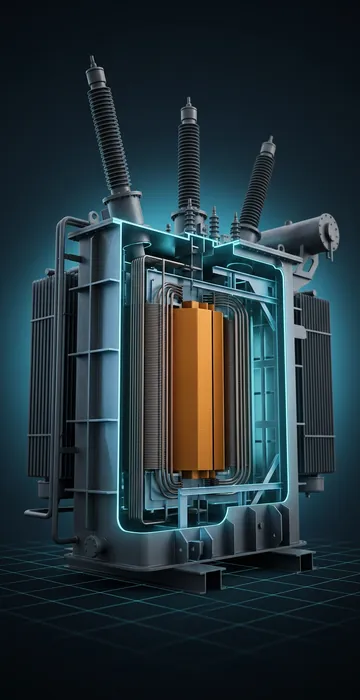
No single fix exists, but several approaches help:
- Order early and reserve factory slots, sometimes with deposits, before final design is complete.
- Standardize specifications across projects so one design can serve several sites and spares are interchangeable.
- Qualify more than one manufacturer, including overseas factories, and accept reasonable design variations.
- Buy or share spares, since a failed large transformer without a spare can mean a very long outage.
- Consider refurbished or remanufactured units, and mobile transformers or mobile substations as temporary bridges.
- Design the electrical system to need fewer high-voltage transformations, for example by generating power on site at medium voltage.
That last option is one reason developers have turned to on-site gas generation. A plant that generates at 13.8 kilovolts (kV) can feed campus distribution directly, skipping the transmission substation entirely, at least for the first phases. Our guide to the natural gas data center covers how that approach works and its trade-offs. On-site generation still needs its own step-up and distribution transformers, though, so it eases the shortage rather than escaping it.
Why Not Just Use More, Smaller Transformers?
Sometimes that works, but it rarely dodges the problem. Smaller substation transformers are also in short supply, and using several in place of one large unit means more breakers, more protection, more concrete pads and a bigger substation footprint. Paralleled transformers must also have closely matched impedance and voltage ratios to share load properly, which limits mixing units from different factories.
At the transmission level, the utility may simply require a certain design for its own system. Splitting the load can still be smart for redundancy, since two transformers that can each carry the full load let you lose one without losing the site.
What Happens If a Transformer Fails?
Without a spare, a long outage. When a large transformer fails, the replacement may be years away, so utilities and big industrial owners plan for that case before it happens. Common practices include designing substations so the remaining transformers can carry the load if one fails, keeping a spare on site or in a shared pool, and maintaining agreements to borrow a mobile transformer in an emergency. For a data center, the substation design and the spares plan deserve as much attention as the generator count.
Is the Transformer Shortage Getting Better?
Slowly, and unevenly. Manufacturers have announced factory expansions, and the NIAC report recommended measures such as a strategic transformer reserve and more standardized designs. New factories take years to build and staff, though, and demand keeps climbing. As of the 2025 Wood Mackenzie outlook, supply was still well short of demand. Plan as though long lead times will persist, and treat any improvement as a bonus.
Expect the gap to close first for standard, high-volume designs and last for one-off large units. A buyer who can accept a common voltage, impedance and cooling class will get better quotes and shorter waits than one who insists on a bespoke design. Flexibility on specifications is one of the few levers a single project actually controls.
Transformer Lead Times Decide the Critical Path
Transformer lead times stretched from about a year to two years or more because demand surged into an industry with limited factories, specialty steel and skilled labor. Large units remain the hardest to get, but even distribution transformers have been scarce.
The practical move is to put transformers at the top of the procurement list. Lock in specifications early, get quotes from several suppliers, think hard about spares, and ask whether your electrical design really needs every transformer in it. The project that orders first usually energizes first.